18TH CENTURY LIVING HISTORY, HISTORICAL TREKKING, AND PERIOD WILDERNESS LIVING.
A LIVING HISTORY BLOG.
18TH CENTURY LIVING HISTORY IN AUSTRALIA.
Showing posts with label woods women. Show all posts
Saturday, 23 May 2020
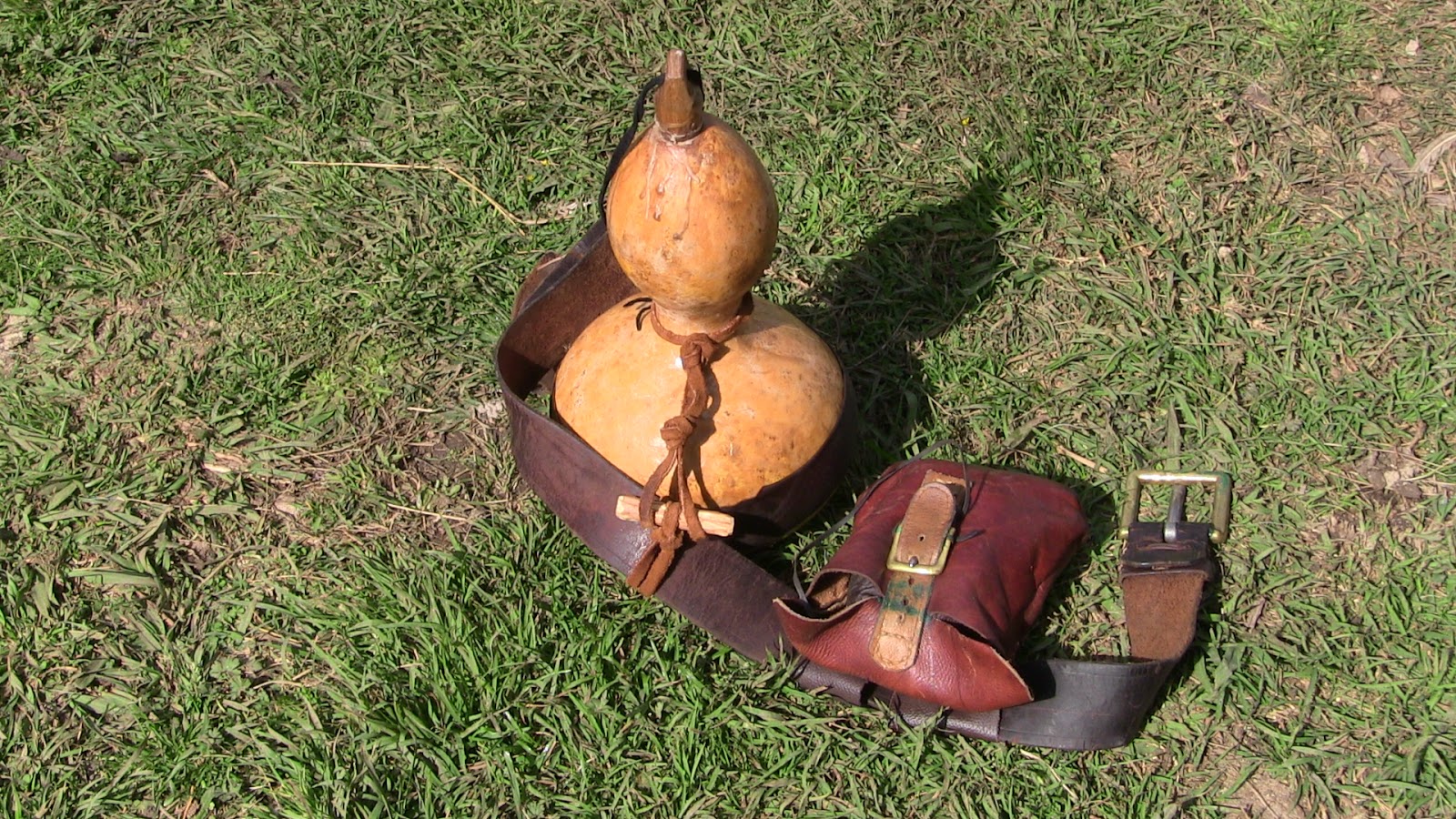
My Finished Bottle Gourd Water Bottle.
Labels:
18th century,
Africa,
bottle gourds,
camping,
colonial,
gourd containers,
Historical,
journeying,
living history,
North America,
trekking,
water bottles,
woods women,
woodsmen,
woodsrunners
Australia
Australia
Tuesday, 11 February 2020
Tools of the Trade.
Labels:
axes,
guns,
Hunting,
knives,
pistols,
self defence,
survival,
tomahawks,
tools of the trade,
woods women,
woodsmen,
woodsrunners
Australia
Australia
Wednesday, 27 February 2019
Cleaning Your Gun In The field.
Cleaning Your Gun In The Field is part of my "A Woodsrunner's Day" series.
Labels:
17th century,
18th century,
19th century,
camping,
cleaning,
field,
historical trekking,
living history,
mountain men,
muzzle-loader,
trappers,
woods women,
woodsman,
woodsrunner,
woodsrunning
Australia
Australia
Sunday, 26 August 2018
What You Need To Know About Eating Bracken Fiddle heads!!!
As woodsmen & woods women we spend a good deal of time in the woods whenever we can, one of the things many of us do is seek out wild edible foods to supplement foods that we are carrying. Bracken fiddle heads are widely known to be an edible food, BUT, they can also be dangerous to eat! These fiddle heads are carcinogenic, they are less so if cooked/boiled, but never totally safe! My advice is to not eat them at all unless it was an emergency & there was no other sources of food available. Personally I can't see this happening, we nearly always have the option of eating fresh game. You can survive up to roughly three weeks without food depending on your health, your exertion levels & you must have a good drinking water supply.
Read More Here: https://honest-food.net/bracken-fern-edible/
Labels:
bracken,
camping,
carcinogenic,
dangers,
edible wild foods,
fiddle heads,
long term wilderness living,
survival,
trekking,
woods women,
woodsmen
Australia
Australia
Tuesday, 20 June 2017
Southern Cross Free Trappers Newsletter Vol. 59, June 2017
Labels:
Australia,
clubs,
family oriented,
groups,
Historical,
living history,
longhunters,
mountain men,
muzzleloading,
newsletter,
rendezvous,
shoots,
southern cross free trappers,
Victoria,
woods women,
woodsmen
Australia
Australia
Tuesday, 5 January 2016
The Well Equipped Woodsrunner.
This post is just to encourage people to improve on their equipment when ever they have the opportunity. In our busy lives we can sometimes lose track of the things that are truly important to us, things that give us pleasure, and in some cases security. These things are worth spending time and money on when they are available.
Collecting things is fun, but be careful to distinguish between what you like to have in your possession and what you need to carry in your pack and on your person. There must be some compromise between minimum weight & maximum self-reliance.
The compass is probably not a necessity, but it can make life easier when moving in unknown territory. The angling tackle and flint and steel to me are a priority.
Knapsack equipped for a long stay in the woods, with the added market wallet, oilcloth secured under the flap closure, blanket roll containing extra clothing for winter use and spare moccasins.
I very much doubt that woodsrunners carried much in the way of a medical kit, possibly some herbs. But I think that anyone who spends time away from home in the woods should carry a medical kit regardless. This kit of mine is very basic, but if I were travelling far long term, I would be packing a modern medical kit.
Shot pouch and contents. Make sure you have a ball mould & lead ladle for re moulding spent ball retrieved from shot game.
Patched ball was not commonly used in smoothbores, and at the rages in which I hunt I have no need for great accuracy, but I do carry two patched ball in a loading block for faster reloading if I should need it.
These tools, grease, spare flint leather and flints are carried in my shot pouch.
These spare lock parts and tools are carried in my knapsack.
Carrying a quality powder horn is essential, it does not have to be flash looking, but it does have to be serviceable. No leaks at spout plug or base plug, and the base plug should NEVER be glued. It should be sealed with beeswax only, and secured with metal pins.
One of three gunpowder bags that I can use to carry extra gunpowder should I need to. A lighter option than carrying extra powder horns. When empty I use this one to carry spare tinder for fire lighting.
Good blades are essential to wilderness living and survival. Choose wisely, only use them for their intended purpose and look after them.
Rifle or smoothbore long gun is your choice. Consider what type of game you are likely to be hunting, and the type of area you are likely to be hunting in. Also consider your capabilities regarding weight of the arm and your eyesight.
A good pistol for a back-up can be useful, and sometimes necessary. Choose a pistol that matches your longarm if you can, especially if it is a rifle. Other options are smoothbore pistols and you can carry shot. I carry a .62 caliber fusil, but my pistol is .70 caliber. However I can still use shot, and I can use a leather patched . 60 caliber ball in this pistol.
This is a left hand lock pistol, so I can carry it under my equipment belt on the right hand side. I am not left handed.
These two leather covered glass water flasks have proved to work very well. Not too heavy, and easy to accommodate in my pack and haversack.
I tend to alternate between carrying my kettle or my tin cup. The cup is obviously lighter, but the kettle holds more. I think that when travelling alone the tin cup suits my purpose better, & if I am in company, then someone else can carry the kettle!
I do carry other items such as soap, comb, whetstone, metal file, wooden spoon, awl, housewife sewing kit etc, but these are personal choices that some may not bother carrying.
The housewife sewing kit how ever does have other uses besides repairing clothing, shelter & packs. The needles are good for removing splinters and if necessary used to sew up a wound that can not be closed with a bandage.
Labels:
17th century,
18th century,
arms,
blades,
colonial,
equipment,
flintlock,
gear,
guns,
historical trekking,
knives,
living history,
settlers,
survival,
tools,
wilderness living,
woods women,
woodsman,
woodsrunner
Australia
Australia
Sunday, 1 November 2015
Free Trappers Australia.
Labels:
Australia,
camping,
club,
family,
Free Trappers,
living history,
mountain men,
muzzle-loading,
organisation,
rendezvous,
shooting range,
social,
Victoria,
woods women,
woodsmen,
woodsrunners
Australia
Australia
Monday, 5 January 2015
NEW ENGLAND COLONIAL LIVING HISTORY GROUP 1680-1760 FORUM AND GROUP.
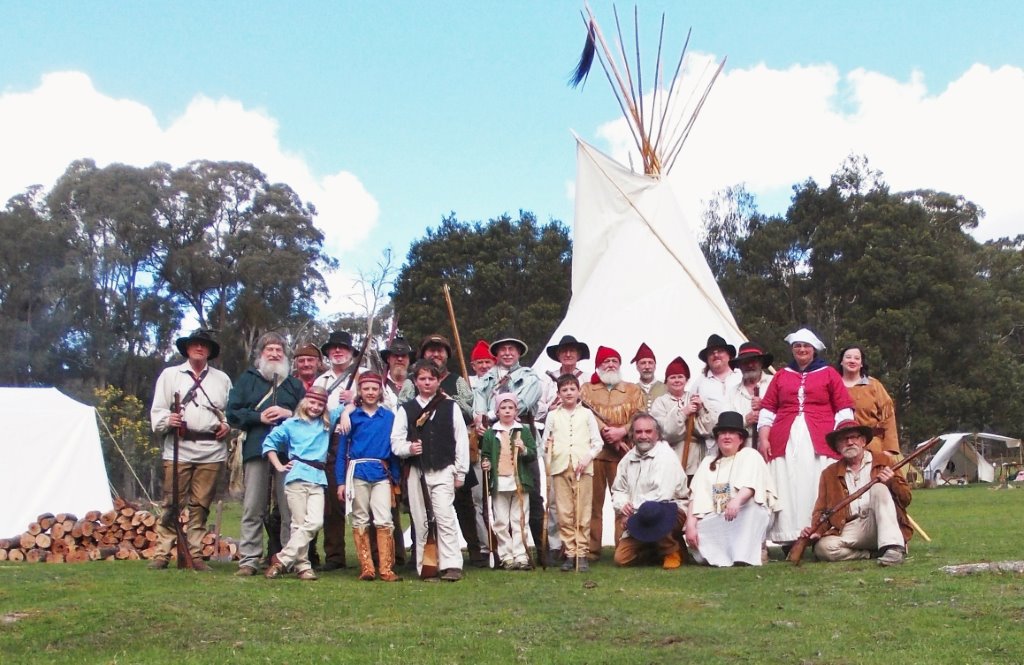
This group is based near Guyra and Armidale and not far from Uralla in New England NSW Australia. Our main focus in history is the settlement of the New World, and our activities include:
Historical Trekking.
Experimental Archaeology.
Learning and practicing primitive and period living skills.
Long Term Wilderness Survival.
Historical Research.
1) Areas within our Forum include:
2) Who We Are and What We Do.
3) New member Introductions.
4) IMPORTANT NOTICES.
5) Activities Calender/Diary.
6) The Pilgrim's Forum.
7) 18th Century Historical Trekking.
8) The Homestead.
8) The Homestead.
9) Living History Activity Suggestions.
10) Period Clothing.
11) Equipment Supplies and Tools.
12) Primitive and Period Living Skills.
13) Cooking.
14) Resources.
15) Period Guns.
16) Persona/Character.
17) Boats and Boating.
18) Stories and Experiences.
19) Forum Ideas and Suggestions.
20) Sword, Axe and Staff Fighting.
21) Other Groups in Australia.
22) Show and Tell.
22) Show and Tell.
23) Ranger, Militia, Scouts and Spies.
24) A Woodland Indian Persona.
25) Textiles.
26) General Living History Information.
27) Advertising Ideas/Recruitment.
28) The Survival Connection.
29) The Club House.
30) What Are You Up To?
31) The Trading Post.
32) UK Forums and Group.
33) Period Movies.
34) Woodworking.
35) Complaints.
36) NECLHG 1680-1760 World Wide Chapters.
37) The Chapter Captains' Lounge.
Anyone is welcome to join our group and our forum. Membership is FREE.
Labels:
17th century,
18th century,
Australia,
camping,
Historical,
historical trekking,
living history,
living skills,
persona,
primitive,
reenactment,
survival,
woodland Indian,
woods women,
woodsman,
woodsmen,
woodsrunner
Australia
New England, Australia
Thursday, 22 May 2014
The Oilcloth & The Blanket, Questions Answered. Video.
"This morning an account was bro't to town, that
a large army of French
and Indians were seen at a small distance from the
German flats, but few
here believe it. Sir William Johnson is still in
readiness, with 1500 of
the militia. Every man in the French army that came
against Fort William
Henry, was equipped in the following manner, viz. With
two pair of
Indian shoes, 2 pair of stockings, 1 pair of
spatterdashes, 1 pair of
breeches, 2 jackets, 1 large over-coat, 2 shirts, 2
caps, 1 hat, 1 pair
of mittens, 1 tomahawk, 2 pocket-knives, 1 scalping
knife, 1 steel and
flint, every two men an ax, and every four a kettle
and oilcloth for a
tent, with one blanket and a bearskin, and 12 days
provision of pork and
bread; all which they drew on little hand-sleighs."
Extract of a letter from Albany, dated April 2, 1757
printed in the
Boston
Gazette, April 18, 1757.}
Labels:
18th century,
blankets,
comfort,
historical trekking,
oil cloth,
oilcloth,
survival,
Video,
wilderness living,
winter camping,
woods women,
woodsmen,
woodsrunners
Australia
Australia
Sunday, 19 June 2011
Becoming The Common Man/Woman.
Becoming The Common Man/woman.
Unless you are working in a living history museum, you are not likely to be interpreting a particular person from history; you are more likely to be interpreting a common character, the common woodsman, or a common Ranger etc. Although there were woods women, I very much doubt that they were as common as the woodsmen. Ann Bailey & Mrs Pentry would hardly be called common woods women, but woodsmen were very common & came in all classes, both poor in regard to woods lore & those that were extremely good, & quite a few in between.
You do not want to be a poor woodsman in regard to the skills, but you do need to start off being common. Later on others may class you as an uncommon woodsrunner in regard to your skills & knowledge, but that will be after you have had a good deal of experience. Even the common woodsrunner had freedom of choice, but there were items of clothing & equipment that were usually common to all. The common English or French work frock was worn by the majority of woodsrunners, men & women. Leggings were very common & were usually of the Indian style. Likewise woodland Indian moccasins were worn by the majority of people running the woods. Breeches or a breechclout, the choice is yours. Both were very common.
Beware of what you see in period paintings. Whilst this is considered to be very good primary documentation, some painters were known to glorify noted individuals by adding items that were not common usage. There are for instance paintings of Daniel Boone wearing a fur collared coat. Boone may have been an uncommon woodsman in regard to his intelligence & experience, but in every other regard he was still a common woodsman & is more likely to have worn the common English work frock than a fur collared coat. Sir John Caldwell was once painted wearing the clothing of an Ojibwe chief. The clothing is genuine I have no doubt, but this was not this gentleman’s common clothing at any time or in any place.
Unless you are working in a living history museum, you are not likely to be interpreting a particular person from history; you are more likely to be interpreting a common character, the common woodsman, or a common Ranger etc. Although there were woods women, I very much doubt that they were as common as the woodsmen. Ann Bailey & Mrs Pentry would hardly be called common woods women, but woodsmen were very common & came in all classes, both poor in regard to woods lore & those that were extremely good, & quite a few in between.
You do not want to be a poor woodsman in regard to the skills, but you do need to start off being common. Later on others may class you as an uncommon woodsrunner in regard to your skills & knowledge, but that will be after you have had a good deal of experience. Even the common woodsrunner had freedom of choice, but there were items of clothing & equipment that were usually common to all. The common English or French work frock was worn by the majority of woodsrunners, men & women. Leggings were very common & were usually of the Indian style. Likewise woodland Indian moccasins were worn by the majority of people running the woods. Breeches or a breechclout, the choice is yours. Both were very common.
Beware of what you see in period paintings. Whilst this is considered to be very good primary documentation, some painters were known to glorify noted individuals by adding items that were not common usage. There are for instance paintings of Daniel Boone wearing a fur collared coat. Boone may have been an uncommon woodsman in regard to his intelligence & experience, but in every other regard he was still a common woodsman & is more likely to have worn the common English work frock than a fur collared coat. Sir John Caldwell was once painted wearing the clothing of an Ojibwe chief. The clothing is genuine I have no doubt, but this was not this gentleman’s common clothing at any time or in any place.
Here we see Daniel Boone with what appears to be fur on the top of his moccasins & he is holding a fur hat. It is well documented that Boone did not ware a fur hat & always wore a wide brimmed low crowned felt hat.
Sir John Caldwell, very fancy indeed. I believe that Sir john was an officer in the British army, and a certain book known to portray military dress has this painting as an example of an officer's dress in colonial America!
The author wearing a common frock coat at a winter solstice party.
Tuesday, 8 March 2011
Shot Pouches.
Prompted by Karl's post where he mentions carrying the shot pouch high, I decided to make this post. First let me say that I totally agree with Karl, the shot pouch should be carried as high as practicable. I have seen shot pouches literally hanging down to the knees. But being too high can also be a problem when you come to use it, even if it does ride well.
The only way you can judge is to try the pouch out. Can you get your hand into the pouch easily? My youngest son's shot pouch is much larger than mine, so it can be worn higher if he wishes. This shot pouch was originally designed for use with a Brown Bess musket. Smoothbore shot pouches tended to be larger because they had a little more to carry. The smoothbore can use round ball, swan shot (buckshot) or bird shot, or any combination of two of these. Kaelem uses this pouch now with a .32 cal flintlock rifle, so he has plenty of room inside.
The powder horn should also ride high, higher than the shot pouch. You do not want the powder horn on top of your shot pouch & getting in the way of accessing the pouch. In use the gun can be liftet/raised to the powder horn to prime the pan, & it is no problem filling the powder measure.
Photo Curtesy of "The Complete Black Powder Handbook By Sam Fadala.
This may be okay for shooting on the range, but it is a little too low for using in the woods.
The only way you can judge is to try the pouch out. Can you get your hand into the pouch easily? My youngest son's shot pouch is much larger than mine, so it can be worn higher if he wishes. This shot pouch was originally designed for use with a Brown Bess musket. Smoothbore shot pouches tended to be larger because they had a little more to carry. The smoothbore can use round ball, swan shot (buckshot) or bird shot, or any combination of two of these. Kaelem uses this pouch now with a .32 cal flintlock rifle, so he has plenty of room inside.
Kaelem's Shot Pouch.
My shot pouch in comparrison is much smaller, even though it is designed for use with my .62 cal fusil. But I like a small pouch, and I have got used to it over the years and can find anything I need by touch. I carry my pouch as high as I can and still be able to get my hand inside.The Author's Shot Pouch.
Author's Powder Horn.
Here you can see that my shot pouch rides high on my hip. Any higher & I can't comfortably get my hand inside. The powder horn you can just see under my arm, and it rides high above my shot pouch. Both are easily kept under controle when stooping or running as can be seen from the following video.
The 18th Century Shot Pouch.
Monday, 7 March 2011
Tuesday, 1 June 2010
Lady Of The Woods. Mad Ann Bailey.
As some of you will know I have a particular interest in promoting women in Historical Trekking. Woodsmen are dressed for woods travel, but the average 18th century woman is not, despite claims to the contrary by women who trek in all woman attire, I still think the men's clothing and the Indian women's clothing is better suited.
I don't know if the term woodswomen or woods women was ever used in the 18th century, but I use this term, or woodsrunner, to denote a woman who is at home in the woods, as much at home as a woodsman. I think Mrs Pentry and Mad Ann Bailey were such women, and I have no doubt that there were others that we simply have not heard about yet.
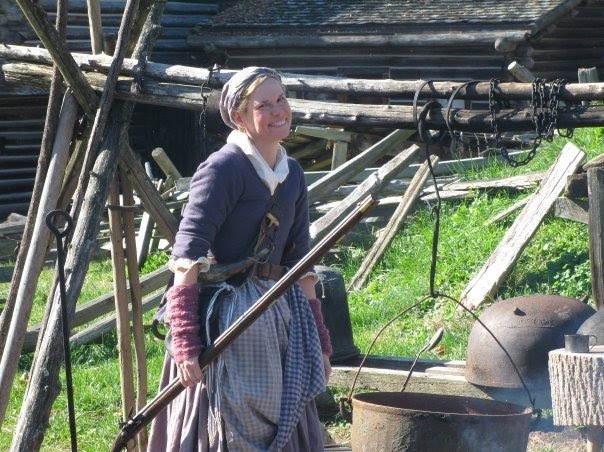
Up until now I have been really stuck for finding images of these women, but now finally I can introduce you to a lovely young lady who actually interprets the life style of Ann Bailey. In real life this lady is known as Suzanne, and I would like to introduce Suzanne to you in the following images. I hope that these images will encourage other women to take on the persona of a woodswoman.
Suzanne, thank you so much for allowing me to use your photos, very much appreciated.
Regards, your Friend, Le Loup.
Subscribe to:
Posts (Atom)