
Showing posts with label club. Show all posts
Showing posts with label club. Show all posts
Tuesday, 7 March 2017


Thursday, 24 March 2016
White Rose of Stuart Living History Society Non-profit Organisation

White Rose of Stuart Living History Society
Non-profit Organisation

Please folks, remember we are a living history society. We are concerned with the Jacobite Rebellions of the 18thC. We are not a political group, we are a living history group. We research, study, make accurate reproductions of period kit, and re-enact the period. Any modern politics, or defamatory remarks will be deleted. Feel free to ask questions, or contact us for information on our activities. Thank you.
Sunday, 1 November 2015
Tuesday, 18 June 2013
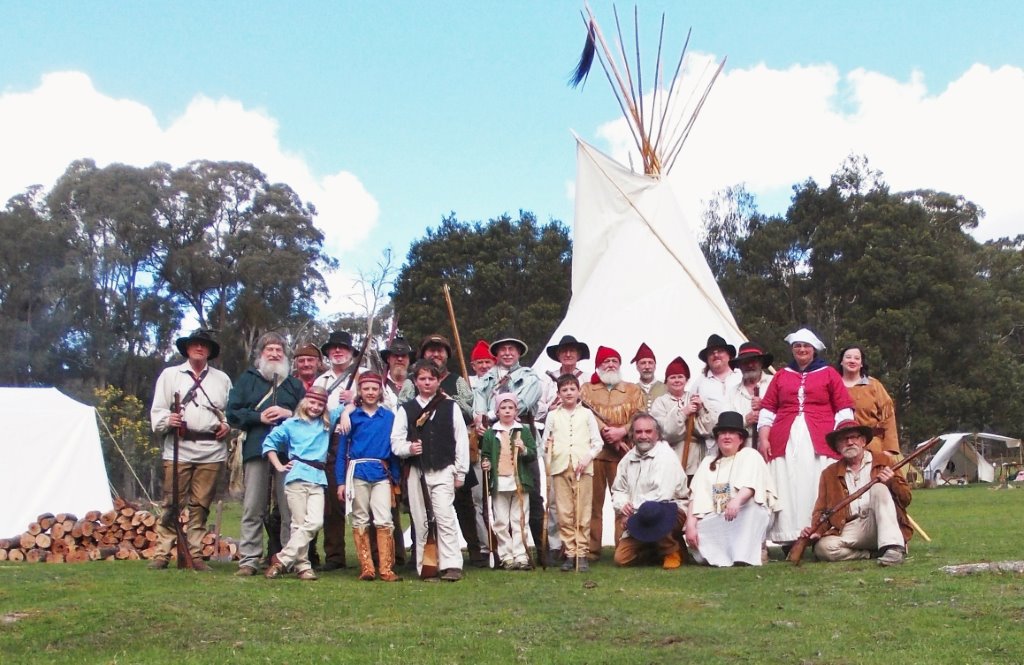
18th century Winter Solstice Masquerade Party.
New England Colonial Living History Group 1680-1760.
Our 18th Century Winter Solstice Masquerade Party will now be held on the 6th of July. This is an annual social & is traditionally held outside in the gardens of Linstock House in Wychwood Forest not far from Guyra & Armidale NSW. Dress warm for outside, but if it gets too cold we will be moving inside.
This event is hosted by our family for club members & friends only. Membership is FREE. Food & drinks will be provided, but please feel free to bring your own if you wish. This event will start about 5 pm.
Dress to be 18th century or earlier, or the best you can manage. A blanket can hide modern clothing if you are really stuck.

Our 18th Century Winter Solstice Masquerade Party will now be held on the 6th of July. This is an annual social & is traditionally held outside in the gardens of Linstock House in Wychwood Forest not far from Guyra & Armidale NSW. Dress warm for outside, but if it gets too cold we will be moving inside.
This event is hosted by our family for club members & friends only. Membership is FREE. Food & drinks will be provided, but please feel free to bring your own if you wish. This event will start about 5 pm.
Dress to be 18th century or earlier, or the best you can manage. A blanket can hide modern clothing if you are really stuck.

Thursday, 9 May 2013
Working on a Wigwam for a Winter Shelter.
I thought it was about time I did some more experimenting with a different type of shelter, so I decided to make a Wigwam. These images show just the framework, later I will have to pull it apart & move it to a winter camp site in the forest. Then I will cover the framework and take more photos.


Sunday, 1 July 2012

Saturday, 17 December 2011

Friday, 20 May 2011
Volume 31, Southern Cross Free Trappers News Letter Link.
http://freetrappers.org.au/2011/05/20/vol-31-may-2011/
The Southern Cross Free Trappers are based in Victoria.


The Southern Cross Free Trappers are based in Victoria.


Wednesday, 6 April 2011
The Survival Connection. PART 3.
The Survival Connection. Part 3.
So what can 18th century living history and historical trekking teach you? It can teach you how to choose the right clothing & equipment. There are individual choices of course, but certain items are recommended. Man or woman it makes no difference, the clothing is the same if you are trekking in the wilderness. Hat, neckerchief, shirt, weskit, breeches or breechclout, leggings & moccasins. If the weather is cold then wear more than one shirt & or weskit, and carry spare ones in your blanket roll for wearing at night. One trek and you will see the benefits of wearing such clothing.


Your tools and other equipment will be few, so you need to choose wisely. Remember what I frequently say, when packing for the trail there must be a compromise between two principles; minimum weight and maximum self-reliance. As part of a group you will be given some direction in these choices, but ultimately it is up to you. But remember, if you are part of a group, then you have certain responsibilities. We are all responsible for each others well being, so the choices we make also effects others. If you should ever become separated, you need to know that you can survive on your own.
Basic tools/weapons are well known, & have never differed. The gun, the knife and the axe. You can of course substitute something else for the gun, such as a bow, so long as you become proficient in its use. Each of these tools needs to be serviced, you need other items to make these tools function correctly. The gun needs a shot pouch & a powder horn, plus wadding, worm, screw, shot, spare lock parts and gun tools, plus spare gun flints. Make sure you have a hammer stall & use it.


Blades need to be kept sharp, a blunt blade is dangerous because it takes too much effort to cut with & this often leads to accidents. You will need a good whet stone & a metal file. These blades need to be sheathed. Hunting knives & legging knives will of course have a proper fitting well made safe sheath. The tomahawk/axe can use a leather sheath or it can be wrapped with soft leather or cloth. Secure it so it can be easily uncovered at a moments notice.
The skills are many, & it will take more than one trek for you to learn them all, & many more treks to become proficient in those skills. There is little room for error in an emergency, & sometimes even simple skills such as constructing a shelter can become a matter of urgency in certain situations. Some of us who have been practicing these skills for many years have been guilty of taking these skills for granted. It is only when you see a pilgrim on his/her first trek that you realise just how many skills you have & how the simple lest skill in your eyes can be a difficult task in another’s.
Rules, regulations, & clothing & equipment requirements. 19-6-08/update 7-5-09
Rules and regulations guide.
(1) Each train to have at least 2 archers (each archer to carry at least 1lb of gunpowder, & 1lb of lead on extended ranging expeditions).
(2) When ranging, each column to have one archer accompanying the lead scout.
(3) Each column to use: lead scout with archer, a rear guard, & at least one scout on each flank.
(4) Each member to maintain a space before of at least 3 paces.
(5) Lead scout to lead by at least 60 paces.
(6) Rear guard to trail at 20 paces.
(7) Flank scouts to keep column in sight at all times if possible.
(8) Guards to be posted at all stops.
(9) Packs are not to be removed at stops except for toilet.
(10) No person shall leave the column alone and must always remain in sight of the column.
Equipment for extended ranger duties in wilderness areas.
(1) Cartridge box containing a minimum of 8 cartridges. (Fusils & muskets only).
(2) Shot pouch & required contents.
(3) Powder horn.
(4) Functional firelock with hammer stall & lock cover.
(5) Gunpowder wallet.
(6) At least 2 lbs of gunpowder.
(7) At least 4 lbs of lead in ball, buckshot & birdshot.
(8) At least 12 flints.
(9) A tomahawk/axe.
(10) A good hunting/butcher knife.
(11) A clasp knife.
(12) A knapsack, snapsack or rucksack.
(13) A haversack or market wallet.
(14) A good wool blanket.
(15) An oilcloth of suitable size to shelter one person.
(16) A water bottle, canteen or costrel to hold at least 1 quart (You may need to carry more than one, depending on the area you are travelling in).
(17) Sufficient tow or wads.
(18) Patch material ditto.
(19) Fishing kit with at least 6 hooks & 2 lines.
(20) Tinderbox, flint, steel & prepared tinder.
(21) Trade kettle or other.
(22) Leather inner-soles & repair leather for moccasins.
(23) Leather thong or cordage ties.
(24) Food bags.
(25) Sewing kit.
(26) Awl
(27) Soap & hair comb.
(28) Medical supplies.
Optional Equipment.
(1) Short hunting sword.
(2) Half-axe or felling axe
(3) Auger
Clothing Requirements.
(1) Felt hat.
(2) Shirt ( plus spare wool shirt in bedroll).
(3) Weskit (plus wool weskit ditto)
(4) Monmouth cap ditto.
(5) Wool mittens.
(6) Half-blanket or capote.
(7) Breeches or breechclout.
(8) Neckcloth.
(9) Stockings or socks (wool recommended for winter).
(10) Leather leggings with garters.
(11) Moccasins with extra sewn on sole plus a spare pair.
(12) Frock or other.
Trail Foods.
Each person to carry as much dried foods as possible. Recommended foods are:
• Oats
• Beans
• Pease
• Corn
• Rice
• Cornmeal
• Flour
• Meat (dried)
• Sausage
• Fruit
• Hardtack
• Bread
• Biscuit
• Hard cheese
• Boiled beef
Optional.
Teas
Coffee
Chocolate
Spirits
NOTE: Unless otherwise requested, we will carry 5 POUNDS OF FOOD, which should last approx 6 days.
This is a guide only, & individuals will learn from experience what they need to carry & how much.
So what can 18th century living history and historical trekking teach you? It can teach you how to choose the right clothing & equipment. There are individual choices of course, but certain items are recommended. Man or woman it makes no difference, the clothing is the same if you are trekking in the wilderness. Hat, neckerchief, shirt, weskit, breeches or breechclout, leggings & moccasins. If the weather is cold then wear more than one shirt & or weskit, and carry spare ones in your blanket roll for wearing at night. One trek and you will see the benefits of wearing such clothing.

Wearing woodland Indian women's clothing is an option.


A good pack is very important, just one trek in the woods of any distance and you will find out if your choice was a wise one or not. You will learn to adjust the strap/s to fit more comfortably & stop the pack from moving about. A blanket can be bulky, so we usually only carry one. But you will learn how to stay reasonably warm with only one blanket. Note that I say “reasonably warm”, I will also say “reasonably comfortable”. Do not expect to be as cosy in a primitive camp when you are travelling light, as you would be in your own bed at home. This is something you need to understand & get used to.


Your tools and other equipment will be few, so you need to choose wisely. Remember what I frequently say, when packing for the trail there must be a compromise between two principles; minimum weight and maximum self-reliance. As part of a group you will be given some direction in these choices, but ultimately it is up to you. But remember, if you are part of a group, then you have certain responsibilities. We are all responsible for each others well being, so the choices we make also effects others. If you should ever become separated, you need to know that you can survive on your own.
Basic tools/weapons are well known, & have never differed. The gun, the knife and the axe. You can of course substitute something else for the gun, such as a bow, so long as you become proficient in its use. Each of these tools needs to be serviced, you need other items to make these tools function correctly. The gun needs a shot pouch & a powder horn, plus wadding, worm, screw, shot, spare lock parts and gun tools, plus spare gun flints. Make sure you have a hammer stall & use it.


Blades need to be kept sharp, a blunt blade is dangerous because it takes too much effort to cut with & this often leads to accidents. You will need a good whet stone & a metal file. These blades need to be sheathed. Hunting knives & legging knives will of course have a proper fitting well made safe sheath. The tomahawk/axe can use a leather sheath or it can be wrapped with soft leather or cloth. Secure it so it can be easily uncovered at a moments notice.
The skills are many, & it will take more than one trek for you to learn them all, & many more treks to become proficient in those skills. There is little room for error in an emergency, & sometimes even simple skills such as constructing a shelter can become a matter of urgency in certain situations. Some of us who have been practicing these skills for many years have been guilty of taking these skills for granted. It is only when you see a pilgrim on his/her first trek that you realise just how many skills you have & how the simple lest skill in your eyes can be a difficult task in another’s.
Walking & travelling in the wilderness is not the same as walking in a town, city or even on a country road in peace time. You need to learn how to walk to save effort & be as silent as possible. You need to pay attention to your surroundings & stop often to look & listen. Unless you have gained some knowledge of this wilderness before hand, you’re looking & listening will be at a disadvantage. Again, this is where historical trekking can help you. In a group it will be the leader who sets the pace & makes the stops, but at the same time he/she must be aware of the rest of the group. Is there someone who can’t keep up? Has the rear guard heard or seen something & called a stop? Has a member of the group suddenly stopped for some reason? You all need to function together, & only practice will allow this to happen.
NEW ENGLAND COLONIAL LIVING HISTORY GROUP TRAINED-BAND.
Rules, regulations, & clothing & equipment requirements. 19-6-08/update 7-5-09
Rules and regulations guide.
(1) Each train to have at least 2 archers (each archer to carry at least 1lb of gunpowder, & 1lb of lead on extended ranging expeditions).
(2) When ranging, each column to have one archer accompanying the lead scout.
(3) Each column to use: lead scout with archer, a rear guard, & at least one scout on each flank.
(4) Each member to maintain a space before of at least 3 paces.
(5) Lead scout to lead by at least 60 paces.
(6) Rear guard to trail at 20 paces.
(7) Flank scouts to keep column in sight at all times if possible.
(8) Guards to be posted at all stops.
(9) Packs are not to be removed at stops except for toilet.
(10) No person shall leave the column alone and must always remain in sight of the column.
Equipment for extended ranger duties in wilderness areas.
(1) Cartridge box containing a minimum of 8 cartridges. (Fusils & muskets only).
(2) Shot pouch & required contents.
(3) Powder horn.
(4) Functional firelock with hammer stall & lock cover.
(5) Gunpowder wallet.
(6) At least 2 lbs of gunpowder.
(7) At least 4 lbs of lead in ball, buckshot & birdshot.
(8) At least 12 flints.
(9) A tomahawk/axe.
(10) A good hunting/butcher knife.
(11) A clasp knife.
(12) A knapsack, snapsack or rucksack.
(13) A haversack or market wallet.
(14) A good wool blanket.
(15) An oilcloth of suitable size to shelter one person.
(16) A water bottle, canteen or costrel to hold at least 1 quart (You may need to carry more than one, depending on the area you are travelling in).
(17) Sufficient tow or wads.
(18) Patch material ditto.
(19) Fishing kit with at least 6 hooks & 2 lines.
(20) Tinderbox, flint, steel & prepared tinder.
(21) Trade kettle or other.
(22) Leather inner-soles & repair leather for moccasins.
(23) Leather thong or cordage ties.
(24) Food bags.
(25) Sewing kit.
(26) Awl
(27) Soap & hair comb.
(28) Medical supplies.
Optional Equipment.
(1) Short hunting sword.
(2) Half-axe or felling axe
(3) Auger
Clothing Requirements.
(1) Felt hat.
(2) Shirt ( plus spare wool shirt in bedroll).
(3) Weskit (plus wool weskit ditto)
(4) Monmouth cap ditto.
(5) Wool mittens.
(6) Half-blanket or capote.
(7) Breeches or breechclout.
(8) Neckcloth.
(9) Stockings or socks (wool recommended for winter).
(10) Leather leggings with garters.
(11) Moccasins with extra sewn on sole plus a spare pair.
(12) Frock or other.
Trail Foods.
Each person to carry as much dried foods as possible. Recommended foods are:
• Oats
• Beans
• Pease
• Corn
• Rice
• Cornmeal
• Flour
• Meat (dried)
• Sausage
• Fruit
• Hardtack
• Bread
• Biscuit
• Hard cheese
• Boiled beef
Optional.
Teas
Coffee
Chocolate
Spirits
NOTE: Unless otherwise requested, we will carry 5 POUNDS OF FOOD, which should last approx 6 days.
This is a guide only, & individuals will learn from experience what they need to carry & how much.
Friday, 1 April 2011
The Survival Connection. Part One.
There have been several survival scenarios built on the premise that we have to leave home and survive in the wilderness. In some circumstances with a large enough group of people you may be able to retire to your retreat, your small farm in the bush. But many worry about raiders once the food supplies run out in the towns & cities. Of course if this is an invasion by a foreign power, then you will have to leave your retreat and move further into the wilderness.
Think about that scenario, travelling to a new area to start from scratch. The journey, dangers, tools & equipment required, the skills needed, the ever present threat of attack, the need to grow your own food, to hunt & to trap. The constant work involved in just living, especially when you are first setting up. I think this is what Karl was saying in his recent post, many hands make light work. But if you are alone you will be working long hours until you get it all up & running.
Does this remind you of another time in history when people had to travel into the wilderness to settle? Yes, the settlement of the New World. Someone many years ago wrote in a popular US magazine that if anyone stood a chance of survival after TSHTF, it would be 18th century living historians. Why? Because this is what we do. We interpret & recreate that journey into the wilderness through Historical Trekking. We learn & practice the skills required to live in the wilderness. If we are a part of a group, then that group is our support, we all leave together. No fuss, no panic. We have done this a hundred times before. We are trained, skilled & fully equiped. That is why we stand the best chance of survival.
What if it never happens? Personally I hope it never does. Meantime I am having a lot of fun.
Woodsrunner’s Skills.
This is a list of basic skills in which I personally would expect an 18th century woodsman or woods-woman to have some experience with.
• Flint & steel fire lighting
• Wet weather fire lighting
• Fire-bow fire lighting
• Flintlock fire lighting
• Flintlock use, service & repair
• Field dressing & butchering game
• Blade sharpening
• Tomahawk throwing
• Making rawhide
• Brain tanning
• Primitive shelter construction
• Cordage manufacture
• Moccasin construction and repair
• Sewing
• Axe and tomahawk helve making
• Fishing
• Hunting
• Evasion
• Tracking
• Reading sign
• Woods lore
• Navigation
• Primitive trap construction & trapping
• Open fire cooking
• Fireplace construction
• Clothing manufacture
• Drying meat & other foods
• Knowledge of plant tinders & preparation
• Knowledge of native foods & preparation
• Scouting
• Basic first aid
Some of our group member's skills go beyond this list, some do not meet these requirements but have other skills which we need. One is a bowyer & knife maker, another is a nurse. Two are ex security & others have managerial and organisational skills. We have weavers & knitters, gardeners, seamstress, archers & skills instructors. This is the advantage of being a member of a well established group.
New England Colonial Living History Group 1680-1760. http://eighteenthcenturylivinghistory.freeforums.org/

Think about that scenario, travelling to a new area to start from scratch. The journey, dangers, tools & equipment required, the skills needed, the ever present threat of attack, the need to grow your own food, to hunt & to trap. The constant work involved in just living, especially when you are first setting up. I think this is what Karl was saying in his recent post, many hands make light work. But if you are alone you will be working long hours until you get it all up & running.
Does this remind you of another time in history when people had to travel into the wilderness to settle? Yes, the settlement of the New World. Someone many years ago wrote in a popular US magazine that if anyone stood a chance of survival after TSHTF, it would be 18th century living historians. Why? Because this is what we do. We interpret & recreate that journey into the wilderness through Historical Trekking. We learn & practice the skills required to live in the wilderness. If we are a part of a group, then that group is our support, we all leave together. No fuss, no panic. We have done this a hundred times before. We are trained, skilled & fully equiped. That is why we stand the best chance of survival.
What if it never happens? Personally I hope it never does. Meantime I am having a lot of fun.
Woodsrunner’s Skills.
This is a list of basic skills in which I personally would expect an 18th century woodsman or woods-woman to have some experience with.
• Flint & steel fire lighting
• Wet weather fire lighting
• Fire-bow fire lighting
• Flintlock fire lighting
• Flintlock use, service & repair
• Field dressing & butchering game
• Blade sharpening
• Tomahawk throwing
• Making rawhide
• Brain tanning
• Primitive shelter construction
• Cordage manufacture
• Moccasin construction and repair
• Sewing
• Axe and tomahawk helve making
• Fishing
• Hunting
• Evasion
• Tracking
• Reading sign
• Woods lore
• Navigation
• Primitive trap construction & trapping
• Open fire cooking
• Fireplace construction
• Clothing manufacture
• Drying meat & other foods
• Knowledge of plant tinders & preparation
• Knowledge of native foods & preparation
• Scouting
• Basic first aid
Some of our group member's skills go beyond this list, some do not meet these requirements but have other skills which we need. One is a bowyer & knife maker, another is a nurse. Two are ex security & others have managerial and organisational skills. We have weavers & knitters, gardeners, seamstress, archers & skills instructors. This is the advantage of being a member of a well established group.
New England Colonial Living History Group 1680-1760. http://eighteenthcenturylivinghistory.freeforums.org/

Southern Cross Free Trappers Newsletter.
http://freetrappers.org.au/2011/04/01/vol-30-april-2011/

This is of course one of our Australian groups. The Southern Cross Free Trappers welcome new members with an interest in colonial living from the late 17th century to the mid 19th century. So if you have an interest in this period, I suggest you check this group out. They are a great bunch to sit around the camp fire with.

This is of course one of our Australian groups. The Southern Cross Free Trappers welcome new members with an interest in colonial living from the late 17th century to the mid 19th century. So if you have an interest in this period, I suggest you check this group out. They are a great bunch to sit around the camp fire with.
Monday, 28 March 2011
Monday, 28 February 2011
A Small Mountain Man Rendezvous in America.
These people seem to be having a good time, and the only fault I can find in their activities is the setting off of a charge in a stump! A lot of fun I know, but in my opinion not something for a group meeting. Too many things can go wrong. Just the same I think this sort of small group/club rendezvous should be encouraged.
This is very similar to a rendezvous we used to hold here in Wychwood Forest many years ago, we had members all over Australia then and we all came together once a year for this rendezvous. It was a lot of fun.
This is very similar to a rendezvous we used to hold here in Wychwood Forest many years ago, we had members all over Australia then and we all came together once a year for this rendezvous. It was a lot of fun.
Wednesday, 19 January 2011
Affordability. Equipment & Tools. Knives.
Knives.
There are fixed blade belt knives, and there are jack knives/clasp knives. These come in a variety of shapes and sizes. Second hand will usually be less costly than new, and these second hand knives are well worth looking out for at your local second hand dealer.


There are fixed blade belt knives, and there are jack knives/clasp knives. These come in a variety of shapes and sizes. Second hand will usually be less costly than new, and these second hand knives are well worth looking out for at your local second hand dealer.

A repro clasp knife.
Clasp knives are generally not that costly even new from living history traders. If you are on a budget, stay away from custom made knives. If you are going to purchase a new or custom knife, make sure you do your research first as to style.
A repro clasp knife.
Second hand butcher knives of the 18th century style are still available at dealers and markets. Stay away from stainless steel, only purchase carbon steel. Carbon steel is usually recognisable by it being a duller finish than the usually shiny look of stainless.
Two original butcher knives. One I found at a second hand dealer's, and the other I found at a local maket.
Handles on 18th century knives were pinned, not riveted, but handles can be replaced where they have been riveted.
This too is an original blade, and I bought it without a handle.

This one I found second hand as is. I made the sheath. This is now my legging knife.

This was my Fathers craft knife, and that is what I use it for now. The blade shape could be changed on a knife like this.

An original Gully knife.

A Gully knife custom made for me by my close friend the late Geoff W. Howarth of Tamworth NSW Australia. 9 inches long closed.


Above: Pinned. A metal rod or nail is used and peened at both ends to secure it.

Above: These are brass rivets. Most if not all modern butcher knife handles are secured by rivets. As you can see they are much larger than the pins.
Saturday, 15 January 2011
Skills & the Right Tool for The Job.
Many of you may already have seen this particular video of mine, but I am posting it again because it fits in with the present topic. Take note of the skills used here, besides the obvious knowledge or ability to construct a primitive shelter.
Most modern bushcrafters say that carrying a tomahawk or belt axe is not necassary, that they can do all that a hatchet can with their bushcraft knife. Knives have specific purposes, though some knives are versitile enough to butcher game and use for camp chores, I still prefere to carry more than one knife and use the right knife for the job in hand. Knives to my knowledge never were designed to hack at wood or be driven through wood by hitting the back of the blade with a maul!
Anyway, for those of you who are interested in long term survival, I would like you to start thinking about the skills required as well as the tools & equipment NEEDED.
Most modern bushcrafters say that carrying a tomahawk or belt axe is not necassary, that they can do all that a hatchet can with their bushcraft knife. Knives have specific purposes, though some knives are versitile enough to butcher game and use for camp chores, I still prefere to carry more than one knife and use the right knife for the job in hand. Knives to my knowledge never were designed to hack at wood or be driven through wood by hitting the back of the blade with a maul!
Anyway, for those of you who are interested in long term survival, I would like you to start thinking about the skills required as well as the tools & equipment NEEDED.
Tuesday, 11 January 2011
Crimson Bond Trailer. Jas looking good as an actor!
I don't generally do advertising as such, and this trailer does not mean that I recommend Jas Townsend as a trader, but this is the first time I have had a glimps of Jas and associates in what looks at this stage as being a serious attempt at acting. This is only a short trailer, but it looks very interesting. It could of course all turn out to be a sales promotional movie, but even so, if it is well done and interesting then it will be worth watching.
Here's hoping the movie is as good as the trailer.
Here's hoping the movie is as good as the trailer.
Monday, 10 January 2011
Daniel Boone as a young lad.
"But this sort of sport was not enough for him. He seemed resolved to go
away from men, and live in the forests with these animals. One morning
he started off as usual, with his rifle and dog. Night came on, but
Daniel did not return to his home. Another day and night passed away,
and still the boy did not make his appearance. His parents were now
greatly alarmed. The neighbors joined them in making search for the lad.
After wandering about a great while, they at length saw smoke rising
from a cabin in the distance. Upon reaching it, they found the boy. The
floor of the cabin was covered with the skins of such animals as he had
slain, and pieces of meat were roasting before the fire for his supper.
Here, at a distance of three miles from any settlement, he had built his
cabin of sods and branches, and sheltered himself in the wilderness."
Title: Life & Times of Col. Daniel Boone
Author: Cecil B. Harley
away from men, and live in the forests with these animals. One morning
he started off as usual, with his rifle and dog. Night came on, but
Daniel did not return to his home. Another day and night passed away,
and still the boy did not make his appearance. His parents were now
greatly alarmed. The neighbors joined them in making search for the lad.
After wandering about a great while, they at length saw smoke rising
from a cabin in the distance. Upon reaching it, they found the boy. The
floor of the cabin was covered with the skins of such animals as he had
slain, and pieces of meat were roasting before the fire for his supper.
Here, at a distance of three miles from any settlement, he had built his
cabin of sods and branches, and sheltered himself in the wilderness."
Title: Life & Times of Col. Daniel Boone
Author: Cecil B. Harley
Sunday, 9 January 2011
Thursday, 6 January 2011

Subscribe to:
Posts (Atom)