Showing posts with label trappers. Show all posts
Showing posts with label trappers. Show all posts
Wednesday, 27 February 2019
Cleaning Your Gun In The field.
Cleaning Your Gun In The Field is part of my "A Woodsrunner's Day" series.


Friday, 28 December 2018

Saturday, 9 June 2018
Living history re-enactors at Maine Wildlife Park.

Maine Wildlife Park volunteer Miriam Bisbee throws the hatchet with
Dave Bryant of Maine living history group The Ancient Ones.
Sunday, 11 February 2018

Tuesday, 6 June 2017
Colonial Williamsburg plans tomahawk throwing range in Historic Area

Colonial Williamsburg Foundation has submitted a proposal to the
city’s zoning board to construct a “tomahawk/axe throwing range” in the
Historic Area at the old military encampment site at 311 East Nicholson
Street.. (Courtesy Google Maps)
Monday, 10 October 2016
Ligonier Township man relives history as re-enactor
Ligonier Township man relives history as re-enactor


Wade Stoner, a French and Indian War reenactor, poses for
a portrait at Fort Ligonier on Thursday, Oct. 6, 2016.
PHOTO BY STEPH CHAMBERS | TRIBUNE-REVIEW.
PHOTO BY STEPH CHAMBERS | TRIBUNE-REVIEW.
Sunday, 15 May 2016
The Revenant Movie, Disappointment.

If you are a history buff, or know anything about muzzle-loading guns or even if you posses a normal degree of common sense, then don't bother watching this movie. There was apparently a 19th century living historian hired to train the actors in the use of muzzle-loading guns, but either this person did not know his stuff, or he was totally ignored. No one was present to adjust the on screen visual mistakes, either that or they simply had no clue either!
Very few historical facts in this movie, which is a great pitty because the real story, IF DONE PROPERLY, would have been worth watching. There are simply too many mistakes in this movie to make it worth watching from my point of view. I thought that after the Last Of The Mohicans, some breakthroughs in historical accuracy had actually been made, there were some mistakes, but they could be ignored, but in The Revenant, there are more mistakes that you can shake a stick at & for me at least it spoilt the whole movie. If DiCaprio wanted an Oscar for his part in this film, then he should have done his own research & made his own part more believable. I find it really hard to believe that in this day & age film makers are still unable to make a decent historical based movie of this type. Very disappointing.
Keith.
Thursday, 24 September 2015

Wednesday, 23 September 2015
More On The Shot Pouch-A Personal Choice.


The shot pouch was and is a practicle item worn by some hunters/shooters. This pouch carries the shot and tools necessary for the functioning of a muzzle-loading gun or rifle. As to the wearing of a shot pouch, it is not my purpose here to dictate how it should be correctly worn, as I think this is a personal choice. I have found though that carrying the shot pouch too low poses problems when hunting in the bush, so I wear my own pouch as high as I can under my right arm and still get my hand into the pouch without having to move it to my front.
My shot pouch is not large, and a larger opening would I think allow me to wear it higher. Also I may be a little restricted from a past shoulder injury, so these are things to take into account when viewing original painting of the period. The paintings here are 18th and 19th century, as it is the position of the pouch we are concerned with when it is worn by those who earn their living from hunting and trapping.
Someone recently made the observation that Gentlemen may not necessarily wear a shot pouch in the same way as a hunter or trapper. This could quite possibly be true, so I have included artwork of Gentlemen shooters as well as hunters and trappers. But as you will see, very few Gentlemen actually used a shot pouch, preferring instead to carry their accouterments in their coat pockets.

Attributed to David, Antonio (Italian painter, active 1684) , William Howard, Viscount Andover (1714-56).

England 1769 William Hulton with Gun-Dog and Shotgun by Henry Pickering (British artist, fl 1740-c 1771).

Fleetwood Hezketh
Joseph Wright of Derby (1769)

England 1680 John Poulett, 1st Earl Poulett by John Closterman (British artist, 1660-1711).

The pouch hanging on the tree looks too small to be a game bag.
England 1774 Sir Edward Hales, Baronet, of Hales Place, Hackington, Kent by Philip Mercier (German-born painter, c 1689-1760).

Detail from James and Mary Shuttleworth...
Joseph Wright of Derby (1764)

This English Gentleman appears to have a shot pouch on a waist belt, which can be seen on the rock to the right.
England 1752 A Sportsman by Edward Haytley 1752.
England 1752 A Sportsman by Edward Haytley 1752.

This Gentleman is indeed using what appears to be a shoulder slung shot pouch, but this I believe was painted in America.
1782 Colonel John Onslow by Ralph Earl (American painter, 1751-1801).
1782 Colonel John Onslow by Ralph Earl (American painter, 1751-1801).
The following paintings are of hunters and trappers in America.
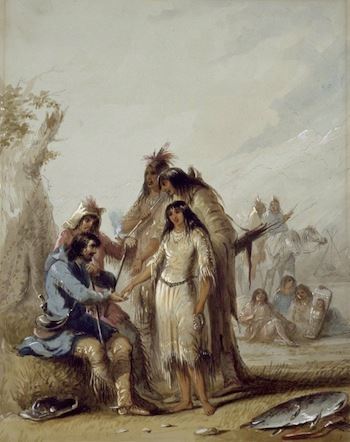
The Trapper's Bride, Alfred Jacob Miller.

charles-deas-jake-el-largo-museos-y-pinturas-juan-carlos-boveri.

No artist named for this painting.

Joseph Brant 1790.

Again, no artist named, but notice the pouch hanging over the powder horn.

Two American riflemen as drawn by a Hessian. These could be cartridge boxes or shot pouches. Also note the bayonets ! Some artistic licence being used here I suspect.


Saturday, 30 May 2015
Wednesday, 11 January 2012
The Fur Trade in Australia? The Beaver Rat and More.

Definition of BEAVER RAT
: a golden Australian water rat (Hydromys chrysogaster) with an elongated flattened body, broad flat head, short limbs, large feet, and a short heavy white-tipped tail.

Fur seals. The loss of furs from other sources was a major incentive leading to massive hunts for various types of seal. The animals were usually clubbed to death when they came ashore to breed. The pattern was familiar - the discovery of large populations of target species, the development of intensive hunting leading to extermination or depletion, the move to a new area. The first phase (1780-1820) was directed at the southern fur seal in many areas of the southern hemisphere and was carried out by sealers from Europe, Russia, Canada and the U.S. http://darwin.bio.uci.edu/~sustain/bio65/lec05/b65lec05.htm

The Australian Mountain Brushtail Possum. We have a lot of these in Wychwood Forest.
The Australian brush tailed possum was introduced into New Zealand in 1837 to establish a fur trade. http://www.doc.govt.nz/conservation/threats-and-impacts/animal-pests/animal-pests-a-z/possums/facts/

Eugène von Guérard, The barter, 1854, oil on canvas.
(Trading possum furs).
Tuesday, 11 October 2011
Sunday, 24 July 2011
Southern Cross Free Trappers. Newsletter Vol 32.
If you are interested in recieving the Southern Cross Free Trappers newsletter, go here & sign up:
http://freetrappers.org.au/
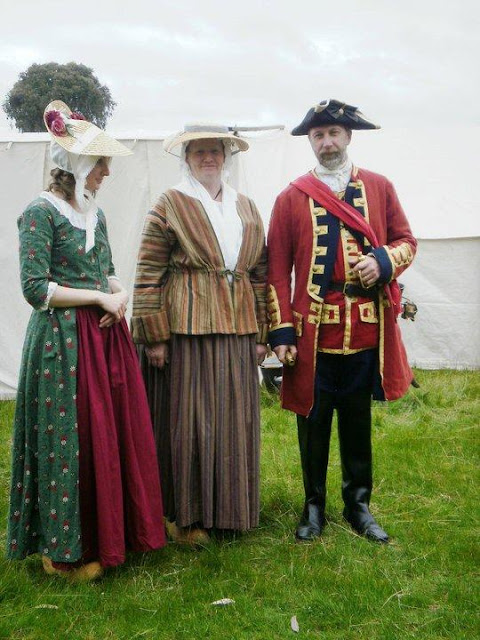
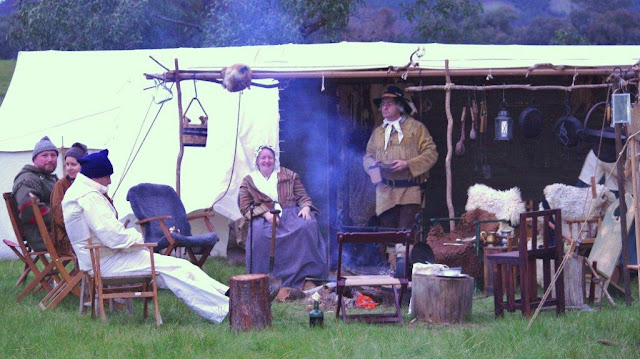
This group is based in Victoria Australia. This is a family oriented group that organise social events.


http://freetrappers.org.au/
This group is based in Victoria Australia. This is a family oriented group that organise social events.


Monday, 10 January 2011
Tuesday, 21 December 2010
Interpreting The Woodsman.
The Eastern Woodsman.
Interpreting The Eastern Woodsman 1700-1760.
A woodsman was someone who spent time in the woods, either wholly or part time. The woodsman could have a variety of jobs. He could be a town tradesman, a militia man, a farmer. He could work as a ranger, a scout, a guide or a messenger. Depending on his present occupation he may travel by horse, wagon or on foot. Scouting areas for trapping was often done on foot. If he did not want to attract attention he would travel on foot and leave less sign.
Daniel Boone worked as a labourer for a Wagoner in the French and Indian war. Later he became a land owner and farmer, but he spent most of his time in the woods whilst his family looked after the farm.
The woodsman and even the woods woman are easy characters to emulate, because you have a variety of choices regarding dress and equipment.
• You do not need a horse to be a woodsman or woods woman.
• You do not need to carry steel traps.
• You have a variety of Historical Trekking scenarios to choose from.
• You can be an “Indian Influenced” woodsman.
• Men & Women can interpret this character & share this experience together.
• Woods women can wear men’s clothing or a mixture of men’s and women’s clothing.
The fur trade started very early on in the history of the New World. Woodsmen involved in the fur trade could be beaver trappers or they could hunt bear, deer, and a variety of other fur bearing animals for the skins.


Interpreting The Eastern Woodsman 1700-1760.
A woodsman was someone who spent time in the woods, either wholly or part time. The woodsman could have a variety of jobs. He could be a town tradesman, a militia man, a farmer. He could work as a ranger, a scout, a guide or a messenger. Depending on his present occupation he may travel by horse, wagon or on foot. Scouting areas for trapping was often done on foot. If he did not want to attract attention he would travel on foot and leave less sign.
Daniel Boone worked as a labourer for a Wagoner in the French and Indian war. Later he became a land owner and farmer, but he spent most of his time in the woods whilst his family looked after the farm.
The woodsman and even the woods woman are easy characters to emulate, because you have a variety of choices regarding dress and equipment.
• You do not need a horse to be a woodsman or woods woman.
• You do not need to carry steel traps.
• You have a variety of Historical Trekking scenarios to choose from.
• You can be an “Indian Influenced” woodsman.
• Men & Women can interpret this character & share this experience together.
• Woods women can wear men’s clothing or a mixture of men’s and women’s clothing.
The fur trade started very early on in the history of the New World. Woodsmen involved in the fur trade could be beaver trappers or they could hunt bear, deer, and a variety of other fur bearing animals for the skins.


Rangers were excellent woodsmen.

Interpreting Mad Ann Bailey.
Links for more information:
Friday, 29 October 2010
Subscribe to:
Posts (Atom)