A LIVING HISTORY BLOG.

18TH CENTURY LIVING HISTORY IN AUSTRALIA.
Showing posts with label fire-bow. Show all posts

Tuesday, 27 June 2017

18th Century Period Fire Lighting Methods. Ebook.

Authors, historical, living history, authenticity, flint and steel, burning glass, reading glass, fire-bow, Mountain men, woodsmen, woodsrunners, books, reading, experimental archaeology, plant tinder, fungi tinder, tinderbox, fire lighting, 18th century, 17th century, 19th century, survival, Indians, primitive, fur trade, French and Indian War, Revolution, historical trekking, long term wilderness living, colonial, Australia, North America, cooking, heating, Reenacting, Reenactment, 

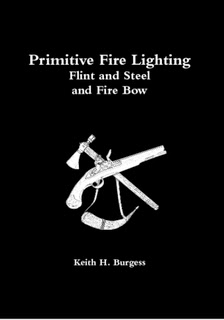
Primitive Fire Lighting-Flint & Steel & Fire Bow.

Title: Primitive Fire Lighting
ID: 9784776
Category: History
Description: “Primitive Fire Lighting”, is a hands on guide to how to make fire with flint and steel and fire bow. This includes some history, a variety of methods, tinder plants identification, and tinder production, tips on fire place construction and use, how to prepare and lay a fire, wet weather fire lighting and magnifying glass fire lighting. The skills and methods in this book will be of interest to a wider range of readers including survivalists, historical re-enactors, bush-walkers and campers, historical–trekkers and even historical novel writers. Although the plant identifications list is mainly Australian it also has some information for England, Europe and America.
Publisher: Keith H. Burgess
Copyright Year: © 2010
Language: English
Country: Australia

Table of Contents
Illustrations. 4
FOREWORD. 6
FLINT AND STEEL FIRE LIGHTING. 8
PLANT FIBRE TINDERS: 11
TINDER PREPARATION. 15
Tinder preparation-charring: 15
OTHER FLINT and STEEL FIRE LIGHTING METHODS: 16
Emergency methods: 17
A WORD ABOUT BLACK POWDER: 17
THE CAMPFIRE FIREPLACE: 18
READING GLASS/MAGNIFYING GLASS FIRE LIGHTING 20
WET WEATHER FIRE LIGHTING. 21
A FINAL WORD OF CAUTION. 23
FIRE-BOW FIRE LIGHTING. 24
Introduction 24
FIRE-BOW FIRE LIGHTING. 25
A Brief Overview. 25
The Parts of the Fire-bow. 26
The Bow. 26
The Drill Piece. 27
The Fireboard. 29
The Tinder-board. 30
The Bearing Block. 31
The Bowstring. 32
Tinder. 32
Making Fire. 32
Making Cordage. 37
The Step for making Cordage. 38
AFTERWORD. 40
Fire steel suppliers. 45
About the author. 45

5.83" x 8.26", saddle-stitch binding, white interior paper (60# weight), black and white interior ink, white exterior paper (100# weight), full-colour exterior ink.
Cost: Book $11.00 US. Plus P&P. Download $7.00 US


Tuesday, 20 October 2015

The Polypore Fungus Tinder for Flint & Steel Fire Lighting & Fire Bow.

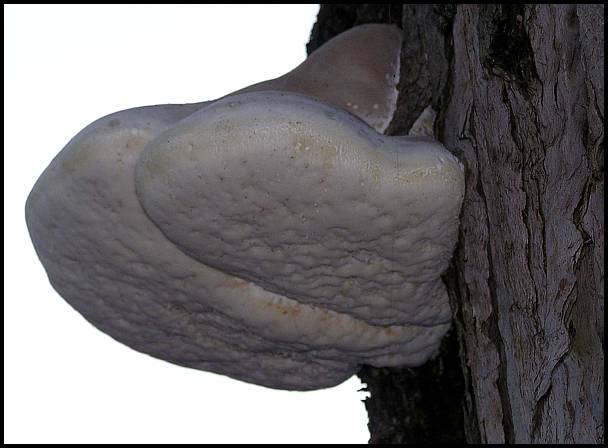
This is really just an update to previous posts I have made concerning these Bracket Fungus. These first 3 images of Laetiporus Portentosus, also known as White Punk, were taken this past Monday afternoon in the forest in the Armidale/Guyra area of New England NSW. Mostly found on Stringybark trees here, but they will grow on other trees. This one was found within reach of my hand being about 7 feet off the ground.
I have not seen this type of bracket fungus growing in the tropics, but that does not mean that it does not exist there.
 Once charred directly in the fire it makes excellent tinder for flint & steel fire lighting, it can also be used in the Fire-Bow process & for carrying fire.
Similar fungus known as Piptoporus & Ryvardenia serve the same purpose & all look very much alike. The image is more important than the name, just remember what it looks like.


The following images are of this Bracket Fungus that I have found in the past. These fungus very often grow high in trees & to collect them you will need to throw a stick or rock to bring them down, but after rain, this fungus soaks up the water & becomes too heavy to hang on the tree & falls to the ground. Many are found on the ground.
This fungus is eaten by a fungus beetle, & the resulting dust will catch a spark without having to char the fungus in the fire.


A close up of the damage done by the fungus beetle, & a close up of the beetle itself (a lot of fun trying to get a good photo of this tiny beetle !!!)


Laetiporus Portentosus Map.


Monday, 23 March 2015

My Book. Primitive Fire Lighting. eBook. Written For Australian Survivalists, Preppers, Living Historians & Reenactors.

Primitive Fire Lighting-Flint & Steel & Fire Bow. eBook.

Title: Primitive Fire lighting.
ID: 9784776
Category: History
Description: “Primitive Fire Lighting”, is a hands on guide to how to make fire with flint and steel and fire bow. This includes some history, a variety of methods, tinder plants identification, and tinder production, tips on fire place construction and use, how to prepare and lay a fire, wet weather fire lighting and magnifying glass fire lighting. The skills and methods in this book will be of interest to a wider range of readers including survivalists, historical re-enactors, bush-walkers and campers, historical–trekkers and even historical novel writers. Although the plant identifications list is mainly Australian it also has some information for England, Europe and America.
Publisher: Keith H. Burgess
Copyright Year: © 2010
Language: English
Country: Australia

Table of Contents
Illustrations. 4
FOREWORD. 6
FLINT AND STEEL FIRE LIGHTING. 8
PLANT FIBRE TINDERS: 11
TINDER PREPARATION. 15
Tinder preparation-charring: 15
OTHER FLINT and STEEL FIRE LIGHTING METHODS: 16
Emergency methods: 17
A WORD ABOUT BLACK POWDER: 17
THE CAMPFIRE FIREPLACE: 18
READING GLASS/MAGNIFYING GLASS FIRE LIGHTING 20
WET WEATHER FIRE LIGHTING. 21
A FINAL WORD OF CAUTION. 23
FIRE-BOW FIRE LIGHTING. 24
Introduction 24
FIRE-BOW FIRE LIGHTING. 25
A Brief Overview. 25
The Parts of the Fire-bow. 26
The Bow. 26
The Drill Piece. 27
The Fireboard. 29
The Tinder-board. 30
The Bearing Block. 31
The Bowstring. 32
Tinder. 32
Making Fire. 32
Making Cordage. 37
The Step for making Cordage. 38
AFTERWORD. 40
Fire steel suppliers. 45
About the author. 45


$4.99 US.

Saturday, 18 May 2013

Primitive Skills DVDs.


im finally starting to get the hang of this now. it took a little while but its worth it. I feel a lot better knowing I don't need char cloth or mushroom. the important factors I found were obviously having the right wood in the first place. the next was that its charred properly. then a sharp flint. you don't even need lots of sparks, just a few well directed ones. its all here in the videos, I listened to what you said keith and it works seriously well. thanks mate that's awesome
BUY NOW button to the left of this post.

Monday, 2 April 2012

Special Book Sale Promotion By LuLu.

http://www.lulu.com/shop/search.ep?type=Print+Products&keyWords=primitive+fire+lighting-flint+and+steel+and+fire-bow&sitesearch=lulu.com&q=&x=11&y=8

We just made saving, sharing and selling easier than ever. For the first time, registration-less checkout and no coupons required.
You and your readers can save just by adding an item to your cart, between now and Friday, April 6th. Use this opportunity to promote your book or buy more copies for yourself. The cost of this promotion is on us, but only for a limited time, so hurry for your chance to save big! Just add an item to your Lulu shopping cart to see your savings.

Thursday, 16 February 2012

Primitive Fire Lighting-Flint & Steel & Fire-Bow. 30% OFF!

Primitive Firelighting
Purchase Primitive Firelighting or any other title with 30% off with coupon code FEBRUARYCART305GBP.
Lulu incurs the cost of this discount, so it does not impact the Author's proceeds of the book.
http://www.lulu.com/product/14015072?cid=021612_en_email_FEBRUARYCART305GBP

As you can see this does not cost me anything, not that I make much anyway, but I certainly would not want to lose 30% off what I get! So if you think this book could be useful, now is the time to buy. I think the Aussie dollar is pretty high too at this time.

“Primitive Fire Lighting”, is a hands on guide to how to make fire with flint and steel and fire bow. This includes some history, a variety of methods, tinder plants identification, and tinder production, tips on fire place construction and use, how to prepare and lay a fire, wet weather fire lighting and magnifying glass fire lighting. The skills and methods in this book will be of interest to a wider range of readers including survivalists, historical re-enactors, bush-walkers and campers, historical–trekkers and even historical novel writers. Although the plant identifications list is mainly Australian it also has some information for England, Europe and America.                                          

Tuesday, 24 January 2012

Friction Fire. The Fire-Bow. Slightly Different Approach.

For a long time I did not bother to make a video on fire-bow fire lighting, & that was because it has already been done so many times. However, I have noticed how some people have difficulty getting the smouldering ember to ignite the kindling grass (or whatever they use).
I add one other stage to using the fire-bow, that of adding extra tinder. So if you do use the fire-bow, or are learning this method, my video may still be worth watching.


Saturday, 17 December 2011

Fire-Bow Fire Lighting.

People have been requesting that I make this video for a long time now, well finally I have got it done. I made this before my hip replacement surgery, and at that time had difficulty getting down on the ground to use the fire-bow. I improvised to make this video by making a platform out of tomahawk target blocks.
The leather thong on the bow which I have been using to instruct others for the past 20 years or so finally broke, and the new thong I used for this video stretched during the making of this video. I decided not to stop, because these things can happen to anyone and I wanted to show that it can still work. I tightened the leather thong by gathering the slack in with my fingers and completed the fire making process. So here it is.
Please note that my method differs slightly from other peoples methods by the fact that I use an extra piece of plant tinder to transfere the ember in the tinder dust to the kindling.

This is just one of the videos available on my latest DVD, Primitive Skills 2.


Friday, 24 December 2010

More Details Of My New Book. Primitive Fire Lighting.

Primitive Fire Lighting-Flint & Steel & Fire Bow.

Title: Primitive Firelighting
ID: 9784776
Category: History
Description: “Primitive Fire Lighting”, is a hands on guide to how to make fire with flint and steel and fire bow. This includes some history, a variety of methods, tinder plants identification, and tinder production, tips on fire place construction and use, how to prepare and lay a fire, wet weather fire lighting and magnifying glass fire lighting. The skills and methods in this book will be of interest to a wider range of readers including survivalists, historical re-enactors, bush-walkers and campers, historical–trekkers and even historical novel writers. Although the plant identifications list is mainly Australian it also has some information for England, Europe and America.
Publisher: Keith H. Burgess
Copyright Year: © 2010
Language: English
Country: Australia


Table of Contents
Illustrations. 4
FOREWORD. 6
FLINT AND STEEL FIRE LIGHTING. 8
PLANT FIBRE TINDERS: 11
TINDER PREPARATION. 15
Tinder preparation-charring: 15
OTHER FLINT and STEEL FIRE LIGHTING METHODS: 16
Emergency methods: 17
A WORD ABOUT BLACK POWDER: 17
THE CAMPFIRE FIREPLACE: 18
READING GLASS/MAGNIFYING GLASS FIRE LIGHTING 20
WET WEATHER FIRE LIGHTING. 21
A FINAL WORD OF CAUTION. 23
FIRE-BOW FIRE LIGHTING. 24
Introduction 24
FIRE-BOW FIRE LIGHTING. 25
A Brief Overview. 25
The Parts of the Fire-bow. 26
The Bow. 26
The Drill Piece. 27
The Fireboard. 29
The Tinder-board. 30
The Bearing Block. 31
The Bowstring. 32
Tinder. 32
Making Fire. 32
Making Cordage. 37
The Step for making Cordage. 38
AFTERWORD. 40
Fire steel suppliers. 45
About the author. 45

5.83" x 8.26", saddle-stitch binding, white interior paper (60# weight), black and white interior ink, white exterior paper (100# weight), full-colour exterior ink.
Cost: Book $11.00 US. Plus P&P. Download $7.00 US


Sunday, 5 December 2010

My New Book. Primitive Fire Lighting. Flint & Steel & Fire Bow.

My new book has finally been published on LuLu, you can get it in hard copy as a book, or you can download it. Pasting the following link into your browser, or by clicking on it here will take you to my book on LuLu.  http://www.lulu.com/browse/search.php?fListingClass=0&fSearch=primitive+fire+lighting
Or you can put LULU in your search engine and go to LULU, then either type in woodscraft or bushcraft or the name Keith Burgess (there is two Keith Burgess on LULU but you will know which book is mine).
Primitive Fire Lighting-Flint & Steel & Fire Bow.

For those of you who have seen my first book you will see that I have changed the cover on this one, just plain black with white script.

Friday, 23 July 2010

Foraging. BIG Punkwood.

This is the largest single piece of punkwood I have found so far, would have to last me for a year at least if I were using it. The rule is a meter long, and the piece of punkwood is about 725 cm long.

Thursday, 1 July 2010

Australian Bushcraft.

Did you know that there is not an Australian bushcraft forum on the net?! Well except for our group forum at: http://livinghistory.proforums.org/ 

Bushcraft to me is what we do on our treks and camps, using our skills to make things we need in the field, like a primitive shelter, cordage to use on the shelter, making a kettle hook and maybe a tripod to hang the kettle from. We practice making traps for survival use, making pegs for an oilcloth lean-to shelter. We make fire with tinderbox, flint and steel or we make and use a fire-bow.


Bushcraft is about making a comfortable camp without a lot of modern gear and a nylon tent. It is about making a bed of sticks and bracken and using a blanket instead of an artic sleeping bag. It is about trail foods that don't come in plastic wrap, and making fire in the rain or snow without a ferocium rod!

There was a time when bushcraft meant carrying a hatchet or tomahawk to do heavier work, now it means using a stainless steel bladed knife to split logs by wacking them with a chunk of wood! There is so much more new bushcraft gear being produced now, and people seem to need to keep buying stuff. With each piece of new gear they are distancing themselves from the woodland environment. They can no longer feel the forest floor beneath their feet.

I think people need to stop and think where the term bushcraft came from, and what it originally meant, and perhaps they need to think about where it is going before it is gone. Buried under a pile of nylon tents, synthetic footwear, ferrocium rods, parracord and freeze dried foods!
Twenty years from now you will be more disappointed by the things that you didn't do than by the ones you did do. So throw off the bowlines. Sail away from the safe harbor. Catch the trade winds in your sails. Explore. Dream. Discover.-Mark Twain

Saturday, 26 June 2010

Tinder Fungi.

I have always said that the name of something is not important, what is important is that you recognise something when you see it. I have been researching plant tinders for a long time now, and the more research I do on tinder fungi, the more confused I get. So here are some images of fungi that can be used as tinder, whether they are the same fungus or not I can no longer tell, but so long as they all work I don't see that learnoing the Latin names is going to help. Ryvardenia Cretaceus or Piptoporus Cretacious or Laetiporus Portentosus or whatever! 


The same fungus after the beetles have eaten into it. The dust produced by these beetles will catch a spark without the need for charring.


If there is anyone that can tell one from the other, please feel free to enlighten me!

Thursday, 27 May 2010

Making Cordage.

I had a request today from a friend re describing how to make cordage, so here is the section from my book "Primitive Fire Lighting, The Fire-Bow".

Making Cordage.


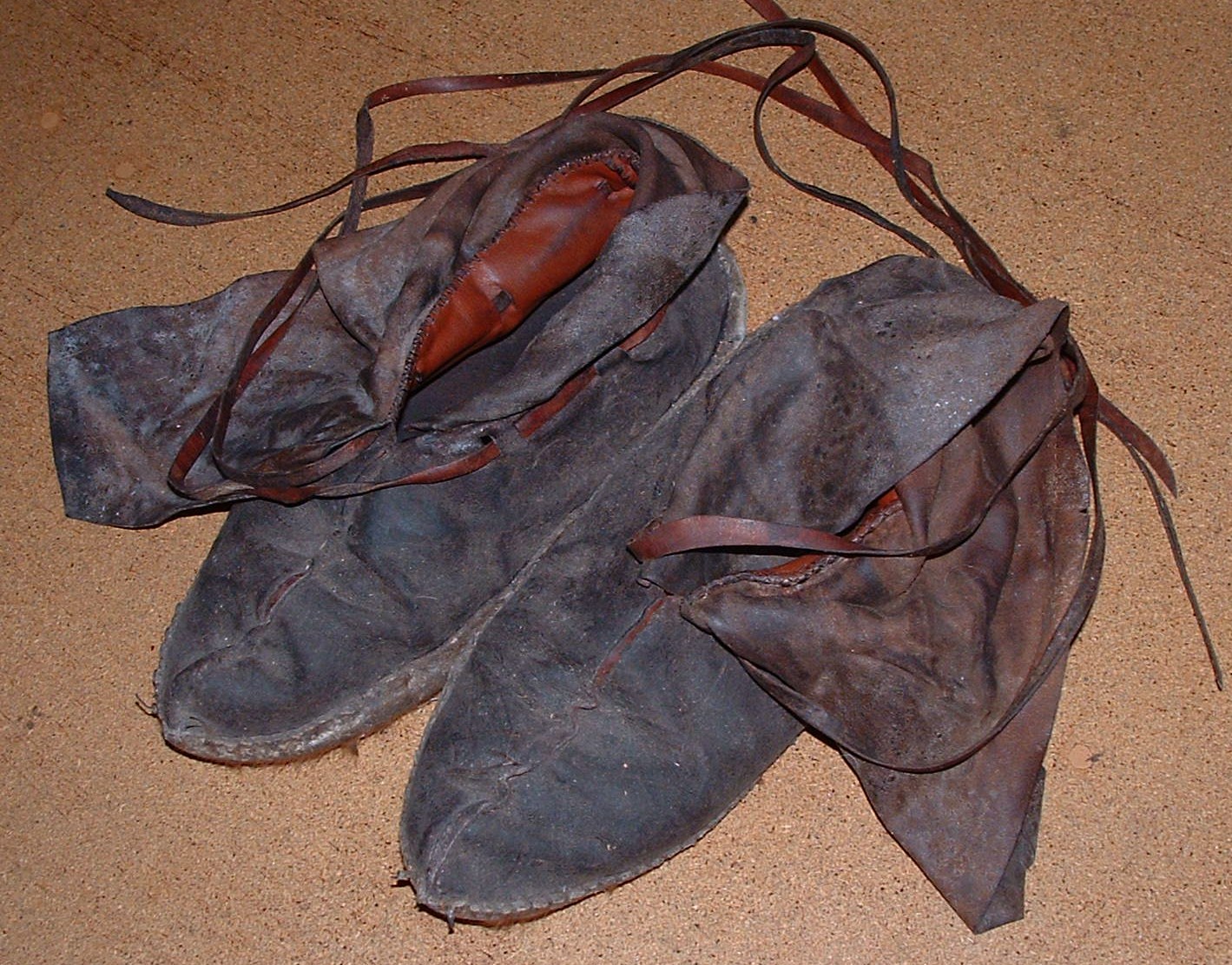
There are many plant fibres that can be used to make cordage, but the only one I have found so far, in the New England Area that is strong enough to withstand the strain of fire-bow fire lighting, is the inner bark of the stringy bark tree. If you do not have this tree available, then you must either experiment with other plant fibres in the area, I have been told that nettle fibre makes a good cordage, or you must use some other resource, such as animal skin, corded strips of clothing material or leather moccasin ties or bootlaces. In an emergency try whatever you have on hand first that you think may be suitable. Don’t forget the length cut from the leather waist belt. If it is not long enough then you can splice or tie two lengths together. Just keep the join to one end and not in the middle of the bow.

To use the inner bark of the stringy bark tree you must first strip away the outer bark. If you use a tomahawk or hatchet or knife to remove the outer bark you may find that the inner bark will come away with the outer bark. In which case peel away the inner bark from the outer bark afterward. If you pound on the outer bark with the poll of your tomahawk or using a rock, the outer and inner bark will peel away from the tree relatively easily. Whether stripping the inner bark from the tree trunk or the outer bark, the tree must be alive and the bark in a “green” state and the lengths of inner bark must be in as long a length as you can produce.

The material you use to make the cordage bowstring has to be folded length-ways. If you have enough length to make the string in one piece once folded, then fold to equal lengths. If however you do not have enough length in the one piece, and you need to splice in another length, then fold the material with one side longer than the other.

Now hold the length of material/inner bark between your teeth at the fold. Holding one length in one hand and the other side in the other hand twist both lengths separately in the same direction by rolling them between thumb and forefinger. Once each length is twisted quite tightly, fold them over one another in the opposite direction to the way you were twisting them. Do this until you reach the required length you need.

Fig.16.
The author making cordage using strips of cloth, by holding the upper end between his teeth, whilst twisting with his fingers(and yes, if you are not careful, it is easy to cord ones beard into the cordage!).When the cordage gets longer, you can take it from your teeth, and place it beneath your foot.

If you have to splice in an extra length, then stop short of the end of the shortest length, and separate the end into a fork. Now taking up a new piece of material/inner bark, split this into a fork also and slip these forked ends into one another and continue twisting and cording.


Fig.17.
Showing the splicing of a join, and the completed cording of that join.

This cordage may only last the one time, so each time you want to make fire in this way you may need to make a new bowstring. Using stringy bark I have occasionally been able to use the same string twice, but don’t depend on it. In a survival situation you need to make sure you keep the fire going once lit. If you have to move for any reason and take the fire with you, use a large piece of tinder, or a long length of the yacca flower stem, and set it smouldering. This will last a good while and you can carry it with you and use it to start your next fire.