A LIVING HISTORY BLOG.

18TH CENTURY LIVING HISTORY IN AUSTRALIA.
Showing posts with label medical. Show all posts

Thursday, 3 October 2019

Medical Use of Honey in the 17th & 18th centuries. Documentation.


18th Century Medicinal Uses for Honey.
 ‘A poultis for a Swelling by My Aunt Dorothy Pates’, for example, used honey as a binding agent. Another recipe, said to be ‘approved by the best doctars [sic]’ used a clove of garlic saturated in fine English honey and put in the ear for eight days to cure pain and restore hearing.   
 Abigail Smith and others, ‘Collection of medical and cookery receipts’ (c. 1700).  Wellcome Library, London, MS 4631, f. 7r.
 Ibid., f. 23 v

“Cut the white heels from some red rose buds, and lay them to dry in a place where there is a draught of air; when they are dried, put half a pound of them into a stone jar, and pour on them three pints of boiling water; stir them well, and let them stand twelve hours; then press off the liquor (liquid) and when it has settled, add to it five pounds of honey; boil it well, and when it is of the consistence of thick syrup, put it by for use. It is good against mouth sores, and on many other occasions.”
‘Honey of Roses’ and The Family Herbal by Sir John Hill 1759.
The leaves being applied with honey to running sores or ulcers, do cleanse them.
SYRUPS MADE WITH VINEGAR AND HONEY.
The Project Gutenberg EBook of The Complete Herbal, by Nicholas Culpeper
17th Century.


Friday, 3 August 2018

Wilderness Living. Therapeutic Uses & Other Benefits and Claims of Agave Americana/Century Plant.

Image credit & copyright Author.
This plant can also be found growing wild in Australia.
The inner core of the flower stem makes excellent tinder.
SWEETENER
MEDICINE
SOAP
NEEDLE AND THREAD
ROPE
FOOD
PAPER
FIREWOOD
TINDER from the inner core of the flower stem.


Sunday, 4 February 2018

Doc Paul's Salt Horn.

One of the best replica salt horns I have seen, lovely work. Not too flashy, but tasteful.

Photo & horn by Paul J Schonbrun.

Friday, 20 January 2017

Apothecary's Cabinet, 1730.


Apothecary's Cabinet, 1730, Delft. Veneered with walnut and olive wood in oak core. Contents complete. The small central alcove can be removed to reveal a hidden pulley system that opens a set of secret drawers.

Photo: Rijksmuseum

Thursday, 21 January 2016

Historical Trekking Useful Australian Plants. The Bloodwood Tree.

Use in bush medicine.
Occasionally a bloodwood tree will shed a piece of bark, hence opening a "wound" through which a blood-like kino will flow. The sap flows until it crystallises, covering up the hole in the bark. Australian Aboriginals collect this substance as bush medicine. They apply the sticky gum directly to sores or cuts and it works as an antiseptic. If the sap is in a dried form, it can be crushed into powder and boiled in water to use as an antiseptic wash.[6]
Another use of the bloodwood sap by Aboriginal people is to tan "kangaroo-skin waterbags".[1]


Sunday, 22 November 2015

Trekking Finds. Foraging. Fire, Food & Drink.

We left early this morning on a scout, it was overcast but I saw no immediate threat of rain. We travelled up over Dragon's Tol & went as far as Hazard Valley, the latter named for a close family friend who went under before he could get his cabin built in that valley. These attached images are from this scout.
This is a Polypore Bracket Fungus, likely a Lietiporus Portentosus or Ryvardenia Cretacea, they can be difficult to tell apart, but both make excellent tinder & are worth collecting if you are getting low on tinder.

This is another Polypore Bracket Fungus that grows in the North, America & England I believe. This is Piptoporus Betulinus or Birch Polypore.


An Australian Native Bee hive in a dead tree (New England NSW). Honey is a good food, can be added to water & keeps for years, & it has antiseptic properties & can be used on open wounds.


These native bees have no sting.

Goonagurra/Grass Tree, Kangaroo Tail, or Yacca. There is a similar plant that grows in America known as Yucca. This Yacca plant cant be used for making spear shafts, you can suck on the nectar or put the flowers in water to make a tasty drink. Natives have been known to let this ferment to make an alcoholic drink. The ends of the leaves once pulled can be eaten & the sap can be used as a glue. When the flower stems have dried, the inner core makes good tinder. Dried leaves makes excellent light kindling.

Saturday, 19 September 2015

Reading Glasses.

Reading glasses were in use from very early on. But what I was looking for was a pair of spectacles that I did not have to hold in one hand, and did not have a tendency to fall off my face every time I moved my head. These were not just needed for reading, they were also needed for the cleaning and dressing of wounds, and for repairs on my guns if ever required.
I could not find anything suitable for the early to mid 18th century, all seemed to date to the American Revolution. So listening to my own advice of "earlier is better than later", I purchased a pair of 17th century reading spectacles from Trevor Timms in England (trevortimms@blueyonder.co.uk). 
These spectacles are sturdy to say the least, & there are no arms to get broken. They are secured to the head by a cord, ribbon or leather tie, so there is no chance of them falling off my head, and the optometrist had no problems fitting my prescription lenses. 


My spectacles case is a copy of an original made by my youngest son.


The alternative to reading spectacles is the reading glass. The one below I made using an old magnifying lens, copied from an original including the case.


Saturday, 24 August 2013

18th Century Wilderness Living; Pack Items.

18th Century Wilderness Living; Pack Items.
When living in the wilderness you need to be able to look after yourself, your tools & your equipment. Even if your wife/husband is with you, you still need to be self-reliant. In this way, should you become separated for any reason, then you are both able to survive.

  The awl is used for repairing and making leather and tree bark items, such as moccasins, pouches, belts knife sheaths, containers, and pack straps. It can also function as a tool to remove large splinters. In the image above you can see a wooden sheath bound in waxed linen thread. This wooden sheath is made to fit over the metal shaft of the awl. The top example is one that I made myself, which I now use at home. The lower one is an original awl which once belonged to my Father. It is this lower awl with the wooden sheath that I carry in my pack at all times.
Damage to clothing and equipment is bound to happen sooner or later when travelling in the wilderness; tears in clothing lets in the cold air in winter and the mossies during summer. A tear in your oilcloth will let in the rain. If such damage is left unrepaired, then it is inevitable that these tears will increase in size over time, so it is important to repair them as soon as possible. To this end most woodsrunners carry some for of sewing equipment.

This is my “Housewife”, it contains; needles, two sizes of linen thread, spare buttons, rolls of sinew, and beeswax for waxing the thread and sealing any tears in my oilcloth.
I was once operated on without any rum to dull my brain and only a piece of rolled rag to place between my teeth. I was younger then and yet was so disabled at this time that I fear in my now later years I might not fare so well. So it is then that I determined to carry with me some form of medical equipment and a bottle of rum.


  The rum bottle I have secured in an old leather drawstring pouch. My medical provisions though very little do hopefully serve my needs in the case of injury or snake bite.
A blade is only as good as it is kept, and a blunt blade is of little use at all. So I carry a small metal file and a whet stone. Creek stones can be used, I used one for some time myself, but as soon as I was able I secured a proper whet stone.

These two items are well worth the extra weight, though in truth they both weigh little, but every small item combined with other small items does add weight to your pack.
Keeping reasonably clean is important to me, even though I may go for long periods of time without washing anything but my hands and face. Nothing is more refreshing to me than washing in a cold forest stream first thing in the morning, & after a long walk dipping my feet in cool water and then drying by the fire.


 I have at times washed using wood ashes from my fire, and at other times sand, but nothing compares to using soap. I carry a piece of soap and a broken piece of an ivory comb in a cloth bag.

Wednesday, 26 June 2013

New Image of my Medical Kit.

I carry this in the top of my knapsack. Left to right: Salt, bottle used as an eye wash glass, iodine, package containing suture needle, suture thread, & Paracetamol, scissors, tweezers, bandages, tweezers, & forceps.

Tuesday, 25 December 2012

What I got for Xmas, and Fly Fishing.


A friend came out on Sunday & gave me some instruction on 21st century fly fishing. A lot harder than 18th century fly fishing. This modern fly fishing line is far longer than an 18th century fly fishing line and the method used to cast this modern line needs far more skill and coordination.
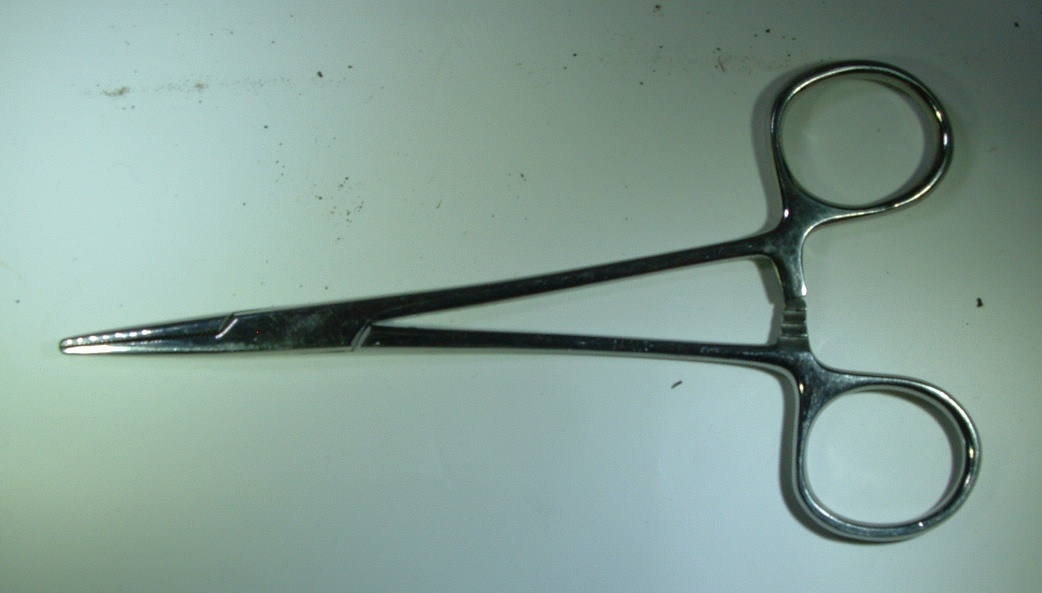
My friend Deer Slayer also showed me a pair of forceps that he uses to work on flies, and to remove hooks from the fish. I had been wanting some forceps for ages for suturing, just in case I should need them. Now I had a double purpose for getting some. 


"THe rod light and taper, thy tackle fine,
  Thy lead ten inches upon the line;
Bigger or lesse, according to the stream, 
  Angle in the dark, when others dream:
Or in a cloudy day with a lively worm,
  The Brandlin is best, but give him a turn
Before thou do land a large wel grown Trout.
  And if with a flye thou wilt have about, 
Overload not with links, that the flye nay fall
  First on the stream, for that's all in all.
The line shorter than the rods, with a naturall flye:
  But the chief point of all is the cookery".
BARKER'S DELIGHT:  OR, THE ART OF A N G L I N G.1659

Fly fishing from a boat requires a shorter rod and shorter line:

"There is no better sport then whipping for Bleaks in a boat in a Summers 206evening, with a hazle top about five or six foot long, and a line twice the length of the Rod".

Fishing from the bank requires a long rod and a long line, but not as longer line as used these days.

"Let your rod be light, and very gentle, I think the best are of two pieces; the line should not exceed (especially for three or four links towards the hook) I say, not exceed three or four haires; but if you can attain to Angle with one haire; you will have more rises, and catch more fish. Now you must bee sure not to cumber yourselfe with too long a Line, as most do: and before you begin to angle, cast to have the wind on your back, and the Sun (if it shines) to be before you, and to fish down the streame, and carry the point or tip of the Rod downeward; by which meanes the shadow of yourselfe, and Rod too will be the least offensive to the Fish, for the sight of any shadow amazes the fish, and spoiles your sport, of which you must take a great care".
THE COMPLETE ANGLER;OR, THE CONTEMPLATIVE MAN’S
RECREATION.
By ISAAK WALTON. 1653.
In Summary:


Yesterday, these forceps arrived in the mail from a very close friend of mine, Grey Wolf. How on earth did he know! Just what I wanted. These of course are modern locking forceps, but they are not a lot different from various types of 18th century forceps. See below:


18th century case of suturing needles. Just like the modern ones I carry in my medical pouch.


Grey Wolf also sent me this excellent kettle hook which he made himself.

Thank you my Friends, Deer Slayer and Grey Wolf. Very much appreciated.
Regards, Keith.