A LIVING HISTORY BLOG.

18TH CENTURY LIVING HISTORY IN AUSTRALIA.
Showing posts with label Daniel Defoe. Show all posts

Sunday, 29 April 2012

Alexander Selkirk aka Robinson Crusoe's Drinking Cup.

Author's edited image.


The drinking cup, formed of a small

cocoa-nut shell, presents a simple ornament

scratched with a knife with Selkirk's

own hand, is three inches and a quarter

deep, by two and a half inches diameter.

Mrs Gillies assured the writer, it had

formerly a silver foot and stem, but that

her father had disposed of it. Wanting

that appendage, Sir Walter and Constable

took it to Edinburgh, where the present

foot and stem of rosewood, nearly three

inches high, was added, making the whole

about six inches in height. They also

added the silver band or fillet that

encircles the outside of the cup, bearing Drinking-Cup of Alexander Selkirk,

this inscription—The Cup of Ala. Selkirk,

Tuesday, 5 July 2011

Robinson Crusoe?


I have often thought about what I would get off the ship if I had the chance, knowing that I could be marooned for a long time. I quite enjoy the thought of taking anything I want from what is available. But what I notice most in such movies is the way they so easily discard possible useful items that they find. No matter how much I had, in such a situation I would discard nothing, & it makes me wonder if any thinking man would actually act in such a way.
If we were to have to abandon our homes for any reason & were forced to flee to the wilderness, we would not have the luxury of carrying barrels of gunpowder plus several pistols & muskets. We would have to choose very wisely what we took & what we must leave behind.

Saturday, 24 July 2010

Alexander Selkirk's survival on Juan Fernandez Island 1704-1709.

The story of Robinson Crusoe written by Daniel Defoe, is believed to have been inspired by the survival story of Alexander Selkirk. Here is the list of items he was left with when abandoned on Juan Fernandez Island in 1709.


Author's Note: Does anyone know what an 18th century "flip-can" is?

Monday, 19 July 2010

Robinson Crusoe.

I am not a fan of Brosnan, or the new Robinson Crusoe movie, but there are a few parts that I like.

Saturday, 29 May 2010

Daniel Defoe and Jonathon Swift.

For I had about me my flint, steel, match, and burning glass.


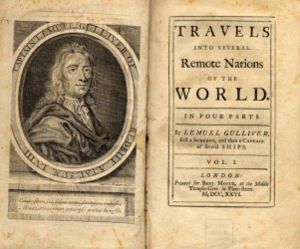
Gulliver’s travels, 1726.


Swift, Jonathan, 1667-1745 


Provided with candles and a tinderbox, which I had made of the lock of one of the muskets, with some wildfire in the pan.


Robinson Crusoe. 1719.   


Daniel Defoe.


One of my favourites, a classic adventure story. Robinson Crusoe.

Sunday, 14 February 2010

17th century and 18th century Survival.


I have no doubt that the following did happen, for it is a true story. But I doubt that all was done in the way it is described. For instance the fire was needed first before any hardening of steel could be done, and this chap would know that he could make fire by simply using the lock on his flintlock gun. The author obviously knows less than the Indian, and is assuming how things were done.


This story, and the story of Alexander Selkirk are believed to be the basis for the well known tale of:

"The Life and Strange Surprizing Adventures of Robinson Crusoe of York, Mariner: Who lived Eight and Twenty Years, all alone in an un-inhabited Island on the coast of America, near the Mouth of the Great River of Oroonoque; Having been cast on Shore by Shipwreck, where-in all the Men perished but Himself. With an Account how he was at last as strangely deliver'd by Pyrates".

Written by Daniel Defoe, we all know it as simply Robinson Crusoe.

This Indian lived here alone above three years and, although he was several times sought after by the Spaniards, who knew he was left on the island, yet they could never find him. He was in the woods hunting for goats when Captain Watling drew off his men, and the ship was under sail before he came back to shore. He had with him his gun and a knife, with a small horn of powder and a few shot; which, being spent, he contrived a way by notching his knife to saw the barrel of his gun into small pieces wherewith he made harpoons, lances, hooks, and a long knife, heating the pieces first in the fire, which he struck with his gunflint, and a piece of the barrel of his gun, which he hardened; having learnt to do that among the English. The hot pieces of iron he would hammer out and bend as he pleased with stones, and saw them with his jagged knife; or grind them to an edge by long labour, and harden them to a good temper as there was occasion. All this may seem strange to those that are not acquainted with the sagacity of the Indians; but it is no more than these Moskito men are accustomed to in their own country, where they make their own fishing and striking-instruments, without either forge or anvil; though they spend a great deal of time about them.


Other wild Indians who have not the use of iron, which the Moskito men have from the English, make hatchets of a very hard stone, with which they will cut down trees (the cotton-tree especially, which is a soft tender wood) to build their houses or make canoes; and, though in working their canoes hollow, they cannot dig them so neat and thin, yet they will make them fit for their service. This their digging or hatchet-work they help out by fire; whether for the felling of trees or for the making the inside of their canoe hollow. These contrivances are used particularly by the savage Indians of Bluefield's River, described in the 3rd chapter, whose canoes and stone hatchets I have seen. These stone hatchets are about 10 inches long, 4 broad, and three inches thick in the middle. They are ground away flat and sharp at both ends: right in the midst and clear round it they make a notch, so wide and deep that a man might place his finger along it and, taking a stick or withe about 4 foot long, they bind it round the hatchet head, in that notch, and so, twisting it hard, use it as a handle or helve; the head being held by it very fast. Nor are other wild Indians less ingenious. Those of Patagonia particularly head their arrows with flint, cut or ground; which I have seen and admired. But to return to our Moskito man on the isle of Juan Fernandez. With such instruments as he made in that manner, he got such provision as the island afforded; either goats or fish. He told us that at first he was forced to eat seal, which is very ordinary meat, before he had made hooks: but afterwards he never killed any seals but to make lines, cutting their skins into thongs. He had a little house or hut half a mile from the sea, which was lined with goat's skin; his couch or barbecue of sticks lying along about two foot distant from the ground, was spread with the same, and was all his bedding. He had no clothes left, having worn out those he brought from Watling's ship, but only a skin about his waist. He saw our ship the day before we came to an anchor, and did believe we were English, and therefore killed three goats in the morning before we came to an anchor, and dressed them with cabbage, to treat us when we came ashore. He came then to the seaside to congratulate our safe arrival.


http://gutenberg.net.au/ebooks05/0500461h.html