18TH CENTURY LIVING HISTORY, HISTORICAL TREKKING, AND PERIOD WILDERNESS LIVING.
A LIVING HISTORY BLOG.
18TH CENTURY LIVING HISTORY IN AUSTRALIA.
Showing posts with label North America. Show all posts
Saturday, 23 May 2020
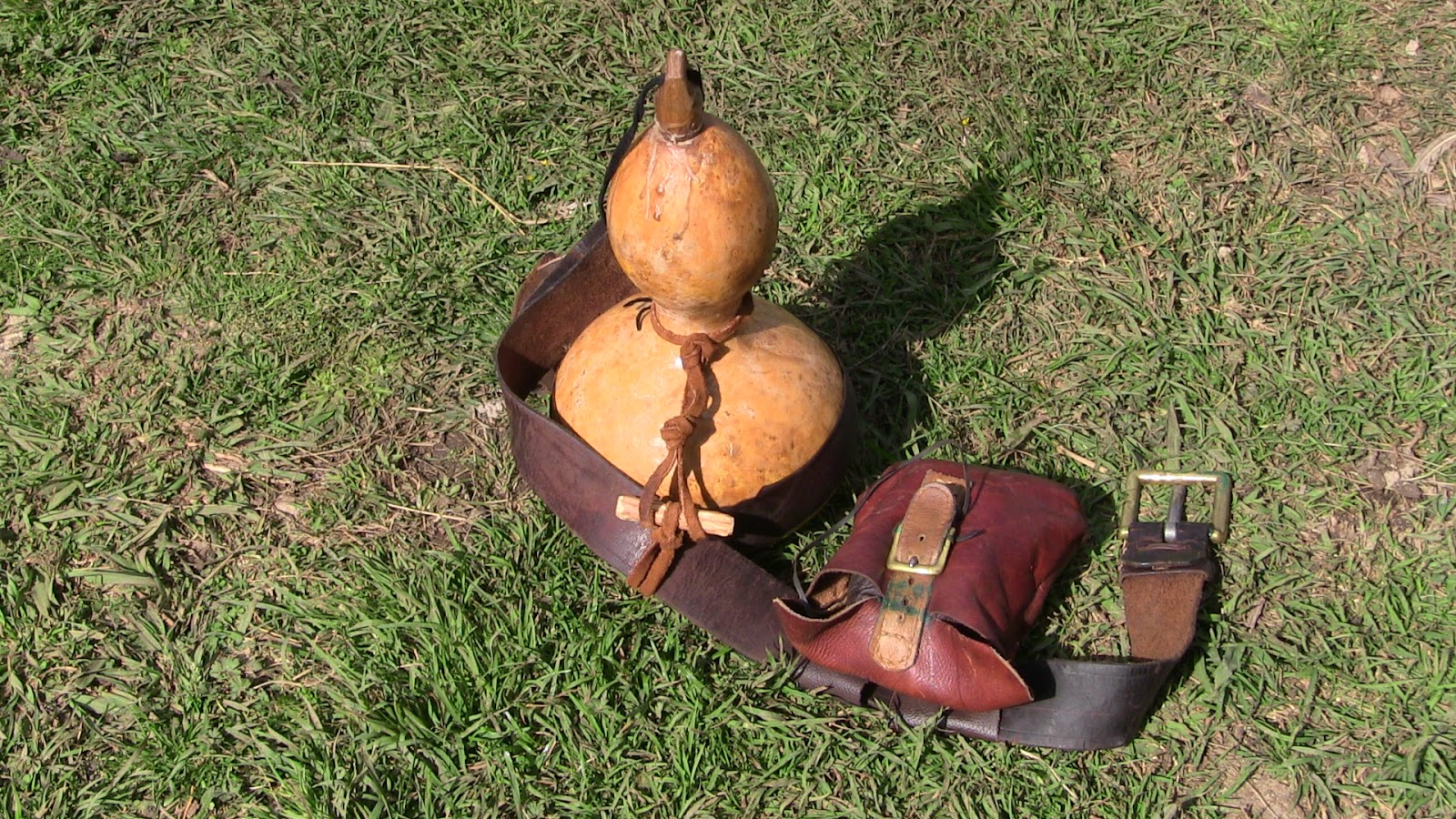
My Finished Bottle Gourd Water Bottle.
Labels:
18th century,
Africa,
bottle gourds,
camping,
colonial,
gourd containers,
Historical,
journeying,
living history,
North America,
trekking,
water bottles,
woods women,
woodsmen,
woodsrunners
Australia
Australia
Friday, 28 December 2018
Steel Traps & a Brief History of their use. PDF Link.
My thanks to MedicineMaker for this link.
Keith.
Keith.
Labels:
animals,
bear,
beaver,
Historical,
living history,
New World,
North America,
PDF,
steel traps,
trappers,
trapping,
traps,
wolf,
woodsmen,
woodsrunners
Australia
Australia
Saturday, 2 June 2018
Area Students Explore Living History
Labels:
18th century,
colonial,
education,
living history,
New World,
North America,
Ohio,
settlement,
students,
woodland Indians
Australia
Ohio, USA
Tuesday, 19 December 2017
17C American Women: 1629 A few problems in early New England
17C American Women: 1629 A few problems in early New England: A Short and True Description of New England by the Rev. Francis Higginson, written in 1629 Printed for Michael Sparke, London, 1630....
Labels:
17th century,
colonial,
living history,
New England,
North America,
settlement,
survival
Australia
New England, USA
Thursday, 13 April 2017
Chocolate Preparation & Serving Vessels in Early North America.
An 18th century chocolate house in London England.
Labels:
18th century,
Australia,
chocolate,
colonial,
drinks,
England,
food,
living history,
North America
Australia
Australia
Sunday, 20 November 2016
18th Century Toilets/Outhouses.
Actually in some country areas I don't think much has changed in 300 years. We still have an outhouse up at the cottage, & the main house composting toilets are not that much different. When you are off grid and have to supply your own water, modern flush toilets are not an option.
The cottage outhouse.
Labels:
18th century,
19th century,
Australia,
bush,
country,
England,
europe,
Historical,
living history,
North America,
off grid,
outback,
outhouses,
toilets
Australia
Australia
Tuesday, 15 November 2016
El Galeón e is a replica of a ship used by the Spanish Crown between the 16th and 18th centuries.
El Galeón e is a replica of a ship used by the Spanish Crown between
the 16th and 18th centuries.
I wish to express my gratitude and appreciation to Jason Stechele for the following images. Rarely do we get to see such images free of modern sights.
Keith.
Photographs By Jason Stechele (Copyright).
New Art By Robert Griffing.
Cherokee Country By Robert Griffing.
Crossing Slippery Rock Creek By Robert Griffing.
Sisters By Robert Griffing.
LORD NELSON"S GALLERY Est. 1990
27 Chambersburg St. Gettysburg PA 17325 | 800-664-9797
web: www.lordnelsons.com
| email: info@lordnelsons.com
Labels:
18th century,
artist,
Easter woodland Indian art,
frontier art,
living history,
Lord Nelson's Gallery,
modern period art,
North America,
paintings,
prints,
Robert Griffing
Australia
United States
Saturday, 12 November 2016
Research Update on Oilcloth Recipes.
Waterproofing ingredients for oilcloth.
2.2.1 Drying Oil Recipes
A source from 1758 describes the
preparation of drying oil (mainly intended for “coarser work”) as involving
boiling or simmering the oil in conjunction with a variety of driers used at
once, including litharge, white lead, red lead, lead acetate, and sulfate of
zinc (Dossie
1758, 148–49). Reports on the color of these early drying oils indicate
that they could be very dark: “a good drying oil is not to be had of them [the
colormen], what they furnish us with being so highly colored as to be improper
for the purposes of fine painting, and only can be admitted in the darkest
shades or back grounds” (Williams
1787, 25). By contrast, recipes provided in the artists' oil painting
instruction books were largely directed toward the preparation of a drying oil
that would be as colorless as possible; these tended to include only one type
of drier.
One of the preferred methods was to use
metallic lead, either by agitating the oil with lead shot or by “grinding” the
oil with a leaden pestle in a lead-lined mortar. Prolonged storage in a leaden
vessel was also recommended. Litharge (and very occasionally white lead) was
sometimes substituted for metallic lead and used in a similar manner. For
example, Rembrandt Peale's method was to add 2 tablespoons of litharge to and
8-ounce phial which was then filled with linseed oil. It was to be kept exposed
to the sun or near a fire for a few days and shanken frequently (Sully
1873, 33).
Litharge was available in two varieties:
silver and gold. Silver, or yellow litharge, was heated higher and was reported
to be a harder material than the gold, or red litharge. Field
(1841, 108) recommended the silver over the gold because it was more highly
oxidized and would therefore make a more effective drier. Sources warned that
litharge was often contaminated with iron or copper oxides and noted that it
contained significant amounts of silica as an impurity. Although it appeared
frequently in drying oil recipes, litharge was not recommended to artists for
use by itself (to be added directly to the colors on the palette), and it was
not listed as a separate article in the colormen's catalogs.
The earliest recipes for drying oils in the
sources consulted contained the highest proportion of driers to oil. In later
publications, the ratio of 1 part drier to 8 parts oil or 1 part drier to 16
parts oil became more common. The preparation of drying oil was dangerous
because of the risk of fire and required skilled workmen to achieve a
consistently high-quality product. Judging from orders for both oil and driers,
it appears that Roberson's prepared its own drying oil between 1830 to 1853.
Sometime after, the firm consistently purchased drying oils ready-made.
OIL PAINTS
Linseed oil, obtained by crushing flax, was
the most important oil for use in oil paints. Its rather yellow colour was a
drawback, and for more delicate shades other more expensive oils, like walnut
or poppy seed, were sometimes used. These are all 'drying oils' - they absorb
oxygen from the atmosphere to form a hard flexible film. This reaction could be
accelerated by the addition of driers, notably litharge or lead monoxide, to
the linseed oil. Grinding white lead (basic lead carbonate) with linseed oil produced
a mixture called 'lead soap', which was an outstandingly flexible and adhesive
coating. It also had excellent opacity, or covering power, whilst many other
white pigments, such as chalk, became almost transparent in oil. White lead
also helped the linseed oil to dry, unlike some other pigments, such as
lampblack, which slowed the drying process.
White lead had been known since antiquity
to be the best white pigment available for use with drying oils. It was made by
suspending sheets of lead metal over vinegar in covered pots. These were then
laid in a dung heap to keep warm for several weeks to allow the fumes from the
vinegar to react with the lead. After removal, the white lead powder (lead
carbonate) which formed on the surface of the sheets was ground to a fine
powder. This was called the Dutch or stack process and was used until the late
19th century when the more efficient chamber process was developed.
The white lead was originally ground with
the linseed oil by hand using a Muller and Slab, then later by machines such as
cone mills or edge runners driven by horse or steam power. Paints typically
contained over 80 per cent white lead with the balance made up of the linseed
oil binder and turpentine as the solvent. The balance between these two dictated
the properties of the paint. More oil than turpentine gave a well-bound but
glossy paint that was more resistant to the weather, and was suitable for
outside and inside use; more turpentine than oil gave a matt finish that was
suitable for indoor use only.
To make a Composition for rendering Canvas,
Linen, and Cloth durable, Pliable, and Water-proof. To make it Black. First,
the canvas, linen, or cloth is to be washed with hot or cold water, the former
preferable, so as to discharge the stiffening which all new canvas, linen, or
cloth contains; when the stiffening is perfectly discharged, hang the canvas,
linen, or cloth up to dry; when perfectly so, it must be constantly rubbed by
the hand until it becomes supple; it must then be stretched in a hollow frame
very tight, and the following ingredients are to be laid on with a brush for
the first coat, viz., 8 qts. of boiled linseed oil, 1/2 oz. of burnt umber, 1/4 oz. of sugar of
lead, 1/4 oz. of white vitriol, 1/4 oz. of white lead.
The above ingredients, except the white lead, must be ground fine with a small quantity of the above-mentioned oil, on a stone or muller; then mix all the ingredients up with the oil, and add 3 oz. of lampblack, which must be put over a slow fire in an iron broad vessel, and kept stirred until the grease disappears. In consequences of the canvas being washed and then rubbed, it will appear rough and nappy; the following method must be taken with the second coat, viz., the same ingredients as before, except the white lead; this coat with set in a few hours, according to the weather; when set take a dry paint-brush and work it very hard with the grain of the canvas; this will cause the nap to lie smooth.
The third and last coat makes a complete jet-black, which continues its color: Take 3 galls. of boiled linseed oil, and ounce of burnt umber, 1/2 oz. of sugar of lead, 1/4 oz. of white vitriol, 1/2 oz. of Prussian blue, and 1/4 oz. of verdigris; this must be all ground very fine in a small quantity of the above oil, then add 4 oz. of lampblack, put through the same process of fire as the first coat. The above are to be laid on and used at discretion, in a similar way to paint.
CYCLOPEDIA OF PAINTING
To Make Gold Size. Take Gum Animi,
Asphaltum, of each 1 ounce, minium litharge of gold and umber, of each %
ounce, reduce all into a veryfine powder, and add to them, of linseed oil 4
ounces, of drying oil 8 ounces, digest over a gentle fire that does not flame,
so that it may only simmer and bubble up, but not boil, for fear it should run
over and set the house on fire.
Keep constantly stirring with a stick till
all the ingredients are dissolved and incorporated, and do not leave off
stirring it till it becomes thick and ropy, and is boiled enough, let it stand
till it is almost cold, and then strain it through a coarse linen cloth, and
keep it for use. To prepare for use, mix with oil of turpentine during heating,
and strain again, add vermilion, and thin as required with turpentine. http://www.forgottenbooks.com/readbook_text/Cyclopedia_of_Painting_1000230154/405
Litharge is pure lead and when boiled with linseed
or Walnut oil creates what is called black oil. Carbonate of lead contains
moisture which is forced out by the heat. The lead fumes are poisonous and the
oil becomes poisonous.
Lead is rusted and becomes white ( flake
white). When burned again it becomes red oxide (used in painting barns). When
fired again it has the look of a light gray, thus Litharge of silver, when
fired again it becomes a soft yellow in colour,(Litharge of gold). When
Litharge of gold is mixed with one of the above oils and heated between 180 and
200 degrees centigrade the oil begins to smoke and turn brownish. The litharge
at 150 degrees begins to turn into scrap and sticks to the spatula. At
210 degrees the deposits soften and mixes with the oil. At 250 the lead is permanently
suspended in the oil and the colour is of clear brown coffee. It is the black
oil developed during the 1400 century. I can't caution you enough about the
danger of lead poisoning.
"The cloth was water-proofed by coating it with a boiled linseed and
"litharge of gold" After several coats of the oil preparation
were dry, the cloth was well sealed and remained flexible." 1758.
Waterproofing
By Gene Hickman
Manuel Lisa Party - Montana Brigade
Whether you make or purchase a haversack or
knapsack you may want to waterproof them. One easy method is to impregnate it
with beeswax. This also works well for any light cotton canvas, hemp or linen,
such as used in tinder bags, meat bags, etc. You will need:
Beeswax
Old paint brush
Empty disposable butter tub
Newspapers
Old iron or hair dryer
Spread your haversack on several layers of
newspapers to absorb spilled wax. Place beeswax in butter tub and heat in
microwave oven until melted. “Paint” the melted wax on the haversack with the
paintbrush. You can reheat wax anytime as it starts to harden again. Try to get
wax to soak in the seams. It will look really ugly, but don’t give up. Now take
the old iron and start to iron the wax into the material or apply heat with the
hair dryer. You can use a new iron, but you don’t have to clean an old one. Good
idea to ask wife first. The hot iron or hair dryer melt the fabric and it will
start absorbing it. Continue until you have covered the entire bag. It will
darken linen bags and give it a good old time look. As you use the item you
will get lighter colored creases in the fabric, which makes it only look
better. I have also mixed a small amount of bear grease with the wax. On white
canvas the wax will give the material a yellow look, so if you add some artists
acrylic colors (burnt umber, brown, etc.) it will darken the fabric and give
you a more satisfactory look.
Another waterproofing method, which can be
used on packs, haversacks, ground cloths, trail tarps or tents, is to put a
pound of beeswax in a quart of turpentine and paint it on. You have to heat
both of these and mix them hot. A very hazardous procedure as they are both
flammable. Some also add hot linseed oil to the turpentine beeswax mix. Then
you wait for all of the turpentine and/or linseed oil to evaporate.
Donald Jackson's book "Letters of the
Lewis and Clark Expedition and Related
Documents,” contains an invoice from Mr. Richd. Wevill, dated June 15, 1803 in which he bills the government for:
107 yds of brown Linen
46 1/2 yds of (Russia) Flanders sheeting
10 yds of 7/8 Country Linen
Oiling all of the linen and sheeting and
making the brown linen into 8 tents and the Russia Sheeting into 45 bags.
If you want to paint a haversack, pack,
sail cloth or tarp, the most common “period paint” was called Spanish Brown.
"Spanish Brown," which is red iron oxide paint, was one of the most
common colours of oilcloth in the 18th and 19th century frontier. This was
linseed oil with iron oxide mixed in it. It was commonly used to waterproof
tarps, military packs and to paint wood. Use boiled linseed oil and powdered
iron oxide (an earth pigment). Iron oxide comes in a variety of shades from a
yellow to a deep rust brown. The colour depends on the purity and temperature
the earth was heated too, either
geologically or artificially. These “earths” are all used in making
pottery glazes, and can be bought at pottery making shops or suppliers. The
iron oxide seems to act as the filler, filling the pores in the fabric, and it
is important in the process.
To make it simply mix iron oxide in linseed
oil. It can be mixed at about 1 – 1 ½
cups iron oxide per quart of linseed oil. Other formulas call for 3 cups
iron oxide per 2 quarts of linseed oil and 4 cups per 3 quarts. I have just
“eye-balled” the mix to what looked good and it was thick like a thick latex
paint. It can take several weeks for the linseed oil to dry out on wood and
fabric. The higher the humidity and the lower the temperature, the longer the
drying time. Drying time in some areas can be several weeks and it will still
be “tacky.” If you lay the fabric flat as described below you’ll have to paint
a side and let it dry before painting the other side. However, if you hang the
item to dry you may paint a side, flip it and then paint the other side. The
drying process can be speeded up, by adding some “Japan Dryer”. The fabric will
often be “tacky” after drying. You can take something like a pumice stone and
rub off the tackiness. This seems to work better if it is dried in the shade
rather than direct sunlight.
Linseed oil is highly flammable and rags or
papers saturated with linseed oil can spontaneously ignite. Do this project
outside and dry out all rags etc. before throwing them away.
There are also several paints on the market
called “American Pride Brand” barn paint in flat red (sold by Hardware Hank)
and Van Sickle red barn paint (sold by ACE Hardware), these may also be
obtained at a farm co-op or a well stocked paint store. The only ingredients
are boiled linseed oil, red iron oxide, and calcium carbonate[lime]. The
calcium carbonate works as a dryer. Spread out your canvas and paint the one
side and allow to cure. Flip it over and paint the other side and allow it to
cure. If needed you may flip it back over and apply a second coat to the first
side. This process takes days to allow the coats to dry. Several thin layers
are better than thick layers of paint. I have had pieces of canvas painted with
the homemade linseed oil and iron oxide mixture, and another with the Van
Sickle barn paint. They are indistinguishable in color and texture. The barn
painted canvas does seem to be lighter. These sample pieces have both been
hanging outside in a tree for almost 2 years and look as good as the day I hung
them up.
Iron oxide can also be purchased at art
supply stores and some paint or hardware stores. I get mine from the Archie
Bray Clay Business, http://www.archiebray.org/business.html,
in Helena, MT, where they carry it by the pound. You can e-mail, call or go by
the Archie Bray foundation to get some. It runs about $1.50 a pound when I
checked last. The iron oxide they carry will be from an ochre yellow to a
reddish brown, depending on the purity and its origin. All work fine.
Oiled Umbrellas
Historically, the Chiang Mai umbrella
cluster's central product is the "oiled umbrella". Oiled umbrellas
are made with a carefully carved bamboo frame, then covered with fine cotton,
to which different layers of waterproofing are applied. While the natural
waterproofing method is regarded as somewhat of a local trade secret, it
traditionally includes teak oil and colour pigment. In the modern, more
competitive marketplace, natural materials may be combined with more easily
available synthetic oils and colours.
500ml of raw linseed oil
250gm of beeswax or paraffin wax (beeswax is best so if you can get that, use it)
50ml of mineral turpentine
250gm of beeswax or paraffin wax (beeswax is best so if you can get that, use it)
50ml of mineral turpentine
Place all of the wax inside the small pot
and the small pot inside the larger pot on the stove.
2
Add water to the larger pot until it rises
two inches along the side of the smaller pot.
3
Turn on the heat until the water begins to
boil and then reduce to a simmer.
4
Add water to the larger pot every time
there is less than an inch of water remaining.
5
Turn off the heat when both waxes are
melted and mixed together.
6
Pour the melted wax into a plastic mold and
allow to solidify overnight.
Waterproof the cotton fabric
7
Lay the cotton fabric to be waterproofed
flat on a large, stable surface like a table.
8
Rub the waterproofing wax hard against the
fabric until you cannot add anymore.
9
Turn the hairdryer on high and sweep it
over the waxed cotton fabric until the wax melts into the fibers.
10
Repeat three times for a total of four
coats on each side of the fabric. The fabric will initially be darker and
stiffer with the added wax, but this will ease in time
http://www.ehow.com/how_7858140_make-waxed-cotton-fabric.html
Read more: How to Make Waxed Cotton Fabric | eHow.com http://www.ehow.com/how_7858140_make-waxed-cotton-fabric.html#ixzz2BVxXuUeJ
The same for waterproofing canvas but add
bees wax 50 parts and 50 parts sweet oil. then smoke the canvas.I note that my
great grandfather also used waterproof compound on packs .. 4oz neatsfoot, 8oz
suet,1oz lamp black,1 and 1/2oz litharge,melt together stir untill
cold.Footnote;wary of exploding linseed. Russ Tyenna.
Period Recipe: This recipe is an
approximation, since the original recipe specified "litharge," or
lead monoxide (PbO) which is extremely poisonous. Bright Idea: Leave out the
lampblack, and you have a recipe for a nice civilian waterproof cloth. I
strongly recommend this recipe because it is about as authentic as you can get
without putting life and limb in danger. Materials: • Boiled linseed oil •
Mineral spirits paint thinner (or turpentine) • Lampblack (comes in tubes or
dry powder) • Japan dryer • Corn starch Method: Make a sizing by boiling about
a quart of water and adding cornstarch mixed in cold water until the mixture becomes
a little syrupy. Paint the cloth with the cornstarch sizing and let dry. Mix
one part of boiled linseed oil with one part of mineral spirits. Add lamp black
until the paint is a very opaque black. Add one oz. (2 tbsp) of Japan dryer per
pint. With a brush, paint the cloth with the blackened linseed oil and let dry.
This can take several days. Mix one part of boiled linseed oil with two parts
of mineral spirits. Add one oz. of Japan dryer per pint. With a brush, paint
the cloth with the clear linseed oil mixture and let it dry. This can also take
several days. Two coats of this mixture should give the results you want. (You
can omit the cornstarch sizing if you want, but the oil-based paint will pretty
much soak the cloth.).
http://www.palmettobattalion.org/Oilcloth%20and%20Painted%20Accouterments.pdf
Labels:
17th century,
18th century,
19th century,
camping,
canvas,
cloth,
cover,
historical trekking,
linen,
living history,
North America,
oil cloth,
oilcloth,
recipes,
shelter,
tarpaulin,
waterproofing
Australia
Australia
Sunday, 29 November 2015
Our Three Sisters Garden.
I finally got our Three Sisters Garden finished & planted. The beans will go in when the corn is about 5 inches high.
Labels:
18th century,
Australia,
beans,
corn,
experimental archaeology,
food,
garden,
living history,
maize,
North America,
pumpkin,
squash,
survival,
three sisters
Australia
Australia
Thursday, 5 November 2015
Wednesday, 26 August 2015
Friday, 12 June 2015
NARRATIVE OF THE CAPTIVITY AND RESTORATION OF MRS. MARY ROWLANDSON. Part Thirteen, Final.
Preparing To meet The Enemy By Robert Griffing.
THE TWENTIETH REMOVE
It was their usual manner to remove, when
they had done any mischief, lest they should be found out; and so they did at
this time. We went about three or four miles, and there they built a great
wigwam, big enough to hold an hundred Indians, which they did in preparation to
a great day of dancing. They would say now amongst themselves, that the
governor would be so angry for his loss at Sudbury, that he would send no more
about the captives, which made me grieve and tremble. My sister being not far
from the place where we now were, and hearing that I was here, desired her
master to let her come and see me, and he was willing to it, and would go with
her; but she being ready before him, told him she would go before, and was come
within a mile or two of the place. Then he overtook her, and began to rant as
if he had been mad, and made her go back again in the rain; so that I never saw
her till I saw her in Charlestown. But the Lord requited many of their ill
doings, for this Indian her master, was hanged afterward at Boston. The Indians
now began to come from all quarters, against their merry dancing day. Among
some of them came one goodwife Kettle. I told her my heart was so heavy that it
was ready to break. "So is mine too," said she, but yet said, "I
hope we shall hear some good news shortly." I could hear how earnestly my
sister desired to see me, and I as earnestly desired to see her; and yet
neither of us could get an opportunity. My daughter was also now about a mile
off, and I had not seen her in nine or ten weeks, as I had not seen my sister
since our first taking. I earnestly desired them to let me go and see them: yea,
I entreated, begged, and persuaded them, but to let me see my daughter; and yet
so hard-hearted were they, that they would not suffer it. They made use of
their tyrannical power whilst they had it; but through the Lord's wonderful
mercy, their time was now but short.
On a Sabbath day, the sun being about an
hour high in the afternoon, came Mr. John Hoar (the council permitting him, and
his own foreward spirit inclining him), together with the two forementioned
Indians, Tom and Peter, with their third letter from the council. When they
came near, I was abroad. Though I saw them not, they presently called me in,
and bade me sit down and not stir. Then they catched up their guns, and away
they ran, as if an enemy had been at hand, and the guns went off apace. I
manifested some great trouble, and they asked me what was the matter? I told
them I thought they had killed the Englishman (for they had in the meantime
informed me that an Englishman was come). They said, no. They shot over his
horse and under and before his horse, and they pushed him this way and that
way, at their pleasure, showing what they could do. Then they let them come to
their wigwams. I begged of them to let me see the Englishman, but they would
not. But there was I fain to sit their pleasure. When they had talked their
fill with him, they suffered me to go to him. We asked each other of our
welfare, and how my husband did, and all my friends? He told me they were all
well, and would be glad to see me. Amongst other things which my husband sent
me, there came a pound of tobacco, which I sold for nine shillings in money;
for many of the Indians for want of tobacco, smoked hemlock, and ground ivy. It
was a great mistake in any, who thought I sent for tobacco; for through the
favor of God, that desire was overcome. I now asked them whether I should go
home with Mr. Hoar? They answered no, one and another of them, and it being
night, we lay down with that answer. In the morning Mr. Hoar invited the
Sagamores to dinner; but when we went to get it ready we found that they had
stolen the greatest part of the provision Mr. Hoar had brought, out of his
bags, in the night. And we may see the wonderful power of God, in that one
passage, in that when there was such a great number of the Indians together, and
so greedy of a little good food, and no English there but Mr. Hoar and myself,
that there they did not knock us in the head, and take what we had, there being
not only some provision, but also trading-cloth, a part of the twenty pounds
agreed upon. But instead of doing us any mischief, they seemed to be ashamed of
the fact, and said, it were some matchit Indian that did it. Oh, that we could
believe that there is nothing too hard for God! God showed His power over the
heathen in this, as He did over the hungry lions when Daniel was cast into the
den. Mr. Hoar called them betime to dinner, but they ate very little, they
being so busy in dressing themselves, and getting ready for their dance, which
was carried on by eight of them, four men and four squaws. My master and
mistress being two. He was dressed in his holland shirt, with great laces sewed
at the tail of it; he had his silver buttons, his white stockings, his garters
were hung round with shillings, and he had girdles of wampum upon his head and
shoulders. She had a kersey coat, and covered with girdles of wampum from the
loins upward. Her arms from her elbows to her hands were covered with
bracelets; there were handfuls of necklaces about her neck, and several sorts
of jewels in her ears. She had fine red stockings, and white shoes, her hair
powdered and face painted red, that was always before black. And all the
dancers were after the same manner. There were two others singing and knocking
on a kettle for their music. They kept hopping up and down one after another,
with a kettle of water in the midst, standing warm upon some embers, to drink
of when they were dry. They held on till it was almost night, throwing out
wampum to the standers by. At night I asked them again, if I should go home?
They all as one said no, except my husband would come for me. When we were lain
down, my master went out of the wigwam, and by and by sent in an Indian called
James the Printer, who told Mr. Hoar, that my master would let me go home
tomorrow, if he would let him have one pint of liquors. Then Mr. Hoar called
his own Indians, Tom and Peter, and bid them go and see whether he would
promise it before them three; and if he would, he should have it; which he did,
and he had it. Then Philip smelling the business called me to him, and asked me
what I would give him, to tell me some good news, and speak a good word for me.
I told him I could not tell what to give him. I would [give him] anything I
had, and asked him what he would have? He said two coats and twenty shillings in
money, and half a bushel of seed corn, and some tobacco. I thanked him for his
love; but I knew the good news as well as the crafty fox. My master after he
had had his drink, quickly came ranting into the wigwam again, and called for
Mr. Hoar, drinking to him, and saying, he was a good man, and then again he
would say, "hang him rogue." Being almost drunk, he would drink to
him, and yet presently say he should be hanged. Then he called for me. I
trembled to hear him, yet I was fain to go to him, and he drank to me, showing
no incivility. He was the first Indian I saw drunk all the while that I was
amongst them. At last his squaw ran out, and he after her, round the wigwam,
with his money jingling at his knees. But she escaped him. But having an old
squaw he ran to her; and so through the Lord's mercy, we were no more troubled
that night. Yet I had not a comfortable night's rest; for I think I can say, I
did not sleep for three nights together. The night before the letter came from
the council, I could not rest, I was so full of fears and troubles, God many
times leaving us most in the dark, when deliverance is nearest. Yea, at this
time I could not rest night nor day. The next night I was overjoyed, Mr. Hoar
being come, and that with such good tidings. The third night I was even
swallowed up with the thoughts of things, viz. that ever I should go home
again; and that I must go, leaving my children behind me in the wilderness; so
that sleep was now almost departed from mine eyes.
On Tuesday morning they called their
general court (as they call it) to consult and determine, whether I should go
home or no. And they all as one man did seemingly consent to it, that I should
go home; except Philip, who would not come among them.
But before I go any further, I would take
leave to mention a few remarkable passages of providence, which I took special
notice of in my afflicted time.
1. Of the fair opportunity lost in the
long march, a little after the fort fight, when our English army was so
numerous, and in pursuit of the enemy, and so near as to take several and
destroy them, and the enemy in such distress for food that our men might track
them by their rooting in the earth for ground nuts, whilst they were flying for
their lives. I say, that then our army should want provision, and be forced to
leave their pursuit and return homeward; and the very next week the enemy came
upon our town, like bears bereft of their whelps, or so many ravenous wolves,
rending us and our lambs to death. But what shall I say? God seemed to leave
his People to themselves, and order all things for His own holy ends. Shall
there be evil in the City and the Lord hath not done it? They are not grieved
for the affliction of Joseph, therefore shall they go captive, with the first
that go captive. It is the Lord's doing, and it should be marvelous in our
eyes.
2. I cannot but remember how the Indians
derided the slowness, and dullness of the English army, in its setting out. For
after the desolations at Lancaster and Medfield, as I went along with them,
they asked me when I thought the English army would come after them? I told
them I could not tell. "It may be they will come in May," said they.
Thus did they scoff at us, as if the English would be a quarter of a year
getting ready.
3. Which also I have hinted before, when
the English army with new supplies were sent forth to pursue after the enemy,
and they understanding it, fled before them till they came to Banquang river,
where they forthwith went over safely; that that river should be impassable to
the English. I can but admire to see the wonderful providence of God in
preserving the heathen for further affliction to our poor country. They could
go in great numbers over, but the English must stop. God had an over-ruling
hand in all those things.
4. It was thought, if their corn were cut
down, they would starve and die with hunger, and all their corn that could be
found, was destroyed, and they driven from that little they had in store, into
the woods in the midst of winter; and yet how to admiration did the Lord
preserve them for His holy ends, and the destruction of many still amongst the
English! strangely did the Lord provide for them; that I did not see (all the
time I was among them) one man, woman, or child, die with hunger.
Though many times they would eat that,
that a hog or a dog would hardly touch; yet by that God strengthened them to be
a scourge to His people.
The chief and commonest food was ground
nuts. They eat also nuts and acorns, artichokes, lilly roots, ground beans, and
several other weeds and roots, that I know not.
They would pick up old bones, and cut them
to pieces at the joints, and if they were full of worms and maggots, they would
scald them over the fire to make the vermine come out, and then boil them, and
drink up the liquor, and then beat the great ends of them in a mortar, and so
eat them. They would eat horse's guts, and ears, and all sorts of wild birds
which they could catch; also bear, venison, beaver, tortoise, frogs, squirrels,
dogs, skunks, rattlesnakes; yea, the very bark of trees; besides all sorts of
creatures, and provision which they plundered from the English. I can but stand
in admiration to see the wonderful power of God in providing for such a vast
number of our enemies in the wilderness, where there was nothing to be seen,
but from hand to mouth. Many times in a morning, the generality of them would
eat up all they had, and yet have some further supply against they wanted. It
is said, "Oh, that my People had hearkened to me, and Israel had walked in
my ways, I should soon have subdued their Enemies, and turned my hand against
their Adversaries" (Psalm 81.13-14). But now our perverse and evil
carriages in the sight of the Lord, have so offended Him, that instead of
turning His hand against them, the Lord feeds and nourishes them up to be a
scourge to the whole land.
5. Another thing that I would observe is
the strange providence of God, in turning things about when the Indians was at
the highest, and the English at the lowest. I was with the enemy eleven weeks and
five days, and not one week passed without the fury of the enemy, and some
desolation by fire and sword upon one place or other. They mourned (with their
black faces) for their own losses, yet triumphed and rejoiced in their
inhumane, and many times devilish cruelty to the English. They would boast much
of their victories; saying that in two hours time they had destroyed such a
captain and his company at such a place; and boast how many towns they had
destroyed, and then scoff, and say they had done them a good turn to send them
to Heaven so soon. Again, they would say this summer that they would knock all
the rogues in the head, or drive them into the sea, or make them fly the
country; thinking surely, Agag-like, "The bitterness of Death is past."
Now the heathen begins to think all is their own, and the poor Christians'
hopes to fail (as to man) and now their eyes are more to God, and their hearts
sigh heaven-ward; and to say in good earnest, "Help Lord, or we
perish." When the Lord had brought His people to this, that they saw no
help in anything but Himself; then He takes the quarrel into His own hand; and
though they had made a pit, in their own imaginations, as deep as hell for the
Christians that summer, yet the Lord hurled themselves into it. And the Lord
had not so many ways before to preserve them, but now He hath as many to
destroy them.
But to return again to my going home,
where we may see a remarkable change of providence. At first they were all
against it, except my husband would come for me, but afterwards they assented
to it, and seemed much to rejoice in it; some asked me to send them some bread,
others some tobacco, others shaking me by the hand, offering me a hood and
scarfe to ride in; not one moving hand or tongue against it. Thus hath the Lord
answered my poor desire, and the many earnest requests of others put up unto
God for me. In my travels an Indian came to me and told me, if I were willing,
he and his squaw would run away, and go home along with me. I told him no: I
was not willing to run away, but desired to wait God's time, that I might go
home quietly, and without fear. And now God hath granted me my desire. O the
wonderful power of God that I have seen, and the experience that I have had. I
have been in the midst of those roaring lions, and savage bears, that feared
neither God, nor man, nor the devil, by night and day, alone and in company,
sleeping all sorts together, and yet not one of them ever offered me the least
abuse of unchastity to me, in word or action. Though some are ready to say I
speak it for my own credit; but I speak it in the presence of God, and to His
Glory. God's power is as great now, and as sufficient to save, as when He
preserved Daniel in the lion's den; or the three children in the fiery furnace.
I may well say as his Psalm 107.12 "Oh give thanks unto the Lord for he is
good, for his mercy endureth for ever." Let the redeemed of the Lord say
so, whom He hath redeemed from the hand of the enemy, especially that I should
come away in the midst of so many hundreds of enemies quietly and peaceably,
and not a dog moving his tongue. So I took my leave of them, and in coming
along my heart melted into tears, more than all the while I was with them, and
I was almost swallowed up with the thoughts that ever I should go home again.
About the sun going down, Mr. Hoar, and myself, and the two Indians came to
Lancaster, and a solemn sight it was to me. There had I lived many comfortable
years amongst my relations and neighbors, and now not one Christian to be seen,
nor one house left standing. We went on to a farmhouse that was yet standing,
where we lay all night, and a comfortable lodging we had, though nothing but
straw to lie on. The Lord preserved us in safety that night, and raised us up
again in the morning, and carried us along, that before noon, we came to
Concord. Now was I full of joy, and yet not without sorrow; joy to see such a
lovely sight, so many Christians together, and some of them my neighbors. There
I met with my brother, and my brother-in-law, who asked me, if I knew where his
wife was? Poor heart! he had helped to bury her, and knew it not. She being
shot down by the house was partly burnt, so that those who were at Boston at
the desolation of the town, and came back afterward, and buried the dead, did
not know her. Yet I was not without sorrow, to think how many were looking and
longing, and my own children amongst the rest, to enjoy that deliverance that I
had now received, and I did not know whether ever I should see them again.
Being recruited with food and raiment we went to Boston that day, where I met
with my dear husband, but the thoughts of our dear children, one being dead,
and the other we could not tell where, abated our comfort each to other. I was
not before so much hemmed in with the merciless and cruel heathen, but now as
much with pitiful, tender-hearted and compassionate Christians. In that poor,
and distressed, and beggarly condition I was received in; I was kindly
entertained in several houses. So much love I received from several (some of
whom I knew, and others I knew not) that I am not capable to declare it. But
the Lord knows them all by name. The Lord reward them sevenfold into their
bosoms of His spirituals, for their temporals. The twenty pounds, the price of
my redemption, was raised by some Boston gentlemen, and Mrs. Usher, whose
bounty and religious charity, I would not forget to make mention of. Then Mr.
Thomas Shepard of Charlestown received us into his house, where we continued
eleven weeks; and a father and mother they were to us. And many more
tender-hearted friends we met with in that place. We were now in the midst of
love, yet not without much and frequent heaviness of heart for our poor
children, and other relations, who were still in affliction. The week
following, after my coming in, the governor and council sent forth to the
Indians again; and that not without success; for they brought in my sister, and
goodwife Kettle. Their not knowing where our children were was a sore trial to
us still, and yet we were not without secret hopes that we should see them
again. That which was dead lay heavier upon my spirit, than those which were
alive and amongst the heathen: thinking how it suffered with its wounds, and I
was no way able to relieve it; and how it was buried by the heathen in the
wilderness from among all Christians. We were hurried up and down in our
thoughts, sometime we should hear a report that they were gone this way, and
sometimes that; and that they were come in, in this place or that. We kept
inquiring and listening to hear concerning them, but no certain news as yet.
About this time the council had ordered a day of public thanksgiving. Though I
thought I had still cause of mourning, and being unsettled in our minds, we
thought we would ride toward the eastward, to see if we could hear anything
concerning our children. And as we were riding along (God is the wise disposer
of all things) between Ipswich and Rowley we met with Mr. William Hubbard, who
told us that our son Joseph was come in to Major Waldron's, and another with
him, which was my sister's son. I asked him how he knew it? He said the major
himself told him so. So along we went till we came to Newbury; and their
minister being absent, they desired my husband to preach the thanksgiving for
them; but he was not willing to stay there that night, but would go over to
Salisbury, to hear further, and come again in the morning, which he did, and
preached there that day. At night, when he had done, one came and told him that
his daughter was come in at Providence. Here was mercy on both hands. Now hath
God fulfilled that precious Scripture which was such a comfort to me in my
distressed condition. When my heart was ready to sink into the earth (my
children being gone, I could not tell whither) and my knees trembling under me,
and I was walking through the valley of the shadow of death; then the Lord
brought, and now has fulfilled that reviving word unto me: "Thus saith the
Lord, Refrain thy voice from weeping, and thine eyes from tears, for thy Work
shall be rewarded, saith the Lord, and they shall come again from the Land of
the Enemy." Now we were between them, the one on the east, and the other
on the west. Our son being nearest, we went to him first, to Portsmouth, where
we met with him, and with the Major also, who told us he had done what he
could, but could not redeem him under seven pounds, which the good people
thereabouts were pleased to pay. The Lord reward the major, and all the rest,
though unknown to me, for their labor of Love. My sister's son was redeemed for
four pounds, which the council gave order for the payment of. Having now
received one of our children, we hastened toward the other. Going back through
Newbury my husband preached there on the Sabbath day; for which they rewarded
him many fold.
On Monday we came to Charlestown, where we
heard that the governor of Rhode Island had sent over for our daughter, to take
care of her, being now within his jurisdiction; which should not pass without
our acknowledgments. But she being nearer Rehoboth than Rhode Island, Mr.
Newman went over, and took care of her and brought her to his own house. And
the goodness of God was admirable to us in our low estate, in that He raised up
passionate friends on every side to us, when we had nothing to recompense any for
their love. The Indians were now gone that way, that it was apprehended
dangerous to go to her. But the carts which carried provision to the English
army, being guarded, brought her with them to Dorchester, where we received her
safe. Blessed be the Lord for it, for great is His power, and He can do
whatsoever seemeth Him good. Her coming in was after this manner: she was
traveling one day with the Indians, with her basket at her back; the company of
Indians were got before her, and gone out of sight, all except one squaw; she
followed the squaw till night, and then both of them lay down, having nothing
over them but the heavens and under them but the earth. Thus she traveled three
days together, not knowing whither she was going; having nothing to eat or
drink but water, and green hirtle-berries. At last they came into Providence,
where she was kindly entertained by several of that town. The Indians often
said that I should never have her under twenty pounds. But now the Lord hath
brought her in upon free-cost, and given her to me the second time. The Lord
make us a blessing indeed, each to others. Now have I seen that Scripture also
fulfilled, "If any of thine be driven out to the outmost parts of heaven,
from thence will the Lord thy God gather thee, and from thence will he fetch
thee. And the Lord thy God will put all these curses upon thine enemies, and on
them which hate thee, which persecuted thee" (Deuteronomy 30.4-7). Thus
hath the Lord brought me and mine out of that horrible pit, and hath set us in
the midst of tender-hearted and compassionate Christians. It is the desire of
my soul that we may walk worthy of the mercies received, and which we are
receiving.
Our family being now gathered together
(those of us that were living), the South Church in Boston hired an house for
us. Then we removed from Mr. Shepard's, those cordial friends, and went to
Boston, where we continued about three-quarters of a year. Still the Lord went
along with us, and provided graciously for us. I thought it somewhat strange to
set up house-keeping with bare walls; but as Solomon says, "Money answers
all things" and that we had through the benevolence of Christian friends,
some in this town, and some in that, and others; and some from England; that in
a little time we might look, and see the house furnished with love. The Lord
hath been exceeding good to us in our low estate, in that when we had neither
house nor home, nor other necessaries, the Lord so moved the hearts of these
and those towards us, that we wanted neither food, nor raiment for ourselves or
ours: "There is a Friend which sticketh closer than a Brother"
(Proverbs 18.24). And how many such friends have we found, and now living
amongst? And truly such a friend have we found him to be unto us, in whose house
we lived, viz. Mr. James Whitcomb, a friend unto us near hand, and afar off.
I can remember the time when I used to
sleep quietly without workings in my thoughts, whole nights together, but now
it is other ways with me. When all are fast about me, and no eye open, but His
who ever waketh, my thoughts are upon things past, upon the awful dispensation
of the Lord towards us, upon His wonderful power and might, in carrying of us
through so many difficulties, in returning us in safety, and suffering none to
hurt us. I remember in the night season, how the other day I was in the midst
of thousands of enemies, and nothing but death before me. It is then hard work
to persuade myself, that ever I should be satisfied with bread again. But now
we are fed with the finest of the wheat, and, as I may say, with honey out of
the rock. Instead of the husk, we have the fatted calf. The thoughts of these
things in the particulars of them, and of the love and goodness of God towards
us, make it true of me, what David said of himself, "I watered my Couch
with my tears" (Psalm 6.6). Oh! the wonderful power of God that mine eyes
have seen, affording matter enough for my thoughts to run in, that when others
are sleeping mine eyes are weeping.
I have seen the extreme vanity of this
world: One hour I have been in health, and wealthy, wanting nothing. But the
next hour in sickness and wounds, and death, having nothing but sorrow and
affliction.
Before I knew what affliction meant, I was
ready sometimes to wish for it. When I lived in prosperity, having the comforts
of the world about me, my relations by me, my heart cheerful, and taking little
care for anything, and yet seeing many, whom I preferred before myself, under
many trials and afflictions, in sickness, weakness, poverty, losses, crosses,
and cares of the world, I should be sometimes jealous least I should have my
portion in this life, and that Scripture would come to my mind, "For whom
the Lord loveth he chasteneth, and scourgeth every Son whom he receiveth"
(Hebrews 12.6). But now I see the Lord had His time to scourge and chasten me.
The portion of some is to have their afflictions by drops, now one drop and
then another; but the dregs of the cup, the wine of astonishment, like a
sweeping rain that leaveth no food, did the Lord prepare to be my portion.
Affliction I wanted, and affliction I had, full measure (I thought), pressed
down and running over. Yet I see, when God calls a person to anything, and
through never so many difficulties, yet He is fully able to carry them through
and make them see, and say they have been gainers thereby. And I hope I can say
in some measure, as David did, "It is good for me that I have been
afflicted." The Lord hath showed me the vanity of these outward things.
That they are the vanity of vanities, and vexation of spirit, that they are but
a shadow, a blast, a bubble, and things of no continuance. That we must rely on
God Himself, and our whole dependance must be upon Him. If trouble from smaller
matters begin to arise in me, I have something at hand to check myself with,
and say, why am I troubled? It was but the other day that if I had had the
world, I would have given it for my freedom, or to have been a servant to a
Christian. I have learned to look beyond present and smaller troubles, and to
be quieted under them. As Moses said, "Stand still and see the salvation
of the Lord" (Exodus 14.13).
Finis.
Labels:
18th century,
colonial,
Frontier,
historical trekking,
history,
living history,
Mary Rowlandson,
narrative,
North America,
settlement,
settlers,
story,
survival,
Woodland Indian Captivity
Australia
North America
Sunday, 10 May 2015
COLONIAL AMERICAN DIGRESSIONS: INDIAN CAPTIVES
COLONIAL AMERICAN DIGRESSIONS: INDIAN CAPTIVES: The Capture of Mary Rowlandson Courtesy of 17th18Century.blog Mary Rowlandson, 10 February 1675 ‘…But out we must go, the fire...
Labels:
18th century,
captives,
captivity,
colonial,
David Fowler,
Frontier,
Historical,
Link,
living history,
Mary Rowlandson,
North America,
settlement,
trekking,
woodland Indian
Australia
North America
Wednesday, 29 April 2015
NARRATIVE OF THE CAPTIVITY AND RESTORATION OF MRS. MARY ROWLANDSON. Part Six.
Courtesy of the Gutenberg Project.
THE SIXTH REMOVE
On Monday (as I said) they set their
wigwams on fire and went away. It was a cold morning, and before us there was a
great brook with ice on it; some waded through it, up to the knees and higher,
but others went till they came to a beaver dam, and I amongst them, where
through the good providence of God, I did not wet my foot. I went along that
day mourning and lamenting, leaving farther my own country, and traveling into a
vast and howling wilderness, and I understood something of Lot's wife's
temptation, when she looked back. We came that day to a great swamp, by the
side of which we took up our lodging that night. When I came to the brow of the
hill, that looked toward the swamp, I thought we had been come to a great
Indian town (though there were none but our own company). The Indians were as
thick as the trees: it seemed as if there had been a thousand hatchets going at
once. If one looked before one there was nothing but Indians, and behind one,
nothing but Indians, and so on either hand, I myself in the midst, and no
Christian soul near me, and yet how hath the Lord preserved me in safety? Oh
the experience that I have had of the goodness of God, to me and mine!
THE SEVENTH REMOVE
After a restless and hungry night there,
we had a wearisome time of it the next day. The swamp by which we lay was, as
it were, a deep dungeon, and an exceeding high and steep hill before it. Before
I got to the top of the hill, I thought my heart and legs, and all would have
broken, and failed me. What, through faintness and soreness of body, it was a
grievous day of travel to me. As we went along, I saw a place where English
cattle had been. That was comfort to me, such as it was. Quickly after that we
came to an English path, which so took with me, that I thought I could have
freely lyen down and died. That day, a little after noon, we came to Squakeag,
where the Indians quickly spread themselves over the deserted English fields,
gleaning what they could find. Some picked up ears of wheat that were crickled
down; some found ears of Indian corn; some found ground nuts, and others
sheaves of wheat that were frozen together in the shock, and went to threshing
of them out. Myself got two ears of Indian corn, and whilst I did but turn my
back, one of them was stolen from me, which much troubled me. There came an
Indian to them at that time with a basket of horse liver. I asked him to give
me a piece. "What," says he, "can you eat horse liver?" I told
him, I would try, if he would give a piece, which he did, and I laid it on the
coals to roast. But before it was half ready they got half of it away from me,
so that I was fain to take the rest and eat it as it was, with the blood about
my mouth, and yet a savory bit it was to me: "For to the hungry soul every
bitter thing is sweet." A solemn sight methought it was, to see fields of
wheat and Indian corn forsaken and spoiled and the remainders of them to be
food for our merciless enemies. That night we had a mess of wheat for our
supper.
THE EIGHTH REMOVE
On the morrow morning we must go over the
river, i.e. Connecticut, to meet with King Philip. Two canoes full they had
carried over; the next turn I myself was to go. But as my foot was upon the
canoe to step in there was a sudden outcry among them, and I must step back,
and instead of going over the river, I must go four or five miles up the river
farther northward. Some of the Indians ran one way, and some another. The cause
of this rout was, as I thought, their espying some English scouts, who were
thereabout. In this travel up the river about noon the company made a stop, and
sat down; some to eat, and others to rest them. As I sat amongst them, musing
of things past, my son Joseph unexpectedly came to me. We asked of each other's
welfare, bemoaning our doleful condition, and the change that had come upon us.
We had husband and father, and children, and sisters, and friends, and
relations, and house, and home, and many comforts of this life: but now we may
say, as Job, "Naked came I out of my mother's womb, and naked shall I
return: the Lord gave, the Lord hath taken away, blessed be the name of the
Lord." I asked him whether he would read. He told me he earnestly desired
it, I gave him my Bible, and he lighted upon that comfortable Scripture "I
shall not die but live, and declare the works of the Lord: the Lord hath
chastened me sore yet he hath not given me over to death" (Psalm
118.17-18). "Look here, mother," says he, "did you read
this?" And here I may take occasion to mention one principal ground of my
setting forth these lines: even as the psalmist says, to declare the works of
the Lord, and His wonderful power in carrying us along, preserving us in the
wilderness, while under the enemy's hand, and returning of us in safety again.
And His goodness in bringing to my hand so many comfortable and suitable
scriptures in my distress. But to return, we traveled on till night; and in the
morning, we must go over the river to Philip's crew. When I was in the canoe I
could not but be amazed at the numerous crew of pagans that were on the bank on
the other side. When I came ashore, they gathered all about me, I sitting alone
in the midst. I observed they asked one another questions, and laughed, and
rejoiced over their gains and victories. Then my heart began to fail: and I
fell aweeping, which was the first time to my remembrance, that I wept before
them. Although I had met with so much affliction, and my heart was many times
ready to break, yet could I not shed one tear in their sight; but rather had
been all this while in a maze, and like one astonished. But now I may say as
Psalm 137.1, "By the Rivers of Babylon, there we sate down: yea, we wept
when we remembered Zion." There one of them asked me why I wept. I could
hardly tell what to say: Yet I answered, they would kill me. "No,"
said he, "none will hurt you." Then came one of them and gave me two
spoonfuls of meal to comfort me, and another gave me half a pint of peas; which
was more worth than many bushels at another time. Then I went to see King
Philip. He bade me come in and sit down, and asked me whether I would smoke it
(a usual compliment nowadays amongst saints and sinners) but this no way suited
me. For though I had formerly used tobacco, yet I had left it ever since I was
first taken. It seems to be a bait the devil lays to make men lose their
precious time. I remember with shame how formerly, when I had taken two or
three pipes, I was presently ready for another, such a bewitching thing it is.
But I thank God, He has now given me power over it; surely there are many who
may be better employed than to lie sucking a stinking tobacco-pipe.
Now the Indians gather their forces to go
against Northampton. Over night one went about yelling and hooting to give
notice of the design. Whereupon they fell to boiling of ground nuts, and
parching of corn (as many as had it) for their provision; and in the morning
away they went. During my abode in this place, Philip spake to me to make a
shirt for his boy, which I did, for which he gave me a shilling. I offered the money
to my master, but he bade me keep it; and with it I bought a piece of horse
flesh. Afterwards he asked me to make a cap for his boy, for which he invited
me to dinner. I went, and he gave me a pancake, about as big as two fingers. It
was made of parched wheat, beaten, and fried in bear's grease, but I thought I
never tasted pleasanter meat in my life. There was a squaw who spake to me to
make a shirt for her sannup, for which she gave me a piece of bear. Another
asked me to knit a pair of stockings, for which she gave me a quart of peas. I
boiled my peas and bear together, and invited my master and mistress to dinner;
but the proud gossip, because I served them both in one dish, would eat
nothing, except one bit that he gave her upon the point of his knife. Hearing
that my son was come to this place, I went to see him, and found him lying flat
upon the ground. I asked him how he could sleep so? He answered me that he was
not asleep, but at prayer; and lay so, that they might not observe what he was
doing. I pray God he may remember these things now he is returned in safety. At
this place (the sun now getting higher) what with the beams and heat of the
sun, and the smoke of the wigwams, I thought I should have been blind. I could
scarce discern one wigwam from another. There was here one Mary Thurston of
Medfield, who seeing how it was with me, lent me a hat to wear; but as soon as
I was gone, the squaw (who owned that Mary Thurston) came running after me, and
got it away again. Here was the squaw that gave me one spoonful of meal. I put
it in my pocket to keep it safe. Yet notwithstanding, somebody stole it, but
put five Indian corns in the room of it; which corns were the greatest
provisions I had in my travel for one day.
The Indians returning from Northampton,
brought with them some horses, and sheep, and other things which they had
taken; I desired them that they would carry me to Albany upon one of those
horses, and sell me for powder: for so they had sometimes discoursed. I was
utterly hopeless of getting home on foot, the way that I came. I could hardly
bear to think of the many weary steps I had taken, to come to this place.
Saturday, 18 April 2015
Eastern Woodland Material Culture Symposium.
Labels:
1600s,
1700s,
17th century,
18th century,
colonial,
Eastern Woodland,
Indians,
living history,
Material Culture,
natives,
North America,
Symposium,
woodsmen,
woodsrunners
Australia
Victor, NY 14564, USA
Sunday, 12 October 2014
Living History and Kids. A Link.
Labels:
18th century,
camping,
children,
French,
fun,
kids,
living history,
North America,
Wisconsin
Australia
Wisconsin, USA
Subscribe to:
Posts (Atom)