A LIVING HISTORY BLOG.

18TH CENTURY LIVING HISTORY IN AUSTRALIA.
Showing posts with label New World. Show all posts

Tuesday, 26 November 2019

Bottle gourds floated to the New World from Africa

Bottle gourds floated to the New World from Africa.


For thousands of years, bottle gourds have been cultivated for use the world over as drinking vessels, medicine bottles and even fishing bobs. A new study looks at how they got to the Americas from their native Africa. Here, a preserved gourd stores yerba mate tea.
(Kirk McKoy / Los Angeles Times)


Sunday, 31 March 2019

Gourd Water Bottles. Were They Sealed?

Water bottle gourd found at Bents Fort.

17th & 18th Century water & wine gourds.
Were they lined inside?
To date I have not been able to find any primary documentation suggesting that water bottle gourds were actually sealed inside. However, this does not mean that you can’t seal the inside if you so wish. A close friend of mine purchased a gourd water bottle from a living history trader in America, & it grew mould inside.

“Now we are ready to make the canteen capable of holding liquid without it tasting like swamp sludge. In this procedure I use paraffin wax and a heat source. As you all should know paraffin is extremely flammable and it can be dangerous if used carelessly so I'm not responsible if you flame your gourd, kitty or your humble abode in this next step.
I use pure canning paraffin as opposed to beeswax because beeswax can make the water sort of taste well, like beeswax. Gourds I have waxed with this method have held out over ten years with its original application, however the larger, more often used storage bottles I usually rewax every few years until they get too heavy from all the wax coatings.
The initial waxing is the most important since this can never be undone or redone. So take care - be careful - take your time and you will have success. I use an electric stove and oven in this process so there is no open flame. If you choose to do this on a gas stove it could be dangerous, so please take care.
Get your gourd, a coffee can and a cork that fits the gourd. Also, some towels or rags to handle the hot gourd will be necessary. I set my oven on 250-275 degrees and place the dry and cleaned gourd on the middle rack. Then I take a coffee can which is clean and bend a spout in its side to use as a pouring aid. In this can I carefully melt down two hunks or slabs of wax. When melting wax watch it carefully. Melt at low heat and just as the last solid bit disappears it is ready. If you leave wax to heat too long you may lose track of how hot it is getting and it could burst into flames. As soon at the last traces of wax just disappear in the can take it off the heat. From here on in this must be done quickly and without hesitation to achieve the initial coating in the gourd.
The gourd is removed from the oven and quickly you will pour the melted wax inside it (not near a source of flame). Put the cork in the hole and start vigorously shaking it for a few minutes until the liquid wax starts to "feel different" as it starts to solidify. Then quickly take out the cork and pour the excess back into the can. Set the gourd aside to cool slowly. Don't touch until fully cool. If you did this initial step correctly all of the pores inside the gourd, including whatever fluff remained, are encapsulated in wax. You can do up to two more applications of wax but do not put the gourd back in the oven because you will undo all your hard work. Just melt the wax in the can as before and pour in the gourd, shake vigorously and pour out. Let the gourd cool thoroughly each time; otherwise, you will remove the previous wax.
All you need now is a new clean cork and a method of carrying it and you have a fine water container. I never used this type of container for spirits because they may adversely affect the wax.
Gourds done this way should be fine holding water during events. My big supply bottle gets filled when I leave home for an event and is not emptied until I return home. The water always tastes fine. There is some maintenance however.
For storage after an event you must drain and dry (no heat) the container thoroughly. Do not put the cork back in unless it has dried for a few weeks. I leave my corks out while in storage. Store in a clean dry area. A damp gourd can form a bit of mold on its exterior while drying in storage (not detrimental). Never expose an empty or partially full container to the sun or leave in a hot tent for any length of time as the wax will melt. Keep containers full and in the shade and this will be no problem. I also have found that some hot paraffin rubbed into the exterior of the gourd during the initial waxing process protects the gourd's exterior as well. If at any time the water in the gourd starts to taste foul this would indicate that it is time to reapply a wax coating on the inside. (Follow the instructions for repeated applications of wax)”.

“Bottle Gourds – a natural alternative, one of the things we know about the Dutch that inhabited New Jersey at this time is that they were resourceful and not a wasteful lot. A Gourd Canteen would be cost effective to make though they are fragile.

This first step is to procure a dried bottle gourd. You can either grow your own from seed or look for them at the farm stand in the fall. Your gourd must then be placed in a dry location and be allowed to thoroughly dry out. Once you can hear the seeds rattle inside, clean the outside of the gourd with soap and water so the mold that is on the outside comes off. Next, you want to make sure you are outside and have some sort of breathing mask on. Drill a hole on the top of the gourd (The dried gourd particles inside are not good to breath in, thus why it’s important that this is done outside, along with wearing protection over your mouth), this whole will be used as your opening to dispense water as well. You can then put a few rocks into the gourd, shake them around and this will help to loosen any other objects inside the gourd. To water proof your canteen, some recommend a natural material, like bees wax. Working with bees wax is very hot so be careful. Melt the wax and pour it into the gourd. Shake the gourd around to have even coverage and drain the wax before it dries. Your gourd bottle is now water proof, you just need a cork for the top and you have a very authentic canteen. The fun part of Bottle Gourds is that if you break it, you can always grow more”.
Beeswax was used for sealing the inside of water vessels very early on in history.

“While it’s hard to pin specific dates when archaeologists take us this far back in history, we can say with certainty that the Ancient Georgians were using these large, beeswax coated, earthenware vessels as early as 6,000 BC”.
More gourd history & uses:


Beggar in soldiers clothing by Marquard Wocher 1760-1830.


Monday, 26 November 2018

Immigration in 18th century America.


Immigration in 18th century America.

1707: As a result of the Act of Union (the Scottish Parliament and the English Parliament united to form the Parliament of Great Britain), a large migration of Scottish to America began. They settled in colonial seaports and the Lowland laborers became indentured servants in the tobacco-raising colonies and New York.
1709: German Palatines, fleeing the devastation of war, settled in the Hudson Valley and Pennsylvania.
1717: As punishment, criminals in England were transported to America, mostly to Virginia and Maryland.
1718: Large numbers of discontented Scottish again emigrated to New England and later to Maryland and Pennsylvania; they had been driven out of their homeland by high rent, absentee landlords, and short leases for farming land.
1730: Germans and Scotch-Irish migrated from Pennsylvania to Virginia and the Carolinas.
1732: Georgia, settled by James Oglethorpe, provided a place for imprisoned debtors.
1740: In an attempt to encourage Jewish immigration, the Naturalization Act was enacted by the English Parliament. It gave British citizenship to colonial immigrants.
1745: Another wave of Scottish immigration when rebels against the attempt to re-throne the Stuarts were sent to America.
1755: On suspicion of disloyalty, Nova Scotia expelled French Arcadians. Those who survived settled in Louisiana.


Saturday, 3 March 2018

17C American Women: 17C New England

17C American Women: 17C New England: The northeastern New England colonies had generally thin, stony soil, relatively little level land, and long winters, making it difficult...


Thursday, 3 August 2017

18th Century Living History Forum.


  • Historical Trekking
  • The Homestead
  • Living History Activity Suggestions
  • Period Clothing
  • Equipment, Supplies & Tools
  • Primitive & Period Living Skills
  • Cooking
  • Resources
  • Period Guns
  • Persona/Character
  • Boats & Boating
  • Stories & Experiences
  • Forum Ideas & Suggestions
  • Sword, Axe & Staff Fighting
  • Groups & People Wishing To Contact Others in Australia.
  • Show & Tell
  • Ranger, Militia, Scouts & Spies
  • A Woodland Indian Persona
  • Textiles
  • General Living History Information
  • Food & Drinks
  • Advertising Ideas/Recruitment
  • The Survival Connection
  • The Club House
  • What Are You Up To?
  • The Trading Post
  • Worldwide groups & Forums
  • Period Movies, Living History & Skills Videos
  • Newsletters
  • Complaints
  • NECLHG Worldwide Chapters
  • The Chapter Captain's Lounge
  • Seamen, Pirates, Privateers & Buccaneers
  • For Sale & Wanted To Buy
  • Leisure, Games & Entertainment
  • Medical/Apothecary 


Thursday, 4 May 2017

Sunday, 12 March 2017

Production of Sulphur in the 18th Century.


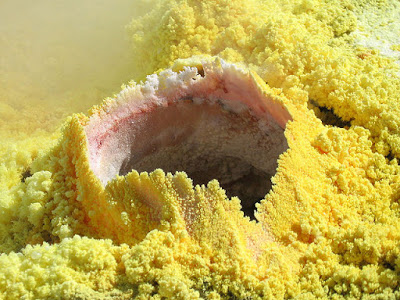
Sulphur was obtained in a variety of ways during the 18th century. Sulphur could be mined, it could be found on the surface having been deposited there from sulphur springs or from gasses escaping from deep in the earth. Sulphur was produced in England, America & overseas in Asia & Europe.

Sulphur springs in Yellowstone Park America.

Sulphur mine in England.

Sulfur found naturally on the ground from the island of Vulcano in Italy.

Mined sulphur in rock form.

Sulphur.
Spelling and etymology
Sulfur is derived from the Latin word sulpur, which was Hellenized to sulphur. The spelling sulfur appears toward the end of the Classical period. (The true Greek word for sulfur, θεῖον, is the source of the international chemical prefix thio-.) In 12th-century Anglo-French, it was sulfre; in the 14th century the Latin ph was restored, for sulphre; and by the 15th century the full Latin spelling was restored, for sulfur, sulphur. The parallel f~ph spellings continued in Britain until the 19th century, when the word was standardized as sulphur.[7] Sulfur was the form chosen in the United States, whereas Canada uses both. The IUPAC adopted the spelling sulfur in 1990, as did the Nomenclature Committee of the Royal Society of Chemistry in 1992, restoring the spelling sulfur to Britain.[8] Oxford Dictionaries note that "in chemistry and other technical uses … the -f- spelling is now the standard form for this and related words in British as well as US contexts, and is increasingly used in general contexts as well."[9]


Friday, 10 February 2017

Order from Sir William Johnson 1756-1757.


A Specification of the Quality and Quantity of Goods
necessary to be sent from London for the Northern
Indian department.
20, pcs. of blue narrow Cord Strowds
10, ditto. of Black ditto.
5, ditto. of Aurora, or Crimson ditto.
5, ditto. of common Red ditto.
200, Rolls of different Colours Gartering
200, ps. Gimps Suitable to the Strouds
300, Blankets made to sample every Way
300, ditto. Large enough for Women
400, ditto. for men something Larger,
6, pcs. of deep purple Ratteen
6, pcs. of White or uncolour’d d”.
6, ds. of Walsh Cottons
200, Mens Ruffled Shirts Buttons
200, ditto. plain
100, ditto. Smaller size and plain
100, ditto. for little Boys
20, Hanks of light Colour’d Thread
6, pcs. of Yellow half thicks
4, ditto. of Blue d”.
30, pcs. Strip’d Callimincoes, lively Colours
20, pcs. of Callicoes also Lively Colours
20, pcs. embors’d Serges ditto.
10, pcs. of Yard wide Checks Red Stripes
40. pcs. of single Ribbands Viz’. 10. deep Red, 10. deep blue, 10. deep Green, & 10. Yellow,
30, doz”. of Womens Yarn Hose Clock’. & diff’. Colours.
20, d°. of Boys ditto & ditto.
20, d°. of Childrens ditto & ditto.
20, d°. Smallest Childrens Hose.
10, d°. of Womens Scarlet blue and Green Worsted Hose with Clocks,
100, Castor Hatts laced with a broad cheap Lace
50, ditto. with a better Lace
2, doz”. of small Jacks or Colours
100, Coats of blue Cloath Red Cuffs &c. Laced
100, Cheap Green Waste Coats with white Mett’. Buttons
400, Neat Fowling pieces Barrels 4 Feet Long Substantíal Stocks to have some distinguishing mark on the Barrel and Lock of each, about 2 0 / price,
400, ditto. a better kind distinguish’d as above.
200, ditto. 3 Feet Barrell for Boys. ditto. Wilson Maker
100, pcs. of middling Pistols with Ramrods
1000, Indian Cuthashes strong & of the Cymiter kind
500, Pipe Hatchets neat & Strong without Handles
50, doz. of Long Fish Knives with Box Handles and Sharp points
50, ditto. of Buckhorn Clasp Knives
20, doz. of Penknives Sorted
20, doz. of Womens Siczars,
20, Gro: of Indian Awl Blades,
50, B of Brass wire Sorted,
50, Brass Gorgets Gilt, with the Kings Arms
150, Hair Cocades,
50, Gro. of the smallest brass dutch Jews Harps
50, doz. Buckling Combs,
10, M of Needles Sorted
30, Gro. of Hawks Bells different Sizes
4, ditto. of Common Razors,
20, doz. of Looking Glasses at 8/
20, ditto. of ditto at 10/
100, Gro: of Bristol pipes
50, 11 of small white Beeds
500, Common Steel Tongs for Striking Fire
4, •M'”. of Good Gun powder, half in whole, & half in 1/2 Barrells
8, Tons of Leaden Barrs of 1-1/2 lbs Each
2, M of Goose Shott
2. ditto. of duck Shott
10, -M. of Good Flints
500, lbs. of VermiIIion in Casks well packd
20, 1bs of Verdegreace in Lump
100, doz. of Bullet Molds for the before Mention’d Arms,
Source: Sir William Johnson Papers, Volume II page 898-899
1757ad.