A LIVING HISTORY BLOG.

18TH CENTURY LIVING HISTORY IN AUSTRALIA.
Showing posts sorted by relevance for query fire lighting. Sort by date Show all posts

Tuesday, 27 June 2017

18th Century Period Fire Lighting Methods. Ebook.

Authors, historical, living history, authenticity, flint and steel, burning glass, reading glass, fire-bow, Mountain men, woodsmen, woodsrunners, books, reading, experimental archaeology, plant tinder, fungi tinder, tinderbox, fire lighting, 18th century, 17th century, 19th century, survival, Indians, primitive, fur trade, French and Indian War, Revolution, historical trekking, long term wilderness living, colonial, Australia, North America, cooking, heating, Reenacting, Reenactment, 

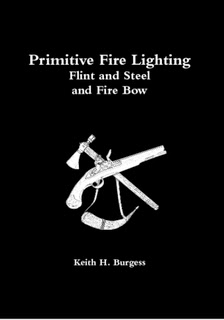
Primitive Fire Lighting-Flint & Steel & Fire Bow.

Title: Primitive Fire Lighting
ID: 9784776
Category: History
Description: “Primitive Fire Lighting”, is a hands on guide to how to make fire with flint and steel and fire bow. This includes some history, a variety of methods, tinder plants identification, and tinder production, tips on fire place construction and use, how to prepare and lay a fire, wet weather fire lighting and magnifying glass fire lighting. The skills and methods in this book will be of interest to a wider range of readers including survivalists, historical re-enactors, bush-walkers and campers, historical–trekkers and even historical novel writers. Although the plant identifications list is mainly Australian it also has some information for England, Europe and America.
Publisher: Keith H. Burgess
Copyright Year: © 2010
Language: English
Country: Australia

Table of Contents
Illustrations. 4
FOREWORD. 6
FLINT AND STEEL FIRE LIGHTING. 8
PLANT FIBRE TINDERS: 11
TINDER PREPARATION. 15
Tinder preparation-charring: 15
OTHER FLINT and STEEL FIRE LIGHTING METHODS: 16
Emergency methods: 17
A WORD ABOUT BLACK POWDER: 17
THE CAMPFIRE FIREPLACE: 18
READING GLASS/MAGNIFYING GLASS FIRE LIGHTING 20
WET WEATHER FIRE LIGHTING. 21
A FINAL WORD OF CAUTION. 23
FIRE-BOW FIRE LIGHTING. 24
Introduction 24
FIRE-BOW FIRE LIGHTING. 25
A Brief Overview. 25
The Parts of the Fire-bow. 26
The Bow. 26
The Drill Piece. 27
The Fireboard. 29
The Tinder-board. 30
The Bearing Block. 31
The Bowstring. 32
Tinder. 32
Making Fire. 32
Making Cordage. 37
The Step for making Cordage. 38
AFTERWORD. 40
Fire steel suppliers. 45
About the author. 45

5.83" x 8.26", saddle-stitch binding, white interior paper (60# weight), black and white interior ink, white exterior paper (100# weight), full-colour exterior ink.
Cost: Book $11.00 US. Plus P&P. Download $7.00 US


Monday, 23 March 2015

My Book. Primitive Fire Lighting. eBook. Written For Australian Survivalists, Preppers, Living Historians & Reenactors.

Primitive Fire Lighting-Flint & Steel & Fire Bow. eBook.

Title: Primitive Fire lighting.
ID: 9784776
Category: History
Description: “Primitive Fire Lighting”, is a hands on guide to how to make fire with flint and steel and fire bow. This includes some history, a variety of methods, tinder plants identification, and tinder production, tips on fire place construction and use, how to prepare and lay a fire, wet weather fire lighting and magnifying glass fire lighting. The skills and methods in this book will be of interest to a wider range of readers including survivalists, historical re-enactors, bush-walkers and campers, historical–trekkers and even historical novel writers. Although the plant identifications list is mainly Australian it also has some information for England, Europe and America.
Publisher: Keith H. Burgess
Copyright Year: © 2010
Language: English
Country: Australia

Table of Contents
Illustrations. 4
FOREWORD. 6
FLINT AND STEEL FIRE LIGHTING. 8
PLANT FIBRE TINDERS: 11
TINDER PREPARATION. 15
Tinder preparation-charring: 15
OTHER FLINT and STEEL FIRE LIGHTING METHODS: 16
Emergency methods: 17
A WORD ABOUT BLACK POWDER: 17
THE CAMPFIRE FIREPLACE: 18
READING GLASS/MAGNIFYING GLASS FIRE LIGHTING 20
WET WEATHER FIRE LIGHTING. 21
A FINAL WORD OF CAUTION. 23
FIRE-BOW FIRE LIGHTING. 24
Introduction 24
FIRE-BOW FIRE LIGHTING. 25
A Brief Overview. 25
The Parts of the Fire-bow. 26
The Bow. 26
The Drill Piece. 27
The Fireboard. 29
The Tinder-board. 30
The Bearing Block. 31
The Bowstring. 32
Tinder. 32
Making Fire. 32
Making Cordage. 37
The Step for making Cordage. 38
AFTERWORD. 40
Fire steel suppliers. 45
About the author. 45


$4.99 US.

Friday, 24 December 2010

More Details Of My New Book. Primitive Fire Lighting.

Primitive Fire Lighting-Flint & Steel & Fire Bow.

Title: Primitive Firelighting
ID: 9784776
Category: History
Description: “Primitive Fire Lighting”, is a hands on guide to how to make fire with flint and steel and fire bow. This includes some history, a variety of methods, tinder plants identification, and tinder production, tips on fire place construction and use, how to prepare and lay a fire, wet weather fire lighting and magnifying glass fire lighting. The skills and methods in this book will be of interest to a wider range of readers including survivalists, historical re-enactors, bush-walkers and campers, historical–trekkers and even historical novel writers. Although the plant identifications list is mainly Australian it also has some information for England, Europe and America.
Publisher: Keith H. Burgess
Copyright Year: © 2010
Language: English
Country: Australia


Table of Contents
Illustrations. 4
FOREWORD. 6
FLINT AND STEEL FIRE LIGHTING. 8
PLANT FIBRE TINDERS: 11
TINDER PREPARATION. 15
Tinder preparation-charring: 15
OTHER FLINT and STEEL FIRE LIGHTING METHODS: 16
Emergency methods: 17
A WORD ABOUT BLACK POWDER: 17
THE CAMPFIRE FIREPLACE: 18
READING GLASS/MAGNIFYING GLASS FIRE LIGHTING 20
WET WEATHER FIRE LIGHTING. 21
A FINAL WORD OF CAUTION. 23
FIRE-BOW FIRE LIGHTING. 24
Introduction 24
FIRE-BOW FIRE LIGHTING. 25
A Brief Overview. 25
The Parts of the Fire-bow. 26
The Bow. 26
The Drill Piece. 27
The Fireboard. 29
The Tinder-board. 30
The Bearing Block. 31
The Bowstring. 32
Tinder. 32
Making Fire. 32
Making Cordage. 37
The Step for making Cordage. 38
AFTERWORD. 40
Fire steel suppliers. 45
About the author. 45

5.83" x 8.26", saddle-stitch binding, white interior paper (60# weight), black and white interior ink, white exterior paper (100# weight), full-colour exterior ink.
Cost: Book $11.00 US. Plus P&P. Download $7.00 US


Wednesday, 30 September 2009

Flint & Steel Fire Lighting For Wilderness Survival, Then & Now.


Figure 3.


Figure4.


figure 4.


figure 4.


Figure 5.


This is my brass tinderbox with tinder, musket flint, beeswax candle stubb and my fire steel which is early 18th century English design. The beeswax candle stubb is for use when having to use damp kindling, the stubb is placed under the kindling to dry it out and make fire.

This is taken from my book Primitive Fire Lighting-Flint and Steel. Unfortunately this book has not sold as many copies as I would have wished, mostly I think because people THINK they already know all there is to know about flint & steel fire lighting. WRONG! There is always more to learn about primitive skills, it is an ongoing learning experience for all of us, including me.

I was reading another blog today with several posts on flint & steel fire lighting and it is not so much that the author was wrong, it is more that there are better ways and more correct ways of making fire with flint & steel, and in a survival situation this is IMPORTANT!


So here is some info on flint & steel fire lighting. Forget about using so called CHARCLOTH! And forget about using a so called charcloth tin. There is no need. Learn which tinder plants grow in your area and use these.


You can place some tinder in a grass nest and strike sparks directly onto that and blow it into flame.

As soon as the kindling takes fire place it in your prepared fireplace and PUT THE LID ON YOUR TINDERBOX! This will stop the tinder smouldering all to ash!

To prepare tinder that needs charring, simply char directly in the fire and then place it in your tinderbox and close the lid. It is as simple as that.


FLINT AND STEEL FIRE LIGHTING.

“Fire making is a simple process with the mountaineers. Their bullet pouches always contain a flint and steel, and sundry pieces of “punk”-a pithy substance found in dead pine trees-or tinder; and pulling a handful of dry grass, which they screw into a nest, they place the lighted punk in this, and closing the grass over it, wave it in the air, when it soon ignites, and readily kindles the dry sticks forming the foundation of a fire.”
Ruxton, 1848.

Flint and steel fire lighting was the method used during the medieval period through to the late 19th century. Although matches were invented and marketed during the mid 19th century, they were not considered reliable enough for use in isolated or wilderness situations. Matches are not reusable and if not protected are easily damaged through wet weather and dampness.

Flint and steel is a sustainable method of fire lighting, providing you continue to prepare a supply of tinder from available plant materials. Matches are easily blown out in the wind, where as with flint and steel fire lighting the wind only hastens combustion. Learning how to make fire with flint and steel will teach you skills that will enable you to make fire by other means in adverse weather conditions.


CAUTIONARY NOTE: The author advises anyone practicing these skills to always wear eye protection and to be careful not to cut one’s hands or fingers with the sharp flint.


The following instructions are for right-handed people, left-handers simply reverse.


Hold the steel in your left hand, (see fig 3).

Now, holding the flint shard in your right hand; strike the edge of the steel with the flint using a downward blow, (see fig 4). To get the correct angle, imagine you are shaving or whittling a piece of wood, like sharpening a pencil with a pocketknife. The sparks you need to create, by striking the steel with the flint, are in fact steel shavings cut from the steel with the sharp edged flint.


Once you have mastered striking sparks from the fire-steel the next step is to strike sparks onto tinder. (See fig 5). This is best done with the tinder contained in a tin. You need to make sure that the smouldering tinder cannot be blown about in any wind or breeze, and perhaps inadvertently start an unwanted fire. When the sparks catch they will be seen as small red glowing spots, which will slowly spread. If you use a tin with a lid (tinderbox), like a shallow tobacco tin, you can place the lid on the tin to smother the smouldering tinder.

Tuesday, 5 June 2012

Fire Steel versus Ferrocerium Rod.

Some people do not realise that there is a difference between a ferrocerium rod and a traditional fire steel used in flint and steel fire lighting. With this short article I hope to correct this misunderstanding so that new comers to 18th century living history are not misled.

The Ferrocerium Rod.
(1) A ferrocerium rod is not made of steel. Despite being advertised as a "fire steel", it is NOT a fire steel. A ferrocerium rod is made from manufactured flint material, much like the flint in a cigarette lighter.

(2) A person will learn little of fire lighting lore from using a ferrocerium rod unless they study other fire lighting methods. A ferrocium rod will light any small kindling material providing it is dry. It will not light a candle.

(3) If a ferrocium rod is dropped, it can break. The shorter the pieces of broken ferrocerium rod, the less affective its capacity to make fire.

(4) Skill wise, using a ferrocerium rod requires no more skill or knowledge than using a cigarette lighter or matches.

(5) Ferrocerium rod users often carry a limitied supply of cotton balls and other types of prepared kindling materials. When these are used, they cannot be re-used. This type of kindling is not readily available in a wilderness situation.

(6) The use of a ferrocerium rod relies on having a piece of steel or a knife in order to create sparks.

The Fire Steel.

(1) A fire steel is made from carbon steel and creates sparks when struck correctly by a hard sharp edged rock such as flint; chert, agate, quartz or other similar rock types.

(2) Using flint and steel leads to learning more about plant tinders and fire lore in general. The method of using flint and steel for making fire goes back several hundred years.

(3) If you drop a fire steel it is not likely to break, but if it does it can still be used for making fire.

(4) It takes a certain skill to use a flint and steel for fire lighting, it also requires some knowledge of plant tinders and different kindling types. Users of flint and steel tend to be more dedicated to research and experimentation and are better prepared for making fire in all weather conditions.

(5) Tinder is always carried along with a flint and steel. Tinder can be used to light a candle and a lit candle can be used to light damp kindling.

(6) Tinder plants are found in the outdoors and they are easily prepared. By using a tinderbox the tinder lasts longer and if you collect a fresh supply of tinder plant material whenever you see it you will never run out.

Saturday, 5 September 2009

18th Century Skills Practiced In The New England Colonial Living History Group.

18th Century Colonial and Primitive Skills.
· Finger Weaving
· Loom Weaving
· Inkle Loom Weaving
· Spinning
· Sewing
· Clothing manufacture
· Moccasin making
· Leather work
· Metalwork
· Hornsmithing
· Helve making
· Stail making
· Rabbit Stick making and use
· Tomahawk Throwing
· Blade Sharpening
· Flint & Steel fire lighting
· Fire-Bow fire lighting
· Flintlock Fire Lighting
· Reading Glass Fire Lighting
· Tinder Plants Identification
· Tinder Preparation
· Wet Weather Fire Lighting
· Edible Plant Identification
· Primitive Shelter Construction
· Fire place construction and Fire Safety
· Historical trekking equipment and packing
· Staying warm in winter with only one blanket
· Tomahawk and Knife use and Safety
· Wilderness Survival Trap Construction and use
· Finding Water
· Open Fire Cooking
· Trail Foods
· Flintlock Safety and use
· Bow & Arrow Making
· Archery
· Primitive Tool Making
· Plant Cordage Manufacture
· Fishing and Making Tackle
Activities.
· Social BBQs
· Show & Tell
· Archery
· Tomahawk throwing competition
· Log Dragging competition
· Horse Shoe Throwing
· Survival Skills games for youngsters
· Historical Trekking & Camping
· Drive-in camping
· Rendezvous
· Experimental Archaeology
· Research

Saturday, 17 May 2008

Who We Are & What We Do.


New England Colonial Living History Group.

Period of interest: 1700-1760AD in the North Eastern parts of the New World. Our clothing and most of our equipment reflects this period, but some items of equipment can date back into the 17th century.

Activities: Our main activity is historical trekking and the skills, and research associated with historical trekking. We can however accommodate those who don’t wish to participate in historical trekking and just wish to learn some period skills and crafts and experience a little of the colonial lifestyle.

Historical Trekking.
Historical trekking is trekking and camping in a historical style, using only period clothing and equipment. We trek all year round, but do most of our trekking in winter. Winter poses more of a challenge in regard to skills, and clothing and equipment choices, but it is also more pleasant in regard to the lack of biting insects and snakes.
We place a lot of emphasis on the period living skills and wilderness survival skills and these skills are practiced as part of our normal trekking activities.

Common Trekking Skills.
Common skills used on treks are: Flint and steel fire lighting, tinder production using only wild plant fibres, wet weather fire lighting and fireplace construction, primitive shelter construction and using natural shelters, primitive survival trap construction and use, cordage and rope making, tomahawk throwing, open fire cooking methods, wild edible plant and tinder plant identification, stalking and tracking, firelock fire lighting, flintlock muzzle-loading and or archery, and more.

Other Skills.
Other skills that can be learnt and practiced are: Helve and stail making, hornsmithing, spinning and loom weaving, finger weaving, leatherworking, tanning, fire-bow fire lighting, reading glass fire lighting, period fishing, moccasin construction, and more.

Where and When: Most of our activities including trekking and camping are performed in Wychwood Forest. We have regular meetings on the first Sunday of each month. Meetings are usually held at Elm Cottage. Members are welcome to attend on the Friday or Saturday and camp over. Regular meetings start between 9 and 10am. Organised treks can be on any day, but usually over a weekend.

Costs and Fees: Membership is free, but members are required to pay an insurance fee of $16 per annum to the Australian Living History Federation.
We help keep expenses down by advising on the most inexpensive clothing and equipment options and by encouraging and helping members to make their own clothing and equipment. Items can also be purchased or traded for if members wish.

Rules and Regulations: We have strict safety rules and regulations. We are a volunteer based organization and as such all members are protected from any liability (duty of care) claims by the Government’s Civil Liability Amendment (Personal Responsibility) Bill 2002. We are also covered by the ALHF insurance policy.

We set no time limit on members to become fully clothed and equipped in period style, so long as we can see some effort is being made in that regard.
We hope you find this information of some use; you will find more information on the group blog site listed below. Please feel free to post comments and questions on this blog. should you need any further information, please don’t hesitate to contact us.
Regards,


Keith H. Burgess Esq.
Email: historicaltrekker@gmail.com
Blog: http://woodsrunnersdiary.blogspot.com/
Group Page At: http://skirmishmagazine.ning.com/ Post: Keith H. Burgess, Wychwood Forest, MSF 2007, Armidale 2350.

Thursday, 16 February 2012

Primitive Fire Lighting-Flint & Steel & Fire-Bow. 30% OFF!

Primitive Firelighting
Purchase Primitive Firelighting or any other title with 30% off with coupon code FEBRUARYCART305GBP.
Lulu incurs the cost of this discount, so it does not impact the Author's proceeds of the book.
http://www.lulu.com/product/14015072?cid=021612_en_email_FEBRUARYCART305GBP

As you can see this does not cost me anything, not that I make much anyway, but I certainly would not want to lose 30% off what I get! So if you think this book could be useful, now is the time to buy. I think the Aussie dollar is pretty high too at this time.

“Primitive Fire Lighting”, is a hands on guide to how to make fire with flint and steel and fire bow. This includes some history, a variety of methods, tinder plants identification, and tinder production, tips on fire place construction and use, how to prepare and lay a fire, wet weather fire lighting and magnifying glass fire lighting. The skills and methods in this book will be of interest to a wider range of readers including survivalists, historical re-enactors, bush-walkers and campers, historical–trekkers and even historical novel writers. Although the plant identifications list is mainly Australian it also has some information for England, Europe and America.                                          

Wednesday, 21 October 2015

Tinder Tubes.

There has been a lot of speculation as to the use of the Tinder Tube and its manufacture date. Personally I have yet to see one made before the 19th century, though I see many 18th century living historians carrying these for fire lighting. I have found little information available on the Tinder Tube, however, being very familiar with 18th century fire lighting methods, I very much doubt that the Tinder Tube was ever intended for fire lighting. 
I believe that the Tinder Tube was simply a method of lighting pipes & cigarettes. After all, it is not only far easier to use a tinderbox for fire lighting, but the tinderbox is essential for the ease of processing plant tinders and charring cloth. One researcher believes that the Tinder Tube was used for firing some form of hand held firearm or cannon. Again, this makes no sense as the matchlock had its own match holder, and the cannon used a Linstock.


Common copy of a tinder tube as sold by Track Of The Wolf.


Three antique 19th century tinder tubes.


Three Russian cigarette cases with built in tinder tubes.
If anyone has any further information on tinder tubes, I would be very pleased to hear from you.
Thank you.
Keith.

Sunday, 7 August 2011

The Early to Mid 18th Century Woodsman & Woods Woman. Who & what they were.

The Early to Mid 18th Century Woodsman & Woods Woman. Who & what they were.


From here on I will refer to this persona as a Woodsrunner, which covers both genders. The woodsrunner was a person with certain skills that enabled them to survive with reasonable comfort in the woods & forests. Today we call this combination of skills & crafts woods lore. Not all woodsrunners came from the same mould, not all had that “brier in the eye” look. Daniel Boone by all accounts was a very skilled woodsman & a decent human being that would rather make friends with the woodland Indians than cause them any harm. But was Boone a typical woodsrunner of the time?


Our aim is to interpret the lifestyle of the common woodsrunner, but in doing this we also want to be as good as we can be in regard to woods lore knowledge. Even so, we are individuals, just as they were 300 years ago, & it makes sense that some of us may be better at some things than others are. So this is our quest then, to learn as much as we can & to practice these skills, this lifestyle as much as possible in the time that we have. Our quest in fact then is to become a woodsrunner.

So what did the woodsrunner wear? Well typically they wore a workman’s frock to protect their other clothing. Their clothing consisted of a shirt and breeches or a breechclout, a weskit/waistcoat, neckerchief, a broad brimmed felt hat with a low crown. Leather woodland Indian style leggings and woodland Indian moccasins. A leather belt went round the waist though this could also be a woollen sash. This belt or sash secured a hunting knife, a tomahawk/axe, possibly a flintlock pistol, and a belt bag for carrying flint, steel and tinderbox and possibly other items as well.
 In winter they may wear stockings, woollen mittens, a half-blanket or even a French capote or a frock coat. If it is very cold they may also wear two shirts or a woollen shirt, and two weskits. Whatever it takes to stay warm.


There is no evidence to show that they ever carried more than one blanket, summer or winter. But the woodsrunner knows how to stay warm with only one blanket. Rolled up in my blanket I have a spare woollen weskit, a woollen shirt, and a woollen Monmouth cap. These items of clothing are for wearing on cold nights.


The woodsrunner could take a variety of jobs that they were well qualified for. Militia duty fell to every male between 16 and 60 years of age. Ann Bailey was also known to accompany the militia. Rangers as they were called were hired to range the surrounding country round settlements, looking for sign of any enemy. Couriers, hunters, scouts, trappers, all needed to be skilled woodsrunners. Even traders such as Mr and Mrs Pentry were woodsrunners. But many were also farmers and land owners like Boone.


Here are some skills that a typical woodsrunner might be expected to know:


• Flint & steel fire lighting
• Wet weather fire lighting
• Fire-bow fire lighting
• Flintlock fire lighting
• Flintlock use, service & repair
• Field dressing & butchering game
• Blade sharpening
• Tomahawk throwing
• Making rawhide
• Brain tanning
• Primitive shelter construction
• How to stay warm in winter with only one blanket
• Cordage manufacture
• Moccasin construction and repair
• Sewing
• Axe and tomahawk helve making
• Fishing
• Hunting
• Evasion
• Tracking
• Reading sign
• Woods lore
• Navigation
• Primitive trap construction & trapping
• Open fire cooking
• Fireplace construction
• Clothing manufacture
• Drying meat & other foods
• Knowledge of plant tinders & preparation
• Knowledge of native foods & preparation
• Scouting
• Basic first aid


Here is a list of equipment that I carry on a long trip:


• .60 cal/20 gauge fusil. 42 inch barrel.
• Shot pouch and contents.
• Powder horn.
• Butcher/Hunting knife.
• Legging knife.
• Clasp knife.
• Tomahawk.
• Tinderbox.
• Belt pouch.
• Fishing lines in brass container.
• Two snares.
• Gunpowder wallet (contains spare fungus tinder at present).
• Knapsack.
• Ball mould and swan shot mould.
• Lead ladle.
• Cup.
• Trade kettle.
• Medical pouch.
• Housewife.
• Piece of soap and a broken ivory comb.
• Dried foods in bags.
• Wooden spoon.
• Gun tools and spare springs.
• Compass.
• Whet stone.
• Oilcloth.
• One blanket (Monmouth cap, spare wool weskit and wool shirt rolled inside blanket).
• Leather costrel.


Thursday, 13 June 2013

Skills List For Woodsrunner's in our Group.

The Station Camp By David Wright.

Woodsrunner’s Skills.
This is a list of basic skills in which I personally would expect an 18th century woodsman or woods-woman to have some experience with.
·         Flint & steel fire lighting
·         Wet weather fire lighting
·         Fire-bow fire lighting
·         Flintlock fire lighting
·         Flintlock use, service & repair
·         Field dressing & butchering game
·         Blade sharpening
·         Tomahawk throwing
·         Making rawhide
·         Brain tanning
·         Primitive shelter construction
·         How to stay warm in winter with only one blanket
·         Cordage manufacture
·         Moccasin construction and repair
·         Sewing
·         Axe and tomahawk helve making
·         Fishing
·         Hunting
·         Evasion
·         Tracking
·         Reading sign
·         Woods lore
·         Navigation
·         Primitive trap construction & trapping
·         Open fire cooking
·         Fireplace construction
·         Clothing manufacture
·         Drying meat & other foods
·         Knowledge of plant tinders & preparation
·         Knowledge of native foods & preparation
·         Knowledge of native plants in the area and their uses for other than tinder and food.
·         Scouting/Ranging.
·         Basic first aid.
·         Finding and treating water.
·         General leather work.