A LIVING HISTORY BLOG.

18TH CENTURY LIVING HISTORY IN AUSTRALIA.
Showing posts with label burning glass. Show all posts

Tuesday, 27 June 2017

18th Century Period Fire Lighting Methods. Ebook.

Authors, historical, living history, authenticity, flint and steel, burning glass, reading glass, fire-bow, Mountain men, woodsmen, woodsrunners, books, reading, experimental archaeology, plant tinder, fungi tinder, tinderbox, fire lighting, 18th century, 17th century, 19th century, survival, Indians, primitive, fur trade, French and Indian War, Revolution, historical trekking, long term wilderness living, colonial, Australia, North America, cooking, heating, Reenacting, Reenactment, 

Primitive Fire Lighting-Flint & Steel & Fire Bow.

Title: Primitive Fire Lighting
ID: 9784776
Category: History
Description: “Primitive Fire Lighting”, is a hands on guide to how to make fire with flint and steel and fire bow. This includes some history, a variety of methods, tinder plants identification, and tinder production, tips on fire place construction and use, how to prepare and lay a fire, wet weather fire lighting and magnifying glass fire lighting. The skills and methods in this book will be of interest to a wider range of readers including survivalists, historical re-enactors, bush-walkers and campers, historical–trekkers and even historical novel writers. Although the plant identifications list is mainly Australian it also has some information for England, Europe and America.
Publisher: Keith H. Burgess
Copyright Year: © 2010
Language: English
Country: Australia

Table of Contents
Illustrations. 4
FOREWORD. 6
FLINT AND STEEL FIRE LIGHTING. 8
PLANT FIBRE TINDERS: 11
TINDER PREPARATION. 15
Tinder preparation-charring: 15
OTHER FLINT and STEEL FIRE LIGHTING METHODS: 16
Emergency methods: 17
A WORD ABOUT BLACK POWDER: 17
THE CAMPFIRE FIREPLACE: 18
READING GLASS/MAGNIFYING GLASS FIRE LIGHTING 20
WET WEATHER FIRE LIGHTING. 21
A FINAL WORD OF CAUTION. 23
FIRE-BOW FIRE LIGHTING. 24
Introduction 24
FIRE-BOW FIRE LIGHTING. 25
A Brief Overview. 25
The Parts of the Fire-bow. 26
The Bow. 26
The Drill Piece. 27
The Fireboard. 29
The Tinder-board. 30
The Bearing Block. 31
The Bowstring. 32
Tinder. 32
Making Fire. 32
Making Cordage. 37
The Step for making Cordage. 38
AFTERWORD. 40
Fire steel suppliers. 45
About the author. 45

5.83" x 8.26", saddle-stitch binding, white interior paper (60# weight), black and white interior ink, white exterior paper (100# weight), full-colour exterior ink.
Cost: Book $11.00 US. Plus P&P. Download $7.00 US


Monday, 2 April 2012

Special Book Sale Promotion By LuLu.

http://www.lulu.com/shop/search.ep?type=Print+Products&keyWords=primitive+fire+lighting-flint+and+steel+and+fire-bow&sitesearch=lulu.com&q=&x=11&y=8

We just made saving, sharing and selling easier than ever. For the first time, registration-less checkout and no coupons required.
You and your readers can save just by adding an item to your cart, between now and Friday, April 6th. Use this opportunity to promote your book or buy more copies for yourself. The cost of this promotion is on us, but only for a limited time, so hurry for your chance to save big! Just add an item to your Lulu shopping cart to see your savings.

Saturday, 12 March 2011

Lenses.

Here I saw a great trial of the goodness of a burning glass, made of a new figure, not spherical (by one Smithys, I think, they call him), that did burn a glove of my Lord Brouncker’s from the heat of a very little fire, which a burning glass of the old form, or much bigger, could not do, which was mighty pretty.

The Diary of Samuel Pepys Thursday 12 March 1667/68


Francis Smethwick ground the first high-quality aspheric lenses and presented them to the Royal Society on February 27, 1667. A telescope containing four aspheric elements was judged superior to a "common, yet very good" telescope used for comparison, and aspheric reading and burning glasses also outdid their spherical equivalents.
http://www.greatwalloptical.com.hk/optical.page/asphericlens.html


http://hotgates.stanford.edu/Eyes/library/annals50.pdf

 “Mr. Smethwick’s glasses were tried again; and his telescope being compared with another longer telescope, and the object-glasses exchanged, was still found to exceed the other in goodness; and his burning concave being compared with a spherical burning-glass of almost twice the diameter, and held to the fire, it burnt gloves, whereas the other spherical ones would not burn at all.” — “Sir Robert Southwell being lately returned from Portugal, where he had been ambassador from the king, and being desired to acquaint the society with what he had done with respect to the instructions, which he had received from them before his departure from England, related, that he had lodged the astronomical quadrant, which the society had sent to Portugal to make observations with there, with a body of men at Lisbon, who had applied themselves among other kinds of literature to mathematics” March 12th, 1668 (Birch’s “History of the Royal Society,” vol. ii., p. 256).
http://www.pepysdiary.com/archive/1668/03/12/


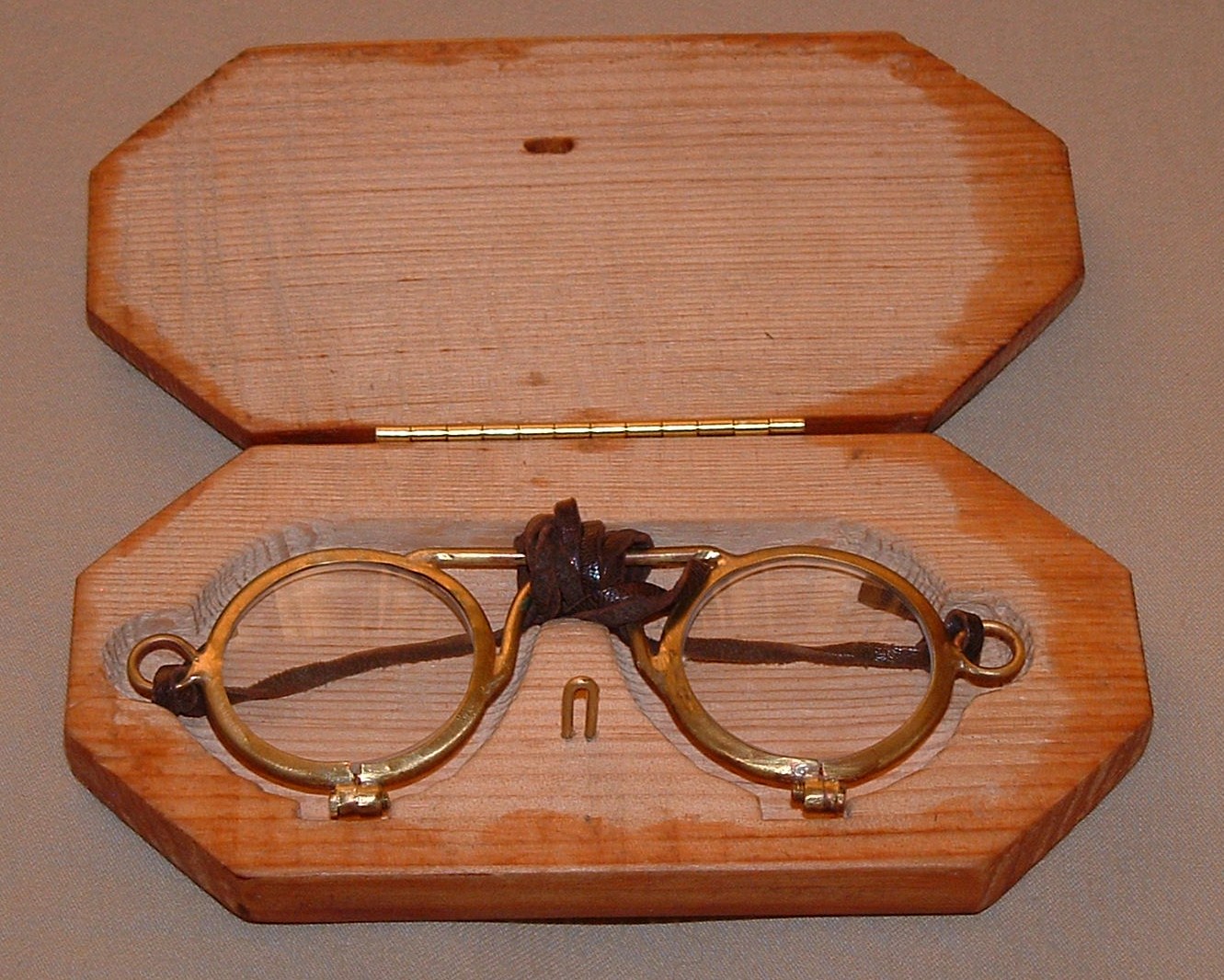
Author's 17th century specticles.


The Author's reading/burning glass.


One of the author's telescopes.

Friday, 24 December 2010

More Details Of My New Book. Primitive Fire Lighting.

Primitive Fire Lighting-Flint & Steel & Fire Bow.

Title: Primitive Firelighting
ID: 9784776
Category: History
Description: “Primitive Fire Lighting”, is a hands on guide to how to make fire with flint and steel and fire bow. This includes some history, a variety of methods, tinder plants identification, and tinder production, tips on fire place construction and use, how to prepare and lay a fire, wet weather fire lighting and magnifying glass fire lighting. The skills and methods in this book will be of interest to a wider range of readers including survivalists, historical re-enactors, bush-walkers and campers, historical–trekkers and even historical novel writers. Although the plant identifications list is mainly Australian it also has some information for England, Europe and America.
Publisher: Keith H. Burgess
Copyright Year: © 2010
Language: English
Country: Australia


Table of Contents
Illustrations. 4
FOREWORD. 6
FLINT AND STEEL FIRE LIGHTING. 8
PLANT FIBRE TINDERS: 11
TINDER PREPARATION. 15
Tinder preparation-charring: 15
OTHER FLINT and STEEL FIRE LIGHTING METHODS: 16
Emergency methods: 17
A WORD ABOUT BLACK POWDER: 17
THE CAMPFIRE FIREPLACE: 18
READING GLASS/MAGNIFYING GLASS FIRE LIGHTING 20
WET WEATHER FIRE LIGHTING. 21
A FINAL WORD OF CAUTION. 23
FIRE-BOW FIRE LIGHTING. 24
Introduction 24
FIRE-BOW FIRE LIGHTING. 25
A Brief Overview. 25
The Parts of the Fire-bow. 26
The Bow. 26
The Drill Piece. 27
The Fireboard. 29
The Tinder-board. 30
The Bearing Block. 31
The Bowstring. 32
Tinder. 32
Making Fire. 32
Making Cordage. 37
The Step for making Cordage. 38
AFTERWORD. 40
Fire steel suppliers. 45
About the author. 45

5.83" x 8.26", saddle-stitch binding, white interior paper (60# weight), black and white interior ink, white exterior paper (100# weight), full-colour exterior ink.
Cost: Book $11.00 US. Plus P&P. Download $7.00 US


Saturday, 11 December 2010

What it is & What it is not. Misinformation!

I think I explained a while back that I will not post corrections on other people's blogs or videos. I have done in the past, in the most respectful manner, and in private when I could, but I still attracted abuse. So instead I choose to post the correct information here, and I do not name the site on which the misinformation is posted. Which sites is not important as there is nothing to be done there. What is important is that you recognise misinformation when you see it.
If I make a mistake of my own, I will admit to it and correct it, and I do not have a problem with other people correcting me providing it is done nicely. However, do not get confused between what is wrong, and what is simply a "different way". True some ways are better than others, and some ways are just wrong, we need to keep this in mind.

The above is charred cloth which is used as tinder, it is tinder. It was not a popular tinder in the wilderness as you can imagine, but was used in some homes in the cities and towns.
It is not "char" and seperate from tinder, it is tinder.

This is a piece of punk wood, which is also used as tinder. A variety of plants and fungus are used as tinder.

This is rope fibres which can be used for kindling, just the same as dried grass or coconut fibre can be used as kindling. Light twigs and sticks are also kindling. This rope fibre is NOT tinder.


The above is a 19th century tobacco box with a burning glass in the lid used for lighting a pipe on a sunny day. It is NOT a Hudson Bay tinderbox. Yes you can use it to store tinder, flint and steel if you wish, but if you use it for making fire, or preparing tinder, it will smoke up the glass and may in time damage the burning glass.


Above are two hammers used on flint locks, they are also known as steels. Below the bottom image of a hammer you can see the hammer spring. These are NOT frizzens, and it is not therefore called a frizzen spring.

This is the cock on a flint lock, it is NOT a hammer! If it were a percussion lock it would be called a hammer, but on a flint lock it is called a COCK. The cock holds/secures the flint which strikes the hammer which creates sparks which fall upon the gunpowder priming in the pan of the flint lock which creates fire that will flash through the vent in the barrel and fire the main charge of gunpowder in the barrel of the gun.

Why does it matter if we use the correct terms or not? Well so long as we know their function it does not matter what you call an object, but if you are going to inform/instruct others, then it does matter. If dried grass is going to be called tinder, then I must assume it is kept in the tinderbox, and if charred cloth is char, then is it the only char available for making fire? Do I strike sparks on the char or the tinder? The book sais tinder, but I have not managed to catch sparks on the dried grass! Do you see where I am going here?
Yes I know people are calling the ferrocium rod a steel, and the method of using the ferrocium rod flint and steel, but it is not. Dried grass may well catch fire from a ferrocium rod scraped with a knife blade, but that does not make the dried grass into tinder! Let us all try and stick with the traditional names even when we are using modern methods and materials, otherwise it just gets confusing for the newbies.

With respect.                                                                                                                                    

Thursday, 8 July 2010

Another New Plant Tinder I Have Found. Australia, USA, UK, Europe.

The inner pithy core of the sunflower stem. The sunflower is native to the Great Lakes area in the New World, and of course is now grown in many countries.

Double headed sunflowers in my garden.

The larger single flowered sunflower drying out in Autumn.

Part of a sunflower stem split.

A closer look at the pith inside. Scrape it out and char it in the fire, but be careful because it burns hot and fast, and you need to be quick to smother it in your tinderbox.
I suggest you add raw/uncharred pith to the prepared tinder, otherwise it will smoulder away too fast to make fire, but it does work, I have tested it.
You can also use this pith tinder as is with a reading/burning/magnifying glass without charring it first, as you can do with all tinders.

Saturday, 29 May 2010

Daniel Defoe and Jonathon Swift.

For I had about me my flint, steel, match, and burning glass.


Gulliver’s travels, 1726.


Swift, Jonathan, 1667-1745 


Provided with candles and a tinderbox, which I had made of the lock of one of the muskets, with some wildfire in the pan.


Robinson Crusoe. 1719.   


Daniel Defoe.


One of my favourites, a classic adventure story. Robinson Crusoe.