18TH CENTURY LIVING HISTORY, HISTORICAL TREKKING, AND PERIOD WILDERNESS LIVING.
A LIVING HISTORY BLOG.
18TH CENTURY LIVING HISTORY IN AUSTRALIA.
Showing posts with label cooking. Show all posts
Sunday, 14 July 2019
FOOD. 18th century recipes.
Labels:
18th century,
baking,
cooking,
experimental archaeology,
foods,
living history,
pies,
recipes
Australia
Australia
Wednesday, 8 May 2019
For Your Medical Kit. A Natural Antibiotic & More.
Hannah Glasse’s 1747 cookbook, The Art of Cookery Made Plain and
Easy.
http://www.pbs.org/food/the-history-kitchen/turmeric-history/
Labels:
18th century,
antibiotics,
cooking,
experimental archaeology,
foods,
history,
honey,
living history,
medical,
spices,
Turmeric
Australia
Australia
Saturday, 20 April 2019
Customised Brass Trade Kettle.
I finally got round to cutting my Track Of The Wolf brass trade kettle down to a correct documented size! I also made & fitted the correct type of bail lugs for this type of kettle. It is much lighter now, & of course it will take up less room in my knapsack.
I am pleased with the way it turned out, but I know I could have done a better job if I had the right tools for the job.
Labels:
1700s,
18th century,
brass kettle,
camping,
cooking,
customising,
documentation,
Historical,
journeying,
trade kettle,
travel
Australia
Australia
Wednesday, 27 March 2019
Inland Icelanders Burned Whale Bones for Warmth
By K.N.Smith.
An archaeological find shows that whale bones were sometimes imported
inland to use as fuel.
Labels:
17th century,
18th century,
bones,
burning,
cooking,
farming,
fire,
Icelandic,
survival,
warmth
Australia
Iceland
Sunday, 10 February 2019
Sunday, 28 October 2018
Period Cook Book Links.
Labels:
17th century,
18th century,
cook books,
cooking,
documentation,
information,
living history
Australia
Australia
Wednesday, 6 June 2018
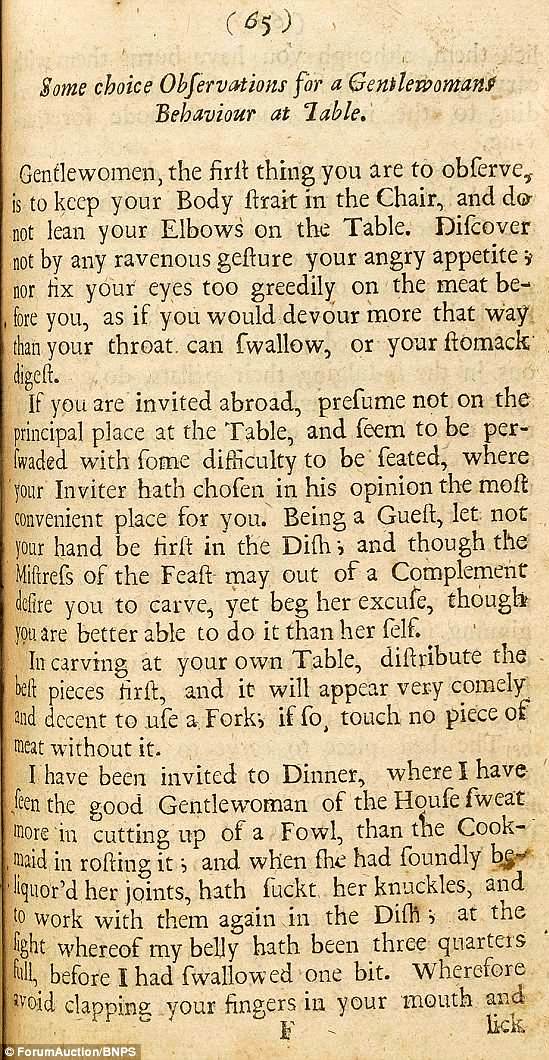
What self-help looked like in the 17th century! ‘Gentlewoman’s companion’ from 1673 offered women advice on handling everything from ‘lewd’ men to ‘windiness’
Labels:
17th century,
18th century,
article,
Auction,
Australia,
cooking,
Daily Mail,
literature,
living history,
manners,
MARTHA CLIFF,
self help book,
women,
writing
Australia
Australia
Sunday, 4 February 2018
Doc Paul's Salt Horn.
One of the best replica salt horns I have seen, lovely work. Not too flashy, but tasteful.
Photo & horn by Paul J Schonbrun.
Labels:
18th century,
blog.living history,
camping,
containers,
cooking,
crafts,
food,
horn smithing,
horn work,
horner,
medical,
salt horn,
travel,
trekking
Australia
United States
Thursday, 1 February 2018
Preserving Eggs.
Labels:
18th century,
cooking,
eggs,
experimental archaeology,
foods,
homesteading,
living history,
preserving
Australia
Australia
Sunday, 31 December 2017
Wilderness Camping & Safety. FIRE.
Any fire small or large, day or night has the potential to attract
unwanted guests, so an all night fire is going to at least double that risk. Raiders are opportunists & a fire glowing in the night or the smell of
smoke will draw them like ants to honey. Because I am a living historian, my
historical treks have to be as authentic as possible. Now even today there are
risks in camping out, but back in the 18th century those risks were far
greater, so I set myself scenarios. Some nights I have camped with no fire,
this requires knowledge of how to stay alive in winter with little bedding,
because bedding is bulky & adds weight to your pack. It also requires
knowledge regarding what foods to carry, because with no fire, you can not cook
food, so you need to carry some food that can be eaten without having to cook
it.
Other nights I do light a small fire in a fire hole. This is a scrape
in the ground to contain the fire surrounded by rocks back & sides. The
heat reflects off the rocks back into my shelter, & they help hide the fire
from prying eyes. But a small fire does not last long once I have fallen
asleep, & at some time in the night the cold will wake me & I will
stoke the fire from my supplies under cover behind my bed & from a supply
of wood at the end of my shelter. Despite the fact that I am always mindful
& therefore alert to sounds in the forest, this waking up from the cold is
for me a security measure. It is an opportunity to look & listen to the
sounds around me before I make up my mind as to whether or not I should re
light or stoke the fire.
If I had placed a large log on the fire to keep it going all night I
would probably sleep soundly, certainly I would not be waking frequently
because of the chill seeping through my bedding. This would create a security
risk, one because as I have already said, the fire would be noticeably visible
from a distance at night, & secondly because I would not be so alert. Just
something for you to think about next time you are camping out & practicing
your skills.
Keith.
Labels:
18th century,
camping,
cooking,
danger,
food,
historical trekking,
living history,
safety,
survival,
travelling,
wilderness
Australia
Australia
Monday, 25 December 2017
17th Century Recipe Found. German Gingerbread.
Take 20 litres of honey and boil it together with 2 litres of water.
Add in cinnamon and nutmeg, a healthy amount of ginger and pepper, plus some
aniseed and coriander. Mix it all together with rye flour and water.
Labels:
17th century,
baking,
Bavaria,
cooking,
food,
German,
gingerbread,
living history,
monastery,
recipes,
XMAS
Australia
Bavaria, Germany
Monday, 11 September 2017
Native Americans and the use of Brass Kettles©
Labels:
18th century,
brass,
cooking,
equipment,
kettles,
living history,
woodland Indian,
woodsrunners
Australia
North America
Thursday, 7 September 2017
Pots, Kettles & Dutch Ovens. A Link.
Labels:
archaeology,
camping,
cooking,
Dutch ovens,
equipment,
kettles,
living history,
pots,
travel,
utensils
Australia
Australia
Monday, 1 May 2017
Thursday, 23 March 2017
Archaeology. Tin Cups & A Wire Bail.
Some time ago I wrote an article about some tin cup fragments that had been found without handles, and that also a wire bail was found with these same fragments (http://woodsrunnersdiary.blogspot.com.au/2012/03/early-to-mid-18th-century-tin-cups.html). Based on this information I made myself a tin cup with a wire handle, but I was never sure whether the wire bail was like a bail on a kettle, or whether it meant a wire handle. Anyway I have since then used my cup in the field, and as I was trying to lighten my pack, I decided to try and use the tin cup with the leather wrapped wire handle for cooking as well as drinking. This did not work. Firstly it was difficult to heat water in the cup without burning the leather on the handle, secondly I found it inconvenient to only have the one vessel. I could not drink and eat at the same time.
Having given this problem further thought I decided to make a second cup with a wire bail, but this time I would make a wire bail such as found on kettles, so I could hang my tin cup over the fire. Given the primary evidence of the two cups found and the presence of the wire bail, this seems to me to be a reasonable thing to do. I used an old spare ball mould as a pair of pliers and constructed the bail without punching holes in the tin.
Original tin cups shown as found. Taken from the PDF.
1 ¼ pounds of iron and brass wire, both thick and thin.
Ft Pontchartrain 1747.
http://www.timothyjkent.com/pontchartrainexcerpts.htm
Ft Pontchartrain 1747.
http://www.timothyjkent.com/pontchartrainexcerpts.htm
Examples of gold and silver jewellery dating back to early Egyptian
times exist which incorporated hand woven wire meshes, but the earliest
evidence of the development of wire weaving on looms for industrial purposes
appears to be in the early part of the 18th Century. Wire drawing had existed
prior to this for many hundreds of years on a simple scale. Iron ingots were
beaten to a flat sheet which was then cut into strips, hammered round, and
pulled through a stone die and many products were made from hand wrought wire.
Twisted wire forks have been unearthed at several 18th-century
military camp sites.1 These may have been available through the army sutlers,
but more than likely were fashioned out of scraps of wire by the soldiers
themselves.
The east well at Bloomsbury yielded two moderately well preserved tin
cups and some flattened tin. A wire bail handle (Figure 94, page 239) appeared
to belong with the tinware. As the pieces of tin were sorted, it became
apparent that the flattened tin included a damaged bottom and part of a side of
a tapered vessel. The cups and fragments were taken to Richard Haddick, a
historical tinsmith in Wyoming, Delaware, for interpretation and replication.
Haddick concluded that there were three fully reproduceable vessels: two cups
and a basin. As nearly as possible, the construction methods of the
eighteenth-century originals were duplicated, using hot-dipped tinplate of the
type that was available to the original maker.
Labels:
archaeology,
artifacts,
boiling,
construction,
cooking,
drinking,
experimental archaeology,
food,
kettle,
PDF,
tea,
tin cups,
water,
wire bail
Australia
Australia
Wednesday, 25 January 2017
The cooks and confectioners dictionary; or, The accomplish'd housewifes companion.
Labels:
18th century,
book,
British,
colonial,
cooking,
English,
food,
Historical,
living history,
New World,
recipes,
settlement
Australia
Australia
Thursday, 29 December 2016
"Peas Pudding" - A Recipe From 1750
Labels:
18th century,
cooking,
food,
Historical,
living history,
peas pudding,
Video
Australia
Australia
Saturday, 15 October 2016
SALT PORK, SHIP’S BISCUIT, AND BURGOO: SEA PROVISIONS FOR COMMON SAILORS AND PIRATES, PART 1.
Sailors or Pirates loading provisions onto boat for transport to a
ship. From an illustration of Blackbeard in Charles Johnson’s, “A General
History of the Lives and Adventures of the Most Famous Highwaymen, Murderers,
Street-Robbers, &c.,” illustrated by Joseph Nichols, 1736.
Labels:
18th century,
baking,
blog,
Colonies ships & pirates,
cooking,
food,
historical trekking,
living history,
pirates,
provisions,
sailors,
salt pork,
seamen,
ship's biscuit
Australia
England, UK
SALT PORK, SHIP’S BISCUIT, AND BURGOO: SEA PROVISIONS FOR COMMON SAILORS AND PIRATES, PART 1.
Sailors or Pirates loading provisions onto boat for transport to a
ship. From an illustration of Blackbeard in Charles Johnson’s, “A General
History of the Lives and Adventures of the Most Famous Highwaymen, Murderers,
Street-Robbers, &c.,” illustrated by Joseph Nichols, 1736.
Labels:
18th century,
baking,
blog,
Colonies ships & pirates,
cooking,
food,
historical trekking,
living history,
pirates,
provisions,
sailors,
salt pork,
seamen,
ship's biscuit
Australia
England, UK
PDF. Reproducing The 18th Century English Biscuit.
Labels:
18th century,
baking,
Biscuit,
cooking,
food,
Historical,
historical trekking,
living history,
PDF,
Trail foods
Australia
England, UK
Subscribe to:
Posts (Atom)