
Showing posts with label pioneers. Show all posts
Showing posts with label pioneers. Show all posts
Monday, 20 March 2017


Friday, 12 June 2015
NARRATIVE OF THE CAPTIVITY AND RESTORATION OF MRS. MARY ROWLANDSON. Part Twelve.

By Robert Griffing.
THE NINETEENTH REMOVE
They said, when we went out, that we must
travel to Wachusett this day. But a bitter weary day I had of it, traveling now
three days together, without resting any day between. At last, after many weary
steps, I saw Wachusett hills, but many miles off. Then we came to a great
swamp, through which we traveled, up to the knees in mud and water, which was
heavy going to one tired before. Being almost spent, I thought I should have
sunk down at last, and never got out; but I may say, as in Psalm 94.18,
"When my foot slipped, thy mercy, O Lord, held me up." Going along,
having indeed my life, but little spirit, Philip, who was in the company, came
up and took me by the hand, and said, two weeks more and you shall be mistress
again. I asked him, if he spake true? He answered, "Yes, and quickly you
shall come to your master again; who had been gone from us three weeks."
After many weary steps we came to Wachusett, where he was: and glad I was to
see him. He asked me, when I washed me? I told him not this month. Then he
fetched me some water himself, and bid me wash, and gave me the glass to see
how I looked; and bid his squaw give me something to eat. So she gave me a mess
of beans and meat, and a little ground nut cake. I was wonderfully revived with
this favor showed me: "He made them also to be pitied of all those that
carried them captives" (Psalm 106.46).
My master had three squaws, living
sometimes with one, and sometimes with another one, this old squaw, at whose
wigwam I was, and with whom my master had been those three weeks. Another was
Wattimore [Weetamoo] with whom I had lived and served all this while. A severe
and proud dame she was, bestowing every day in dressing herself neat as much
time as any of the gentry of the land: powdering her hair, and painting her
face, going with necklaces, with jewels in her ears, and bracelets upon her
hands. When she had dressed herself, her work was to make girdles of wampum and
beads. The third squaw was a younger one, by whom he had two papooses. By the
time I was refreshed by the old squaw, with whom my master was, Weetamoo's maid
came to call me home, at which I fell aweeping. Then the old squaw told me, to
encourage me, that if I wanted victuals, I should come to her, and that I
should lie there in her wigwam. Then I went with the maid, and quickly came
again and lodged there. The squaw laid a mat under me, and a good rug over me;
the first time I had any such kindness showed me. I understood that Weetamoo
thought that if she should let me go and serve with the old squaw, she would be
in danger to lose not only my service, but the redemption pay also. And I was
not a little glad to hear this; being by it raised in my hopes, that in God's
due time there would be an end of this sorrowful hour. Then came an Indian, and
asked me to knit him three pair of stockings, for which I had a hat, and a silk
handkerchief. Then another asked me to make her a shift, for which she gave me
an apron.
Then came Tom and Peter, with the second
letter from the council, about the captives. Though they were Indians, I got
them by the hand, and burst out into tears. My heart was so full that I could
not speak to them; but recovering myself, I asked them how my husband did, and
all my friends and acquaintance? They said, "They are all very well but
melancholy." They brought me two biscuits, and a pound of tobacco. The
tobacco I quickly gave away. When it was all gone, one asked me to give him a
pipe of tobacco. I told him it was all gone. Then began he to rant and
threaten. I told him when my husband came I would give him some. Hang him rogue
(says he) I will knock out his brains, if he comes here. And then again, in the
same breath they would say that if there should come an hundred without guns,
they would do them no hurt. So unstable and like madmen they were. So that
fearing the worst, I durst not send to my husband, though there were some
thoughts of his coming to redeem and fetch me, not knowing what might follow. For
there was little more trust to them than to the master they served. When the
letter was come, the Sagamores met to consult about the captives, and called me
to them to inquire how much my husband would give to redeem me. When I came I
sat down among them, as I was wont to do, as their manner is. Then they bade me
stand up, and said they were the General Court. They bid me speak what I
thought he would give. Now knowing that all we had was destroyed by the
Indians, I was in a great strait. I thought if I should speak of but a little
it would be slighted, and hinder the matter; if of a great sum, I knew not
where it would be procured. Yet at a venture I said "Twenty pounds,"
yet desired them to take less. But they would not hear of that, but sent that
message to Boston, that for twenty pounds I should be redeemed. It was a
Praying Indian that wrote their letter for them. There was another Praying
Indian, who told me, that he had a brother, that would not eat horse; his
conscience was so tender and scrupulous (though as large as hell, for the
destruction of poor Christians). Then he said, he read that Scripture to him,
"There was a famine in Samaria, and behold they besieged it, until an
ass's head was sold for four-score pieces of silver, and the fourth part of a
cab of dove's dung for five pieces of silver" (2 Kings 6.25). He expounded
this place to his brother, and showed him that it was lawful to eat that in a
famine which is not at another time. And now, says he, he will eat horse with
any Indian of them all. There was another Praying Indian, who when he had done
all the mischief that he could, betrayed his own father into the English hands,
thereby to purchase his own life. Another Praying Indian was at Sudbury fight,
though, as he deserved, he was afterward hanged for it. There was another
Praying Indian, so wicked and cruel, as to wear a string about his neck, strung
with Christians' fingers. Another Praying Indian, when they went to Sudbury
fight, went with them, and his squaw also with him, with her papoose at her
back. Before they went to that fight they got a company together to pow-wow.
The manner was as followeth: there was one that kneeled upon a deerskin, with
the company round him in a ring who kneeled, and striking upon the ground with
their hands, and with sticks, and muttering or humming with their mouths.
Besides him who kneeled in the ring, there also stood one with a gun in his
hand. Then he on the deerskin made a speech, and all manifested assent to it;
and so they did many times together. Then they bade him with the gun go out of
the ring, which he did. But when he was out, they called him in again; but he
seemed to make a stand; then they called the more earnestly, till he returned
again. Then they all sang. Then they gave him two guns, in either hand one. And
so he on the deerskin began again; and at the end of every sentence in his
speaking, they all assented, humming or muttering with their mouths, and
striking upon the ground with their hands. Then they bade him with the two guns
go out of the ring again; which he did, a little way. Then they called him in
again, but he made a stand. So they called him with greater earnestness; but he
stood reeling and wavering as if he knew not whither he should stand or fall,
or which way to go. Then they called him with exceeding great vehemency, all of
them, one and another. After a little while he turned in, staggering as he
went, with his arms stretched out, in either hand a gun. As soon as he came in
they all sang and rejoiced exceedingly a while. And then he upon the deerskin,
made another speech unto which they all assented in a rejoicing manner. And so
they ended their business, and forthwith went to Sudbury fight. To my thinking
they went without any scruple, but that they should prosper, and gain the
victory. And they went out not so rejoicing, but they came home with as great a
victory. For they said they had killed two captains and almost an hundred men.
One Englishman they brought along with them: and he said, it was too true, for
they had made sad work at Sudbury, as indeed it proved. Yet they came home
without that rejoicing and triumphing over their victory which they were wont
to show at other times; but rather like dogs (as they say) which have lost
their ears. Yet I could not perceive that it was for their own loss of men.
They said they had not lost above five or six; and I missed none, except in one
wigwam. When they went, they acted as if the devil had told them that they
should gain the victory; and now they acted as if the devil had told them they
should have a fall. Whither it were so or no, I cannot tell, but so it proved,
for quickly they began to fall, and so held on that summer, till they came to
utter ruin. They came home on a Sabbath day, and the Powaw that kneeled upon
the deer-skin came home (I may say, without abuse) as black as the devil. When
my master came home, he came to me and bid me make a shirt for his papoose, of
a holland-laced pillowbere. About that time there came an Indian to me and bid
me come to his wigwam at night, and he would give me some pork and ground nuts.
Which I did, and as I was eating, another Indian said to me, he seems to be
your good friend, but he killed two Englishmen at Sudbury, and there lie their
clothes behind you: I looked behind me, and there I saw bloody clothes, with
bullet-holes in them. Yet the Lord suffered not this wretch to do me any hurt.
Yea, instead of that, he many times refreshed me; five or six times did he and
his squaw refresh my feeble carcass. If I went to their wigwam at any time,
they would always give me something, and yet they were strangers that I never
saw before. Another squaw gave me a piece of fresh pork, and a little salt with
it, and lent me her pan to fry it in; and I cannot but remember what a sweet,
pleasant and delightful relish that bit had to me, to this day. So little do we
prize common mercies when we have them to the full.
Wednesday, 16 April 2014

Sunday, 19 January 2014
Friday, 24 May 2013
Voyage To Georgia. 1736-7. February. Final Page.
On the 23rd, Colonel Bull, one of his Majesty’s Council in Carolina, arrived here
in his own Perriagua, with Letters from the Lieutenant-Governor, Council and
Assembly of that Province for Mr. Oglethorpe. I
offered him the Ship’s great Cabbin, and all Provisions and Necessaries, but he refused it, having himself a Cabbin fitted
up with all Conveniences aboard his own Perriagua; howsoever he did us the
Favour to dine on board.
Nothing remarkable happened on board till Mr. Oglethorpe returned from
the Southward, which was on the 25th in the Evening. I had from one who went along with him, the
following Account.
The Scout-boat went along through Channels, between the Islands and the Main;
these Channels are in some Places above a Mile; these Channels are in some
Places above a Mile, and in others not above 200 Yards wide. In many
Places, the Woods of Pines, Evergreen-Oaks, and Cedar-Trees grow close to the
Water-Side, which with the clear sea-green Colour and Stillness of the
Channels, sheltered by the Woods, is very delightful to the Eye. In other
Places, on the Banks, are wide Marshes, so hard that Cattle feed upon them,
though at some of the very highest Spring-tides they are just covered with
Water. We passed between the Island of Wilmington and the Main;
upon the latter, we landed at one Mr. Lacy’s where 5 Gentlemen of 500 Acre
Lotts have built their Houses together, that they might be the more easily
fortified, which they are with Palisades well flanked with several Pieces of
Cannon. They with Masters and Servants make the Garrison, and in all
Times of Apprehension do regular Duty; one of the Masters, with Proportion of
Servants, mounting Guard each Night. They have cleared above 100 Acres of
Land round the Fort. They have Milk, Cattle, Hogs, Garden-stuff, and
Poultry in such Plenty, that they sent at different Times several Bushels of
Eggs down toFrederica.
Thursday, 6 September 2012
What To Wear. Plymouth. A Link.
http://www.plimoth.org/learn/just-kids/homework-help/what-wearhttp://www.plimoth.org/learn/just-kids/homework-help/what-wear


Saturday, 28 July 2012
18th Century Travel & Settlement in the New World.
18th
Century Travel in the New World.
“When one travels on the roads, one
constantly travels in bush or forest.
Occasionally, there is a house and several miles down the road there is
another house.”
John W. Kleiner and Helmut T. Lehman, The
Correspondence of Heinrich Melchior Mühlenberg, Volume 1, 1740-1747, (Picton
Press, Camden, ME, 1986) 118; hereafter cited as Muhlenberg Correspondence.
“…lost their way several times and had to cross
several rivers, through one of which, the Nottway, they had to swim, as there
was no one at hand to take them across in a boat.”
William
J. Hinke, "Diaries Of Missionary Travels Among The German Settlers In The
American Colonies 1743-1748," The Pennsylvania German Society Proceedings
And Addresses, (Published By The Society 1929) 34:79.
“ The settlements here
are totally surrounded by forests.”
Muhlenberg
Correspondence, 80.
“the whole country is one continuous
woods!”
Benjamin
F. Owen, "Letters of Rev. Richard Locke, and Rev. George Craig,
Missionaries In Pennsylvania of the Society For Propagating the Gospel In
Foreign Parts, 1746-1752," The Pennsylvania Magazine of History and
Biography, (The Historical Society of Pennsylvania, Philadelphia, Pa., 1900),
24:470.
“…farmsteads were irregular in their
appearance, they were frequently set far back from the roads and most often adjacent
to a spring or stream.”
Ibid.,
104.
“The land is not really
dear. One takes up two-hundred acres,
promised to pay by installments in ten years and instead clears off the debt in
five years.”
Mittelberger,
119.
“Reaching a settlement is like a feast for
an inexperienced traveler—to see sun shine on some open grounds, to view clear
fields. You seem to be relieved from
that secret uneasiness and involuntary apprehension which is always in the
woods.”
J.
Hector Crevecoeur, Letters From an American Farmer And Sketches Of 18th-Century
America, (Penquin Books, Ltd., Harmondsworth, Middlesex, England, 1981) 359.
“In this country the chickens are not put
in houses at night nor are they looked after but they sit summer and winter
upon trees near houses. Every morning many a tree is so full of chickens that
the boughs bend beneath them.”
Mittelberger,
64.
Monday, 23 January 2012
Morgan, Baynton & Wharton, Traders, 1768.

Winter Trade By Griffing.
A letter from Morgan to Baynton and Wharton:
Baynton & Wharton, 1768.
I shall impatiently await the Arrival of our red Strouds &c, with-
out without which We shall suffer greatly in our Sales. Should any Accident have happend to them I recommend to you to send at least 100 Pieces of the already described Fabrick, as soon as possible.
out without which We shall suffer greatly in our Sales. Should any Accident have happend to them I recommend to you to send at least 100 Pieces of the already described Fabrick, as soon as possible.
I have already sent you a gen^ Order for the Goods which are in
demand here & which will afford a great Advance Mess" Clarkson
& Jennings drew it out, but I fear the Am* may be beyond your
Capacity. If so, I would have you generally confine yourselves to the
Articles therein mark'd with an A particularly those mentiond in the
inclosed List But a small Part of those markd B, will be very
necessary. As to Muscovado & Loaf Sugar, Coffee, Chocolate, Mens,
Womens & Childrens best & common Leather Shoes, Tin Ware —
Pewter d° Silver Truck, Appalachia Handkerchiefs — Beaver Traps,
& Soap, you cannot send too great a Q^^ but an assortment will
occasion quicker Returns & prevent Traders going to New Orleans.
Pray dont forget to send the Jesuits Bark by the first Opportunity
I expect to eat a pound of it myself if it comes in Time. We are
greatly distressed for Want of Medicines & shall be much more so in
two or three Months if Mr Wharton does not bring a small Supply.
I flatter myself that ere this you have forwarded to Fort Pitt A
considerable Part of the Goods I sent an Order for P Silver Heels &
Mr Young & That that [sic] they will be despatchd to this Place
before the Fall of the Waters — We shall be in Want of the following
particular Articles, Viz
Loaf Sugar
Muscovado d"
Hyson Tea
Bohea d°
Chocolate
Pepper
Shoes very large in the
instep but not high
quarterd fine &
coarse Mens Wom-
ens & Childrens
Tin Ware
Pitch & Cordage
Pewter Basons &c
Brass Candle sticks
Writing Paper
Spike Gimblets
Tap Bores
3 Largest Scale Beams
Steel Spurs Short of all Sizes
Salt Petre
Worsted or Cruels
Short Pipes
Blotting Cloaths
fine Irish Linnens
fine Chintz & Callicos
White & red Flan^
Swanskin
Black Barcelona
Cravats & Hkdfs
Bandana d°
small Gilt Trunks
Bed Ticken in Pieces
Table Cloths
Candle Wick &
Candle moulds
black Kip Hides
tannd Sheep Skins
Beaver Traps
Nails & Iron Mongery
for building of Houses
scyths & Sickles
scyth Stones
Knives & Forks I expect to eat a pound of it myself if it comes in Time. We are
greatly distressed for Want of Medicines & shall be much more so in
two or three Months if Mr Wharton does not bring a small Supply.
I flatter myself that ere this you have forwarded to Fort Pitt A
considerable Part of the Goods I sent an Order for P Silver Heels &
Mr Young & That that [sic] they will be despatchd to this Place
before the Fall of the Waters — We shall be in Want of the following
particular Articles, Viz
Loaf Sugar
Muscovado d"
Hyson Tea
Bohea d°
Chocolate
Pepper
Shoes very large in the
instep but not high
quarterd fine &
coarse Mens Wom-
ens & Childrens
Tin Ware
Pitch & Cordage
Pewter Basons &c
Brass Candle sticks
Writing Paper
Spike Gimblets
Tap Bores
3 Largest Scale Beams
Steel Spurs Short of all Sizes
Salt Petre
Worsted or Cruels
Short Pipes
Blotting Cloaths
fine Irish Linnens
fine Chintz & Callicos
White & red Flan^
Swanskin
Black Barcelona
Cravats & Hkdfs
Bandana d°
small Gilt Trunks
Bed Ticken in Pieces
Table Cloths
Candle Wick &
Candle moulds
black Kip Hides
tannd Sheep Skins
Beaver Traps
Nails & Iron Mongery
for building of Houses
scyths & Sickles
scyth Stones
Garden Spades
Axes, of the best sort
A large Q*^ of English Cheese
12 lb Beeswax
Shirt Buttons
fine y^ w^ Cott Checks
blue & red striped
Ginghams & Cott
Hollands
Apalachia Hhdfs
Mens Boys & Womens
worsted Hose & th"*
G milld Hose &
Mitts & Gloves
Felt & Castor Hats
brass Jews Harps
Castile Soap
Playing Cards
6 best Whip Saws
2 Mill Saws
Bar Iron
Red Stroud &c &c
principally the Indian
Silver Truck as wrote for
Friday, 20 January 2012
Pioneer Handbooks: - How to make rushlights. Plus My Images.
Pioneer Handbooks: - How to make rushlights.


Our two rushlight holders. These supplied us with light for many years.


Hold the weight up and the jaws open.
Let the weight down, and the jaws close to hold the rush stem or a taper.
Tuesday, 19 July 2011
Wednesday, 22 June 2011
Colonial Settlers Travel 2. The home Site.
COLONIAL SETTLERS TRAVEL 2
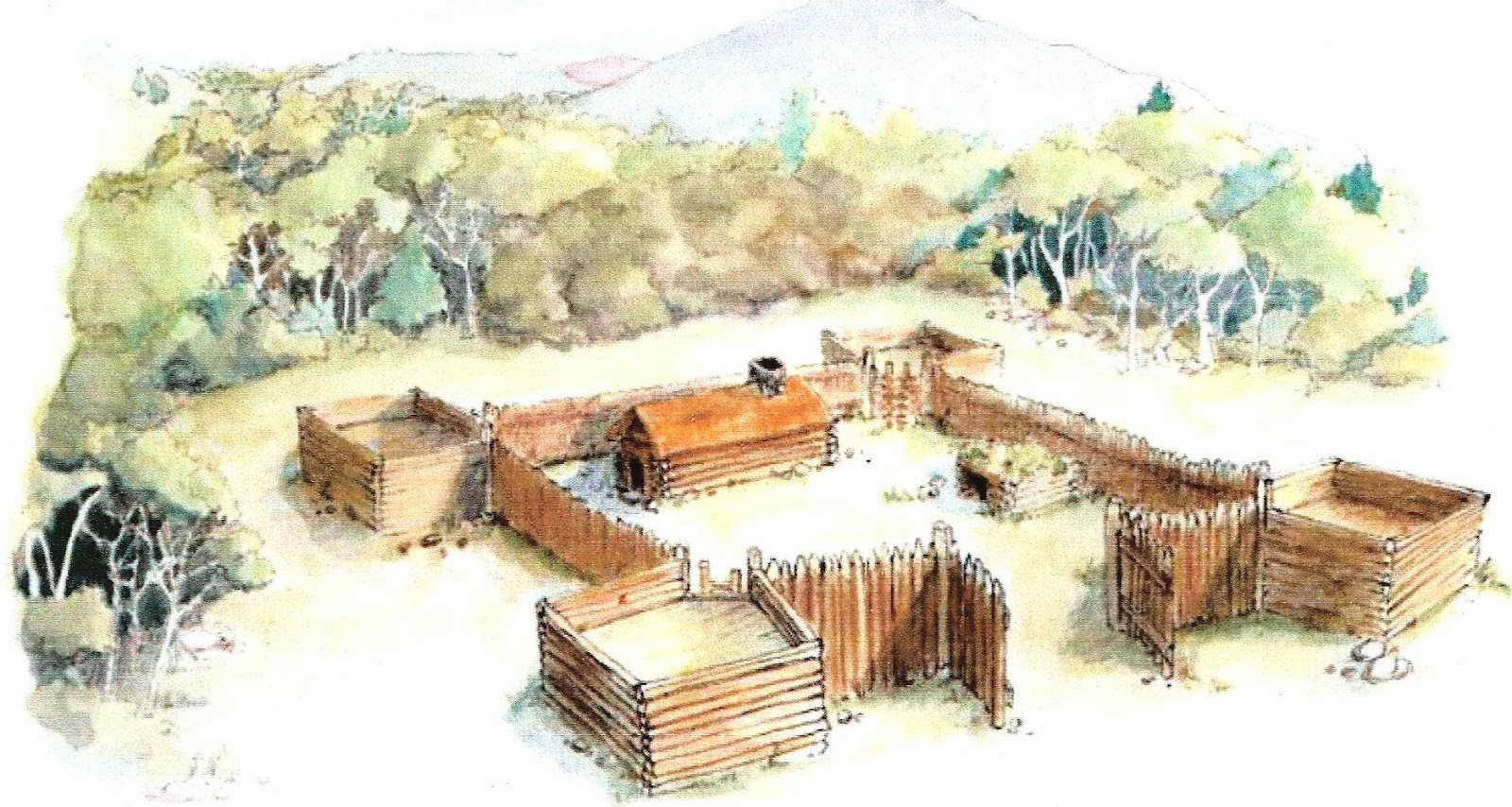
So let us imagine that we have now moved far enough into the wilderness to start looking for a place to settle, what sort of area are we looking for? Priorities will be water, a good site to grow food, and shelter. Personally, if I were doing this now, I would be looking for water with cattail growing, & possibly water chestnut too. This would provide an immediate supply of food. I don’t think I would be too keen to start clearing areas for a garden & crops; it would stand out like a sore thumb. But I know this is what most new settlers did, & my choices would be influenced by my experiences in the last century. I would also be looking for some instant natural shelter, such as a rock overhang or a cave. My garden would probably be close to the water, or planted in the shade in the gullies.
![]()
“these beginners in a new and wild country
fared very hard, may be readily believed; for
this small flock was constantly in great fear on
account of the many Indians or savages who
swarmed around them at that time ; they lacked
all sorts of tools, and were compelled to hoe
the seed into the soil because they had neither
horses nor cattle ; besides they were at that
time and long afterward without flour-mills,
and had to crush the grain between flat
stones, so that it was a very difficult task to
bake bread. And more than all this, no salt
was to be had for a long time. They had wood,
and did not lack meat because they shot all
sorts of game, though they were often in great
want of gun-powder. For a long time several
persons had to keep one horse in common until
more horses and cattle were brought from other
countries. Not to mention the multitude of large
and small wild beasts, snakes and vermin
of every kind, so that they constantly lived in
great fear and anxiety ; therefore they were
obliged to keep large fires burning around their
huts by day and by night, to keep the bears, panthers
and wolves away”.
Gottlieb Mittelberger’s Journey to Pennsylvania in the year 1750 and Return
to Germany in the year 1754.
![]()
With a group of such people it will be necessary to organise who will be doing what. There will be various occupations that need filling. There is no point in every man going hunting for instance, some must stay & protect the community, others must work on shelters. There are gardens to be organised, meat to dry, skins to be fleshed & tanned, a trap line set out. Perhaps some immediate form of dwelling for the protection of all. Foraging for edible plants, collecting firewood, setting out fixed lines for fish. There is a lot to be done.
![]()
![]()
In all this I would try to keep as lower profile as possible, no need to attract trouble. I would not collect all the firewood from one area. I would be careful not to leave too much sign when collecting water or travelling to & from the gardens. But did anyone in the 18th century think this way? Colonial settlers cleared the land & left sign wherever they went. In many cases I think they became very complacent in regard to their safety.
![]()
“On the tenth of February 1675, came the Indians with great numbers upon Lancaster: their first coming was about sunrising; hearing the noise of some guns, we looked out; several houses were burning, and the smoke ascending to heaven. There were five persons taken in one house; the father, and the mother and a sucking child, they knocked on the head; the other two they took and carried away alive. There were two others, who being out of their garrison upon some occasion were set upon; one was knocked on the head, the other escaped; another there was who running along was shot and wounded, and fell down; he begged of them his life, promising them money (as they told me) but they would not hearken to him but knocked him in head, and stripped him naked, and split open his bowels. Another, seeing many of the Indians about his barn, ventured and went out, but was quickly shot down. There were three others belonging to the same garrison who were killed; the Indians getting up upon the roof of the barn, had advantage to shoot down upon them over their fortification. Thus these murderous wretches went on, burning, and destroying before them”.
A Narrative of the Captivity and Restoration of Mrs. Mary Rowlandson.
![]()
"The party that took us consisted of six Indians and four Frenchmen, who immediately commenced plundering, as I just observed, and took what they considered most valuable; consisting principally of bread, meal, and meat. Having taken as much provision as they could carry, they set out with their prisoners in great haste, for fear of detection, and soon entered the woods”.
The capture of Mary Jemison 1758.
![]()
"I cannot omit writing about the dreadful circumstances of our Township, Albany. The Indians came yesterday morning, about 8:00 o'clock, to Frederick Reichelderfer's house. As he was feeding his horses, two Indians ran upon him, and followed him into the field 10 or 12 perches [a perch is equal to 5½ yards] behind; but he escaped and ran toward Jacob Gerhart's house, with a design to fetch arms. When he came nearer Gerhart's, he heard a lamentable cry `Lord Jesus, Lord Jesus', which made him run back towards his own house, but before he got quite home, he saw his house and stables in flames; and heard all the cattle bellowing, and thereupon he ran away again. Two of his children were shot, one of them was found dead in his field, the other was found alive (and brought to Hagenbuch's house) but died three hours after. All his grain and cattle were burnt up. At Jacob Gerhart's they had killed one man, two women, and six children. Two children slipped under the bed; one of which was burned; the other escaped and ran a mile to get to people. We desire help, or we must leave our homes."
http://homepages.rootsweb.ancestry.com/~brobst/chronicles/chap3.htm#s3
For people who were said to be so scared of the forests & the Indians I find it surprising that these settlers ever dropped their guard. I once lived in an area where the inhabitants were often under attack. Our dogs & horses were shot, the attackers coming right into the front yard of some homes. We were far from the help of the authorities, & so had to protect ourselves. Even now all these years later, the first thing I do in the morning is look out the windows & survey the area. It becomes second nature.
![]()
“When the first settlers landed on American shores,
the difficulties in finding or
making shelter must have seemed ironical as well as
almost unbearable. The colonists
found a land magnificent with forest trees of every
size and variety, but they had no sawmills, and few
saws to cut boards ; there was plenty of clay and
ample limestone on every side, yet they could have
no brick and no mortar ; grand boulders of granite
and rock were everywhere, yet there was not a
single facility for cutting, drawing, or using stone.
These homeless men, so sorely in need of immediate
shelter, were baffled by pioneer conditions, and had
to turn to many poor expedients, and be satisfied with
rude covering. In Pennsylvania, New
York, Massachusetts, and, possibly, other states,
some reverted to an ancient form of shelter : they
became cave-dwellers ; caves were dug in the side
of a hill, and lived in till the settlers could have
time to chop down and cut up trees for log houses.
![]() I don't have the height I would like here, so I am cutting my way in from surface to ground level, then after cutting in a larger room, I will roof it.
I don't have the height I would like here, so I am cutting my way in from surface to ground level, then after cutting in a larger room, I will roof it.
Cornelis Van Tienhoven, Secretary of the Province
of New Netherland, gives a description of these
cave-dwellings, and says that " the wealthy and
principal men in New England lived in this fashion
for two reasons : first, not to waste time building ;
second, not to discourage poorer labouring people.
It is to be doubted whether wealthy men ever lived
in them in New England, but Johnson, in his Won
der-working Providence, written in 1645, tells of the
occasional use of these " smoaky homes." They
were speedily abandoned, and no records remain of
permanent cave-homes in New England. In Pennsylvania
caves were used by newcomers as homes
for a long time, certainly half a century. They
generally were formed by digging into the ground
about four feet in depth on the banks or low cliffs
near the river front. The walls were then built up
of sods or earth laid on poles or brush ; thus half
only of the chamber was really under ground. If
dug into a side hill, the earth formed at least two
walls. The roofs were layers of tree limbs covered
over with sod, or bark, or rushes and bark. The
chimneys were laid of cobblestone or sticks of
wood mortared with clay and grass. The settlers
were thankful even for these poor shelters, and
declared that they found them comfortable. By
1685 many families were still living in caves in
Pennsylvania, for the Governor s Council then
ordered the caves to be destroyed and filled in.
Sometimes the settler used the cave for a cellar for
the wooden house which he built over it.
![]()
The homes of the Indians were copied by the
English, being ready adaptations of natural and
plentiful resources. Wigwams in the South were
of plaited rush or grass mats ; of deerskins pinned
on a frame ; of tree boughs rudely piled into a cover,
and in the far South, of layers of palmetto leaves.
![]()
In the mild climate of the Middle and Southern
states a " half-faced camp," of the Indian form, with
one open side, which served for windows and door,
and where the fire was built, made a good temporary
home. In such for a time, in his youth, lived Abraham Lincoln.
Bark wigwams were the most easily
made of all ; they could be quickly pinned together
on a light frame. In 1626 there were thirty home-
buildings of Europeans on the island of Manhattan,
now New York, and all but one of them were of bark”.
ALICE-MORSE-EARLE 19th century.
![]()
![]()
![]()
![]()
![]()
![]()
![]()
So let us imagine that we have now moved far enough into the wilderness to start looking for a place to settle, what sort of area are we looking for? Priorities will be water, a good site to grow food, and shelter. Personally, if I were doing this now, I would be looking for water with cattail growing, & possibly water chestnut too. This would provide an immediate supply of food. I don’t think I would be too keen to start clearing areas for a garden & crops; it would stand out like a sore thumb. But I know this is what most new settlers did, & my choices would be influenced by my experiences in the last century. I would also be looking for some instant natural shelter, such as a rock overhang or a cave. My garden would probably be close to the water, or planted in the shade in the gullies.

Cattail Pond in Wychwood Forest where the author lives.
“these beginners in a new and wild country
fared very hard, may be readily believed; for
this small flock was constantly in great fear on
account of the many Indians or savages who
swarmed around them at that time ; they lacked
all sorts of tools, and were compelled to hoe
the seed into the soil because they had neither
horses nor cattle ; besides they were at that
time and long afterward without flour-mills,
and had to crush the grain between flat
stones, so that it was a very difficult task to
bake bread. And more than all this, no salt
was to be had for a long time. They had wood,
and did not lack meat because they shot all
sorts of game, though they were often in great
want of gun-powder. For a long time several
persons had to keep one horse in common until
more horses and cattle were brought from other
countries. Not to mention the multitude of large
and small wild beasts, snakes and vermin
of every kind, so that they constantly lived in
great fear and anxiety ; therefore they were
obliged to keep large fires burning around their
huts by day and by night, to keep the bears, panthers
and wolves away”.
Gottlieb Mittelberger’s Journey to Pennsylvania in the year 1750 and Return
to Germany in the year 1754.

With a group of such people it will be necessary to organise who will be doing what. There will be various occupations that need filling. There is no point in every man going hunting for instance, some must stay & protect the community, others must work on shelters. There are gardens to be organised, meat to dry, skins to be fleshed & tanned, a trap line set out. Perhaps some immediate form of dwelling for the protection of all. Foraging for edible plants, collecting firewood, setting out fixed lines for fish. There is a lot to be done.


In all this I would try to keep as lower profile as possible, no need to attract trouble. I would not collect all the firewood from one area. I would be careful not to leave too much sign when collecting water or travelling to & from the gardens. But did anyone in the 18th century think this way? Colonial settlers cleared the land & left sign wherever they went. In many cases I think they became very complacent in regard to their safety.

“On the tenth of February 1675, came the Indians with great numbers upon Lancaster: their first coming was about sunrising; hearing the noise of some guns, we looked out; several houses were burning, and the smoke ascending to heaven. There were five persons taken in one house; the father, and the mother and a sucking child, they knocked on the head; the other two they took and carried away alive. There were two others, who being out of their garrison upon some occasion were set upon; one was knocked on the head, the other escaped; another there was who running along was shot and wounded, and fell down; he begged of them his life, promising them money (as they told me) but they would not hearken to him but knocked him in head, and stripped him naked, and split open his bowels. Another, seeing many of the Indians about his barn, ventured and went out, but was quickly shot down. There were three others belonging to the same garrison who were killed; the Indians getting up upon the roof of the barn, had advantage to shoot down upon them over their fortification. Thus these murderous wretches went on, burning, and destroying before them”.
A Narrative of the Captivity and Restoration of Mrs. Mary Rowlandson.

"The party that took us consisted of six Indians and four Frenchmen, who immediately commenced plundering, as I just observed, and took what they considered most valuable; consisting principally of bread, meal, and meat. Having taken as much provision as they could carry, they set out with their prisoners in great haste, for fear of detection, and soon entered the woods”.
The capture of Mary Jemison 1758.

The Taking Of Mary Jemison By Robert Griffing.
"I cannot omit writing about the dreadful circumstances of our Township, Albany. The Indians came yesterday morning, about 8:00 o'clock, to Frederick Reichelderfer's house. As he was feeding his horses, two Indians ran upon him, and followed him into the field 10 or 12 perches [a perch is equal to 5½ yards] behind; but he escaped and ran toward Jacob Gerhart's house, with a design to fetch arms. When he came nearer Gerhart's, he heard a lamentable cry `Lord Jesus, Lord Jesus', which made him run back towards his own house, but before he got quite home, he saw his house and stables in flames; and heard all the cattle bellowing, and thereupon he ran away again. Two of his children were shot, one of them was found dead in his field, the other was found alive (and brought to Hagenbuch's house) but died three hours after. All his grain and cattle were burnt up. At Jacob Gerhart's they had killed one man, two women, and six children. Two children slipped under the bed; one of which was burned; the other escaped and ran a mile to get to people. We desire help, or we must leave our homes."
http://homepages.rootsweb.ancestry.com/~brobst/chronicles/chap3.htm#s3
For people who were said to be so scared of the forests & the Indians I find it surprising that these settlers ever dropped their guard. I once lived in an area where the inhabitants were often under attack. Our dogs & horses were shot, the attackers coming right into the front yard of some homes. We were far from the help of the authorities, & so had to protect ourselves. Even now all these years later, the first thing I do in the morning is look out the windows & survey the area. It becomes second nature.

“When the first settlers landed on American shores,
the difficulties in finding or
making shelter must have seemed ironical as well as
almost unbearable. The colonists
found a land magnificent with forest trees of every
size and variety, but they had no sawmills, and few
saws to cut boards ; there was plenty of clay and
ample limestone on every side, yet they could have
no brick and no mortar ; grand boulders of granite
and rock were everywhere, yet there was not a
single facility for cutting, drawing, or using stone.
These homeless men, so sorely in need of immediate
shelter, were baffled by pioneer conditions, and had
to turn to many poor expedients, and be satisfied with
rude covering. In Pennsylvania, New
York, Massachusetts, and, possibly, other states,
some reverted to an ancient form of shelter : they
became cave-dwellers ; caves were dug in the side
of a hill, and lived in till the settlers could have
time to chop down and cut up trees for log houses.
 I don't have the height I would like here, so I am cutting my way in from surface to ground level, then after cutting in a larger room, I will roof it.
Cornelis Van Tienhoven, Secretary of the Province
of New Netherland, gives a description of these
cave-dwellings, and says that " the wealthy and
principal men in New England lived in this fashion
for two reasons : first, not to waste time building ;
second, not to discourage poorer labouring people.
It is to be doubted whether wealthy men ever lived
in them in New England, but Johnson, in his Won
der-working Providence, written in 1645, tells of the
occasional use of these " smoaky homes." They
were speedily abandoned, and no records remain of
permanent cave-homes in New England. In Pennsylvania
caves were used by newcomers as homes
for a long time, certainly half a century. They
generally were formed by digging into the ground
about four feet in depth on the banks or low cliffs
near the river front. The walls were then built up
of sods or earth laid on poles or brush ; thus half
only of the chamber was really under ground. If
dug into a side hill, the earth formed at least two
walls. The roofs were layers of tree limbs covered
over with sod, or bark, or rushes and bark. The
chimneys were laid of cobblestone or sticks of
wood mortared with clay and grass. The settlers
were thankful even for these poor shelters, and
declared that they found them comfortable. By
1685 many families were still living in caves in
Pennsylvania, for the Governor s Council then
ordered the caves to be destroyed and filled in.
Sometimes the settler used the cave for a cellar for
the wooden house which he built over it.

The homes of the Indians were copied by the
English, being ready adaptations of natural and
plentiful resources. Wigwams in the South were
of plaited rush or grass mats ; of deerskins pinned
on a frame ; of tree boughs rudely piled into a cover,
and in the far South, of layers of palmetto leaves.

Wigwam.
In the mild climate of the Middle and Southern
states a " half-faced camp," of the Indian form, with
one open side, which served for windows and door,
and where the fire was built, made a good temporary
home. In such for a time, in his youth, lived Abraham Lincoln.
Bark wigwams were the most easily
made of all ; they could be quickly pinned together
on a light frame. In 1626 there were thirty home-
buildings of Europeans on the island of Manhattan,
now New York, and all but one of them were of bark”.
ALICE-MORSE-EARLE 19th century.

My half-faced shelter in the forest.

Wigwam.

A cave would make a very secure home.

A rock overhang in an Australian forest. Also known as rock houses.

This 19th century settler family lived inside this hollow tree in Victoria Australia.

These wattle & daub houses were very popular from the 17th century through the 19th century. This one is in Australia.

A log cabin in the woods.
Tuesday, 21 June 2011
Colonial Settlers Travel.
Colonial Settlers Travel.
In this following series of articles I will cover the travel & settlement of early settlers in the New World. Those of you who follow this blog for survival information may think on a modern scenario that may mirror this colonial account. “Bugging out” in this present century would have many similarities to this colonial scenario.
The settlers journey started when they left their own country to travel across the sea. This trip by all accounts was not a pleasant one, & many a passenger was probably so glad to reach land at last that the travels on land held little hardships for them compared to travel by ship. However, there were considerable hardships for many, plus the danger of being discovered by Indians along the trail. Travel was accomplished by boat, horse or by foot; there was no other transport available that could traverse the narrow forest pathways. Some wagons however did manage to get through on wider tracts of land, but these were few in the early days of settlement.
![]()
On account of contrary winds it takes the ships sometimes 2, 3 and 4 weeks
to make the trip from Holland to Kaupp [Cowes] in England. But when the wind is
good, they get there in 8 days or even sooner. Everything is examined there and the
custom-duties paid, whence it comes that the ships ride there 8, lo to 14 days and
even longer at anchor, till they have taken in their full cargoes. During that time
every one is compelled to spend his last remaining money and to consume his little
stock of provisions which had been reserved for the sea; so that most passengers,
finding them selves on the ocean where they would be in greater need of them, must
greatly suffer from hunger and want. Many suffer want already on the water between
Holland and Old England.
When the ships have for the last time weighed their anchors near the city of
Kaupp [Cowes] in Old England, the real misery begins with the long voyage. For
from there the ships, unless they have good wind, must often sail 8, 9, 10 to 12
weeks before they reach Philadelphia. But even with the best wind the voyage lasts 7 weeks.
But during the voyage there is on board these ships terrible misery, stench, fumes,
horror, vomiting, many kinds of sea-sickness, fever, dysentery, headache, heat,
constipation, boils, scurvy, cancer, mouth-rot, and the like, all of which come from
old and sharply salted food and meat, also from very bad and foul water, so that
many die miserably.
Add to this want of provisions, hunger, thirst, frost, heat, dampness, anxiety,
want, afflictions and lamentations, together with other trouble, as c. v. the lice
abound so frightfully, especially on sick people, that they can be scraped off the
body. The misery reaches the climax when a gale rages for 2 or 3 nights and days,
so that every one believes that the ship will go to the bottom with all human beings
on board. In such a visitation the people cry and pray most piteously.
Gottlieb Mittelberger’s Journey to Pennsylvania in the year 1750 and Return
to Germany in the year 1754.
![]()
"I noticed particularly, one family of about 12 in number. The man carried an axe and a gun on his shoulders. The Wife, the rim of a spinning wheel in one hand, and a loaf of bread in the other. Several little boys and girls, each with a bundle, according to their size Two poor horses, each heavily loaded with some poor necessities. On the top of the baggage of one, was an infant rocked to sleep in a kind of wicker cage, lashed securely to the horse. A cow formed one of the company ,and she was destined to bear her proportion of service - a bed cord was wound around her horns and a bag of meal on her back. They were not only patient, but cheerful and pleased with themselves with the expectation of seeing happy days beyond the mountains" Diary of Presbyterian Rev. David McClure. 18th century.
![]()
“We then started to get some provisions, which the old
woman, where we slept, had cheerfully given us; but we took nothing,
except two half loaves of rye bread, and some apples in our travelling
bag”.
Journal of Jasper Danckaerts, 1679-1680. Gutenberg Files.
![]()
![]()
The more skills these travellers had the easier it was going to be to get to where they were heading, & to survive once they got there. The women were no doubt the cooks, seamstresses, nurses & doctors, as well as carrying out many of the same chores as the men. One would think that these women must have been protected at all costs along the trail. Hunting was probably not high on the list of skills these people had, as they were often forbidden to hunt in there country of birth. Some may have poached though & therefore would have some skill at trapping.
![]()
Travelling through these ancient forests these settlers were very much at the mercy of the environment & the Indians if they were discovered. Larger groups were safer & a good deterrent to any would be attackers. Smaller groups would probably not think of using guards on their flanks & rear as the Rogers Rangers rules stipulate, & unless any of them had served in a militia, they would have no experience in the security needed in such travel conditions.
Rogers Rangers Rules 1759.
1. “All Rangers are to be subject to the rules and articles of war; to appear at roll-call every evening, on their own parade, equipped, each with a firelock, sixty rounds of powder and ball, and a hatchet, at which time an officer from each company is to inspect the same, to see they are in order, so as to be ready on any emergency to march at a minute's warning; and before they are dismissed, the necessary guards are to be draughted, and scouts for the next day appointed.
2. Whenever you are ordered out to the enemies forts or frontiers for discoveries, if your number be small, march in a single file, keeping at such a distance from each other as to prevent one shot from killing two men, sending one man, or more, forward, and the like on each side, at the distance of twenty yards from the main body, if the ground you march over will admit of it, to give the signal to the officer of the approach of an enemy, and of their number, &c.
3. If you march over marshes or soft ground, change your position, and march abreast of each other to prevent the enemy from tracking you (as they would do if you marched in a single file) till you get over such ground, and then resume your former order, and march till it is quite dark before you encamp, which do, if possible, on a piece of ground which that may afford your sentries the advantage of seeing or hearing the enemy some considerable distance, keeping one half of your whole party awake alternately through the night.
4. Some time before you come to the place you would reconnoitre, make a stand, and send one or two men in whom you can confide, to look out the best ground for making your observations.
5. If you have the good fortune to take any prisoners, keep them separate, till they are examined, and in your return take a different route from that in which you went out, that you may the better discover any party in your rear, and have an opportunity, if their strength be superior to yours, to alter your course, or disperse, as circumstances may require.
6. If you march in a large body of three or four hundred, with a design to attack the enemy, divide your party into three columns, each headed by a proper officer, and let those columns march in single files, the columns to the right and left keeping at twenty yards distance or more from that of the center, if the ground will admit, and let proper guards be kept in the front and rear, and suitable flanking parties at a due distance as before directed, with orders to halt on all eminences, to take a view of the surrounding ground, to prevent your being ambuscaded, and to notify the approach or retreat of the enemy, that proper dispositions may be made for attacking, defending, &c. And if the enemy approach in your front on level ground, form a front of your three columns or main body with the advanced guard, keeping out your flanking parties, as if you were marching under the command of trusty officers, to prevent the enemy from pressing hard on either of your wings, or surrounding you, which is the usual method of the savages, if their number will admit of it, and be careful likewise to support and strengthen your rear-guard.
7. If you are obliged to receive the enemy's fire, fall, or squat down, till it is over; then rise and discharge at them. If their main body is equal to yours, extend yourselves occasionally; but if superior, be careful to support and strengthen your flanking parties, to make them equal to theirs, that if possible you may repulse them to their main body, in which case push upon them with the greatest resolution with equal force in each flank and in the center, observing to keep at a due distance from each other, and advance from tree to tree, with one half of the party before the other ten or twelve yards. If the enemy push upon you, let your front fire and fall down, and then let your rear advance thro' them and do the like, by which time those who before were in front will be ready to discharge again, and repeat the same alternately, as occasion shall require; by this means you will keep up such a constant fire, that the enemy will not be able easily to break your order, or gain your ground.
8. If you oblige the enemy to retreat, be careful, in your pursuit of them, to keep out your flanking parties, and prevent them from gaining eminences, or rising grounds, in which case they would perhaps be able to rally and repulse you in their turn.
9. If you are obliged to retreat, let the front of your whole party fire and fall back, till the rear hath done the same, making for the best ground you can; by this means you will oblige the enemy to pursue you, if they do it at all, in the face of a constant fire.
10. If the enemy is so superior that you are in danger of being surrounded by them, let the whole body disperse, and every one take a different road to the place of rendezvous appointed for that evening, which must every morning be altered and fixed for the evening ensuing, in order to bring the whole party, or as many of them as possible, together, after any separation that may happen in the day; but if you should happen to be actually surrounded, form yourselves into a square, or if in the woods, a circle is best, and, if possible, make a stand till the darkness of the night favours your escape.
11. If your rear is attacked, the main body and flankers must face about to the right or left, as occasion shall require, and form themselves to oppose the enemy, as before directed; and the same method must be observed, if attacked in either of your flanks, by which means you will always make a rear of one of your flank-guards.
12. If you determine to rally after a retreat, in order to make a fresh stand against the enemy, by all means endeavour to do it on the most rising ground you come at, which will give you greatly the advantage in point of situation, and enable you to repulse superior numbers.
13. In general, when pushed upon by the enemy, reserve your fire till they approach very near, which will then put them into the greatest surprise and consternation, and give you an opportunity of rushing upon them with your hatchets and cutlasses to the better advantage.
14. When you encamp at night, fix your sentries in such a manner as not to be relieved from the main body till morning, profound secrecy and silence being often of the last importance in these cases. Each sentry therefore should consist of six men, two of whom must be constantly alert, and when relieved by their fellows, it should be done without noise; and in case those on duty see or hear any thing, which alarms them, they are not to speak, but one of them is silently to retreat, and acquaint the commanding officer thereof, that proper dispositions may be made; and all occasional sentries should be fixed in like manner.
15. At the first dawn of day, awake your whole detachment; that being the time when the savages choose to fall upon their enemies, you should by all means be in readiness to receive them.
16. If the enemy should be discovered by your detachments in the morning, and their numbers are superior to yours, and a victory doubtful, you should not attack them till the evening, as then they will not know your numbers, and if you are repulsed, your retreat will be favoured by the darkness of the night.
17. Before you leave your encampment, send out small parties to scout round it, to see if there be any appearance or track of an enemy that might have been near you during the night.
18. When you stop for refreshment, choose some spring or rivulet if you can, and dispose your party so as not to be surprised, posting proper guards and sentries at a due distance, and let a small party waylay the path you came in, lest the enemy should be pursuing.
19. If, in your return, you have to cross rivers, avoid the usual fords as much as possible, lest the enemy should have discovered, and be there expecting you.
20. If you have to pass by lakes, keep at some distance from the edge of the water, lest, in case of an ambuscade or an attack from the enemy, when in that situation, your retreat should be cut off.
21. If the enemy pursue your rear, take a circle till you come to your own tracks, and there form an ambush to receive them, and give them the first fire.
22. When you return from a scout, and come near our forts, avoid the usual roads, and avenues thereto, lest the enemy should have headed you, and lay in ambush to receive you, when almost exhausted with fatigues.
23. When you pursue any party that has been near our forts or encampments, follow not directly in their tracks, lest they should be discovered by their rear guards, who, at such a time, would be most alert; but endeavour, by a different route, to head and meet them in some narrow pass, or lay in ambush to receive them when and where they least expect it.
24. If you are to embark in canoes, battoes, or otherwise, by water, choose the evening for the time of your embarkation, as you will then have the whole night before you, to pass undiscovered by any parties of the enemy, on hills, or other places, which command a prospect of the lake or river you are upon.
25. In paddling or rowing, give orders that the boat or canoe next the sternmost, wait for her, and the third for the second, and the fourth for the third, and so on, to prevent separation, and that you may be ready to assist each other on any emergency.
26. Appoint one man in each boat to look out for fires, on the adjacent shores, from the numbers and size of which you may form some judgment of the number that kindled them, and whether you are able to attack them or not.
27. If you find the enemy encamped near the banks of a river or lake, which you imagine they will attempt to cross for their security upon being attacked, leave a detachment of your party on the opposite shore to receive them, while, with the remainder, you surprise them, having them between you and the lake or river.
28. If you cannot satisfy yourself as to the enemy's number and strength, from their fire, &c. conceal your boats at some distance, and ascertain their number by a reconnoitering party, when they embark, or march, in the morning, marking the course they steer, &c. when you may pursue, ambush, and attack them, or let them pass, as prudence shall direct you. In general, however, that you may not be discovered by the enemy upon the lakes and rivers at a great distance, it is safest to lay by, with your boats and party concealed all day, without noise or shew; and to pursue your intended route by night; and whether you go by land or water, give out parole and countersigns, in order to know one another in the dark, and likewise appoint a station every man to repair to, in case of any accident that may separate you”.
Much of the weight these travellers carried would have been in water & food. Remember, these people are relatively new to this environment & would only know such plants as grew in the old country. Meat could be hunted along the way so long as they were as quiet as possible & not spook the game. If there was an experienced woodsman guiding them then they would learn skills along the way. This woodsman would be scouting ahead & leaving sign for the settlers to follow. It would fall to him to hunt for meat. From this woodsman they would learn how to skin & butcher game, & how to follow the wound channel to extract the round ball so it could be remoulded at the camp fire that following night. With any luck these people may have been advised by such a knowledgeable woodsman on what tools & other equipment to carry with them before they started out on their quest for land & freedom.
![]()
![]()
In this following series of articles I will cover the travel & settlement of early settlers in the New World. Those of you who follow this blog for survival information may think on a modern scenario that may mirror this colonial account. “Bugging out” in this present century would have many similarities to this colonial scenario.
The settlers journey started when they left their own country to travel across the sea. This trip by all accounts was not a pleasant one, & many a passenger was probably so glad to reach land at last that the travels on land held little hardships for them compared to travel by ship. However, there were considerable hardships for many, plus the danger of being discovered by Indians along the trail. Travel was accomplished by boat, horse or by foot; there was no other transport available that could traverse the narrow forest pathways. Some wagons however did manage to get through on wider tracts of land, but these were few in the early days of settlement.

On account of contrary winds it takes the ships sometimes 2, 3 and 4 weeks
to make the trip from Holland to Kaupp [Cowes] in England. But when the wind is
good, they get there in 8 days or even sooner. Everything is examined there and the
custom-duties paid, whence it comes that the ships ride there 8, lo to 14 days and
even longer at anchor, till they have taken in their full cargoes. During that time
every one is compelled to spend his last remaining money and to consume his little
stock of provisions which had been reserved for the sea; so that most passengers,
finding them selves on the ocean where they would be in greater need of them, must
greatly suffer from hunger and want. Many suffer want already on the water between
Holland and Old England.
When the ships have for the last time weighed their anchors near the city of
Kaupp [Cowes] in Old England, the real misery begins with the long voyage. For
from there the ships, unless they have good wind, must often sail 8, 9, 10 to 12
weeks before they reach Philadelphia. But even with the best wind the voyage lasts 7 weeks.
But during the voyage there is on board these ships terrible misery, stench, fumes,
horror, vomiting, many kinds of sea-sickness, fever, dysentery, headache, heat,
constipation, boils, scurvy, cancer, mouth-rot, and the like, all of which come from
old and sharply salted food and meat, also from very bad and foul water, so that
many die miserably.
Add to this want of provisions, hunger, thirst, frost, heat, dampness, anxiety,
want, afflictions and lamentations, together with other trouble, as c. v. the lice
abound so frightfully, especially on sick people, that they can be scraped off the
body. The misery reaches the climax when a gale rages for 2 or 3 nights and days,
so that every one believes that the ship will go to the bottom with all human beings
on board. In such a visitation the people cry and pray most piteously.
Gottlieb Mittelberger’s Journey to Pennsylvania in the year 1750 and Return
to Germany in the year 1754.

"I noticed particularly, one family of about 12 in number. The man carried an axe and a gun on his shoulders. The Wife, the rim of a spinning wheel in one hand, and a loaf of bread in the other. Several little boys and girls, each with a bundle, according to their size Two poor horses, each heavily loaded with some poor necessities. On the top of the baggage of one, was an infant rocked to sleep in a kind of wicker cage, lashed securely to the horse. A cow formed one of the company ,and she was destined to bear her proportion of service - a bed cord was wound around her horns and a bag of meal on her back. They were not only patient, but cheerful and pleased with themselves with the expectation of seeing happy days beyond the mountains" Diary of Presbyterian Rev. David McClure. 18th century.

“We then started to get some provisions, which the old
woman, where we slept, had cheerfully given us; but we took nothing,
except two half loaves of rye bread, and some apples in our travelling
bag”.
Journal of Jasper Danckaerts, 1679-1680. Gutenberg Files.

By Andrew Knez Jnr.
Settlers had to carry just the basic tools they would need to start their new life in the wilderness. It is possible that some may have carried only the metal heads of hoes, picks, mattocks, etc intending to make the stailes & helves for these implements once they reached their destination. Felling axes may be needed along the trail, in which case they would have fitted helves. Other necessities would include kettles, knives, axes or tomahawks, guns, tinderboxes for making fire, sewing needles & thread, whet stones for sharpening blades along with metal files. No doubt some would have carried spare parts for their guns & the necessary tools to repair those guns. 
The more skills these travellers had the easier it was going to be to get to where they were heading, & to survive once they got there. The women were no doubt the cooks, seamstresses, nurses & doctors, as well as carrying out many of the same chores as the men. One would think that these women must have been protected at all costs along the trail. Hunting was probably not high on the list of skills these people had, as they were often forbidden to hunt in there country of birth. Some may have poached though & therefore would have some skill at trapping.

Travelling through these ancient forests these settlers were very much at the mercy of the environment & the Indians if they were discovered. Larger groups were safer & a good deterrent to any would be attackers. Smaller groups would probably not think of using guards on their flanks & rear as the Rogers Rangers rules stipulate, & unless any of them had served in a militia, they would have no experience in the security needed in such travel conditions.
Rogers Rangers Rules 1759.
1. “All Rangers are to be subject to the rules and articles of war; to appear at roll-call every evening, on their own parade, equipped, each with a firelock, sixty rounds of powder and ball, and a hatchet, at which time an officer from each company is to inspect the same, to see they are in order, so as to be ready on any emergency to march at a minute's warning; and before they are dismissed, the necessary guards are to be draughted, and scouts for the next day appointed.
2. Whenever you are ordered out to the enemies forts or frontiers for discoveries, if your number be small, march in a single file, keeping at such a distance from each other as to prevent one shot from killing two men, sending one man, or more, forward, and the like on each side, at the distance of twenty yards from the main body, if the ground you march over will admit of it, to give the signal to the officer of the approach of an enemy, and of their number, &c.
3. If you march over marshes or soft ground, change your position, and march abreast of each other to prevent the enemy from tracking you (as they would do if you marched in a single file) till you get over such ground, and then resume your former order, and march till it is quite dark before you encamp, which do, if possible, on a piece of ground which that may afford your sentries the advantage of seeing or hearing the enemy some considerable distance, keeping one half of your whole party awake alternately through the night.
4. Some time before you come to the place you would reconnoitre, make a stand, and send one or two men in whom you can confide, to look out the best ground for making your observations.
5. If you have the good fortune to take any prisoners, keep them separate, till they are examined, and in your return take a different route from that in which you went out, that you may the better discover any party in your rear, and have an opportunity, if their strength be superior to yours, to alter your course, or disperse, as circumstances may require.
6. If you march in a large body of three or four hundred, with a design to attack the enemy, divide your party into three columns, each headed by a proper officer, and let those columns march in single files, the columns to the right and left keeping at twenty yards distance or more from that of the center, if the ground will admit, and let proper guards be kept in the front and rear, and suitable flanking parties at a due distance as before directed, with orders to halt on all eminences, to take a view of the surrounding ground, to prevent your being ambuscaded, and to notify the approach or retreat of the enemy, that proper dispositions may be made for attacking, defending, &c. And if the enemy approach in your front on level ground, form a front of your three columns or main body with the advanced guard, keeping out your flanking parties, as if you were marching under the command of trusty officers, to prevent the enemy from pressing hard on either of your wings, or surrounding you, which is the usual method of the savages, if their number will admit of it, and be careful likewise to support and strengthen your rear-guard.
7. If you are obliged to receive the enemy's fire, fall, or squat down, till it is over; then rise and discharge at them. If their main body is equal to yours, extend yourselves occasionally; but if superior, be careful to support and strengthen your flanking parties, to make them equal to theirs, that if possible you may repulse them to their main body, in which case push upon them with the greatest resolution with equal force in each flank and in the center, observing to keep at a due distance from each other, and advance from tree to tree, with one half of the party before the other ten or twelve yards. If the enemy push upon you, let your front fire and fall down, and then let your rear advance thro' them and do the like, by which time those who before were in front will be ready to discharge again, and repeat the same alternately, as occasion shall require; by this means you will keep up such a constant fire, that the enemy will not be able easily to break your order, or gain your ground.
8. If you oblige the enemy to retreat, be careful, in your pursuit of them, to keep out your flanking parties, and prevent them from gaining eminences, or rising grounds, in which case they would perhaps be able to rally and repulse you in their turn.
9. If you are obliged to retreat, let the front of your whole party fire and fall back, till the rear hath done the same, making for the best ground you can; by this means you will oblige the enemy to pursue you, if they do it at all, in the face of a constant fire.
10. If the enemy is so superior that you are in danger of being surrounded by them, let the whole body disperse, and every one take a different road to the place of rendezvous appointed for that evening, which must every morning be altered and fixed for the evening ensuing, in order to bring the whole party, or as many of them as possible, together, after any separation that may happen in the day; but if you should happen to be actually surrounded, form yourselves into a square, or if in the woods, a circle is best, and, if possible, make a stand till the darkness of the night favours your escape.
11. If your rear is attacked, the main body and flankers must face about to the right or left, as occasion shall require, and form themselves to oppose the enemy, as before directed; and the same method must be observed, if attacked in either of your flanks, by which means you will always make a rear of one of your flank-guards.
12. If you determine to rally after a retreat, in order to make a fresh stand against the enemy, by all means endeavour to do it on the most rising ground you come at, which will give you greatly the advantage in point of situation, and enable you to repulse superior numbers.
13. In general, when pushed upon by the enemy, reserve your fire till they approach very near, which will then put them into the greatest surprise and consternation, and give you an opportunity of rushing upon them with your hatchets and cutlasses to the better advantage.
14. When you encamp at night, fix your sentries in such a manner as not to be relieved from the main body till morning, profound secrecy and silence being often of the last importance in these cases. Each sentry therefore should consist of six men, two of whom must be constantly alert, and when relieved by their fellows, it should be done without noise; and in case those on duty see or hear any thing, which alarms them, they are not to speak, but one of them is silently to retreat, and acquaint the commanding officer thereof, that proper dispositions may be made; and all occasional sentries should be fixed in like manner.
15. At the first dawn of day, awake your whole detachment; that being the time when the savages choose to fall upon their enemies, you should by all means be in readiness to receive them.
16. If the enemy should be discovered by your detachments in the morning, and their numbers are superior to yours, and a victory doubtful, you should not attack them till the evening, as then they will not know your numbers, and if you are repulsed, your retreat will be favoured by the darkness of the night.
17. Before you leave your encampment, send out small parties to scout round it, to see if there be any appearance or track of an enemy that might have been near you during the night.
18. When you stop for refreshment, choose some spring or rivulet if you can, and dispose your party so as not to be surprised, posting proper guards and sentries at a due distance, and let a small party waylay the path you came in, lest the enemy should be pursuing.
19. If, in your return, you have to cross rivers, avoid the usual fords as much as possible, lest the enemy should have discovered, and be there expecting you.
20. If you have to pass by lakes, keep at some distance from the edge of the water, lest, in case of an ambuscade or an attack from the enemy, when in that situation, your retreat should be cut off.
21. If the enemy pursue your rear, take a circle till you come to your own tracks, and there form an ambush to receive them, and give them the first fire.
22. When you return from a scout, and come near our forts, avoid the usual roads, and avenues thereto, lest the enemy should have headed you, and lay in ambush to receive you, when almost exhausted with fatigues.
23. When you pursue any party that has been near our forts or encampments, follow not directly in their tracks, lest they should be discovered by their rear guards, who, at such a time, would be most alert; but endeavour, by a different route, to head and meet them in some narrow pass, or lay in ambush to receive them when and where they least expect it.
24. If you are to embark in canoes, battoes, or otherwise, by water, choose the evening for the time of your embarkation, as you will then have the whole night before you, to pass undiscovered by any parties of the enemy, on hills, or other places, which command a prospect of the lake or river you are upon.
25. In paddling or rowing, give orders that the boat or canoe next the sternmost, wait for her, and the third for the second, and the fourth for the third, and so on, to prevent separation, and that you may be ready to assist each other on any emergency.
26. Appoint one man in each boat to look out for fires, on the adjacent shores, from the numbers and size of which you may form some judgment of the number that kindled them, and whether you are able to attack them or not.
27. If you find the enemy encamped near the banks of a river or lake, which you imagine they will attempt to cross for their security upon being attacked, leave a detachment of your party on the opposite shore to receive them, while, with the remainder, you surprise them, having them between you and the lake or river.
28. If you cannot satisfy yourself as to the enemy's number and strength, from their fire, &c. conceal your boats at some distance, and ascertain their number by a reconnoitering party, when they embark, or march, in the morning, marking the course they steer, &c. when you may pursue, ambush, and attack them, or let them pass, as prudence shall direct you. In general, however, that you may not be discovered by the enemy upon the lakes and rivers at a great distance, it is safest to lay by, with your boats and party concealed all day, without noise or shew; and to pursue your intended route by night; and whether you go by land or water, give out parole and countersigns, in order to know one another in the dark, and likewise appoint a station every man to repair to, in case of any accident that may separate you”.
Much of the weight these travellers carried would have been in water & food. Remember, these people are relatively new to this environment & would only know such plants as grew in the old country. Meat could be hunted along the way so long as they were as quiet as possible & not spook the game. If there was an experienced woodsman guiding them then they would learn skills along the way. This woodsman would be scouting ahead & leaving sign for the settlers to follow. It would fall to him to hunt for meat. From this woodsman they would learn how to skin & butcher game, & how to follow the wound channel to extract the round ball so it could be remoulded at the camp fire that following night. With any luck these people may have been advised by such a knowledgeable woodsman on what tools & other equipment to carry with them before they started out on their quest for land & freedom.

Woodsman By John Buxton.

By Doug Hall.
Subscribe to:
Posts (Atom)