
This reproduction capot, a hooded coat, is representative of those worn circa 1690-1720 in French Canada.


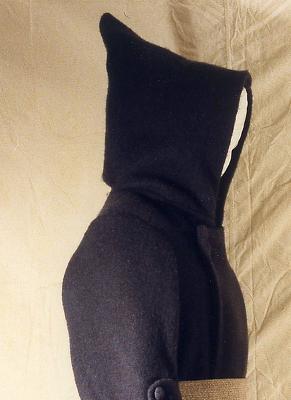
An
ample coat with hood and sleeves, the capot was derived from the coat used by
French sailors in inclement weather. The French inhabitants of Quebec modified
the design by giving them a slightly more tailored look. These alterations were
meant to imitate the justaucorps, the fashionable coat of the day. This
reproduction example has mariner's cuffs. Some sleeves were plain and others
had long "boot cuffs" like those on justaucorps. Capots were fastened
around the waist with a sash. A single button on the right shoulder allowed the
left flap to cross over the breast. These coats were typically made of serge, a
woolen cloth that is pliable and drapable but durable. Blue was the favored
color. Like most textiles, capots rapidly became highly sought-after trade
goods in New France. Native North Americans soon adopted the design to make
their own garments from square-cut blankets, creating a kind of knee-length
hooded cloak held together at the waist by a sash and closed at the chest with
a clasp or pin.

This is supposed to be dated 1730, but I have no provenance as yet.
"the native people wear French capots, and in the
winter, bed-blankets."
Father Baird in Acadia in 1616.

