"Pocket soup" was carried by colonial travellers, as it could easily be reconstituted with a little hot water.
http://www.foodtimeline.org/foodsoups.html
Showing posts with label period foods. Show all posts
Showing posts with label period foods. Show all posts
Saturday, 21 September 2013


Sunday, 15 January 2012

Saturday, 29 October 2011
Australian and New Zealand Possums.
Bob Mc has left a new comment on your post "How to cook Black squirrel.":
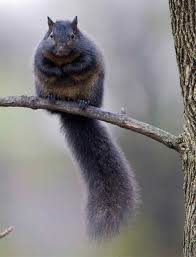
I’ve never heard of black squirrels either, but I grew up hunting grey squirrels and still do. Incidentally, from pictures I’ve seen and from nature shows on TV, what they call a possum in New Zealand is not the same animal we call a possum over here. I assume the possum in Australia is the same critter found in New Zealand.
New Zealand possums were introduced by Europeans from Australia, and have become a pest over there. The bad side is that these possums in New Zealand eat the native birds eggs. The good side, if you see it that way, is that hunting and trapping possums for their fur has given some residents an alternative income.
 http://www.possumbusters.co.nz/
I’ve never heard of black squirrels either, but I grew up hunting grey squirrels and still do. Incidentally, from pictures I’ve seen and from nature shows on TV, what they call a possum in New Zealand is not the same animal we call a possum over here. I assume the possum in Australia is the same critter found in New Zealand.
New Zealand possums were introduced by Europeans from Australia, and have become a pest over there. The bad side is that these possums in New Zealand eat the native birds eggs. The good side, if you see it that way, is that hunting and trapping possums for their fur has given some residents an alternative income.

Thursday, 15 September 2011


Sunday, 21 August 2011
History Week in NSW.
History Week

History Week was initiated by the Council in 1997 to showcase the rich, diverse history being produced by organisations and individuals across the state. With over 200 events across NSW, History Week is about celebrating the best in community and professional history, highlighting its role in our cultural life and inviting people to get involved.
During History Week, community groups, local councils, libraries, archives, museums, universities, cultural institutions, professional and amateur historians across NSW open their doors to present the latest in today’s historical research - fascinating stories, artefacts and experiences about both our past and ourselves today.
History Week 2011: 3-11 September – EAT History
The theme for History Week 2011 will be EAT History. History Week 2011 will bring to the table the Edible, Appetising and Tasty history of food. Who ate what and where in the past? How did we cook and where did our food come from? History Week 2011 will be a smorgasbord of delectable delights!
Like History Week on Facebook.
Follow History Week on Twitter.
The Art of Living in Australia: A Special Event with Tony Bilson
Presented by Bilsons Restaurant and the History Council of NSW
‘It is curious to see the inhabitants of a semi-tropical country like Australia living in wilful contradiction to their climactic necessities, and eating the same kind of food as did their fathers in the old land, with its dampness, its coldness, its ice and its snow,’ wrote Philip E. Muskett in 1893.
Muskett, a public health reformer, advocated the consumption of seafood, fresh produce and Australian wines. Eighty years later Tony Bilson transformed Sydney dining with his eatery Tony’s Bon Gout. His restaurants, Berowra Waters Inn, Kinselas, Bilson’s at Circular Quay, Fine Bouche, Treasury at Sydney’s InterContinental Hotel, Ampersand, Canard, Bilson’s Restaurant at the Radisson Blu Plaza Hotel and Number One Wine Bar have established – and indeed revolutionised – the art of gastronomy in Australia.
In this special event, Tony Bilson and Darren De Bortoli will discuss the development of Sydney’s food and wine scene with Simon Marnie from ABC 702 Sydney, while guests savour a specially created menu inspired by recipes featured in Philip E. Muskett’s book, The Art of Living in Australia.
http://www.historycouncilnsw.org.au/history-week/history-week
Monday, 7 February 2011
The Forest Buffalo.
“From the tops of the mountains which rim the parks the rains of ages have cut deep gorges, which plunge with brusque abruptness, but nevertheless with great regularity, hundreds or even thousands of feet to the valley below. Down the bottom of each such gorge a clear, cold stream of purest water, fertilizing a narrow belt of a few feet of alluvial, and giving birth and growth, to a dense jungle of spruce, quaking asp, and other mountain trees. One side of the gorge is generally a [Pg 410]thick forest of pine, while the other side is a meadow-like park, covered with splendid grass. Such gorges are the favorite haunt of the mountain buffalo. Early in the morning he enjoys a bountiful breakfast of the rich nutritious grasses, quenches his thirst with the finest water, and, retiring just within the line of jungle, where, himself unseen, he can scan the open, he crouches himself in the long grass and reposes in comfort and security until appetite calls him to his dinner late in the evening. Unlike their plains relative, there is no stupid staring at an intruder. At the first symptom of danger they disappear like magic in the thicket, and never stop until far removed from even the apprehension of pursuit. I have many times come upon their fresh tracks, upon the beds from which they had first sprung in alarm, but I have never even seen one.
THE EXTERMINATION OF THE AMERICAN BISON.
BY WILLIAM T. HORNADAY,
Superintendent of the National Zoological Park.
Compliments of the Gutenberg Project.

Woodland or Forest Bison.
This image from: http://kohutcorp.blogspot.com/
THE EXTERMINATION OF THE AMERICAN BISON.
BY WILLIAM T. HORNADAY,
Superintendent of the National Zoological Park.
Compliments of the Gutenberg Project.

Woodland or Forest Bison.
This image from: http://kohutcorp.blogspot.com/
Thursday, 9 September 2010
Whale in The Thames.
(Reuters) - The skeleton of a huge whale, thought to have been butchered for its meat, bone and oils 300 years ago, has been discovered by archaeologists on the banks of London's River Thames.


I'll take this whale myself he said the weak can stay behind
The strong can share my glory and tonight they'll share my wine
Di Di Di Di Di Di Di Di"
Traditional folk song - 18th century?
Contributed By Dave Reid http://www.blogger.com/profile/10686894099000443027
Thanks Dave.


More info here: http://uk.reuters.com/article/idUKTRE68830L20100909
"They saw the whale one morning when the weather it was fair
the men were white as ghosts, but the Captain didn't careI'll take this whale myself he said the weak can stay behind
The strong can share my glory and tonight they'll share my wine
Di Di Di Di Di Di Di Di"
Traditional folk song - 18th century?
Contributed By Dave Reid http://www.blogger.com/profile/10686894099000443027
Thanks Dave.
Saturday, 22 May 2010
More On The sunflower. Kindly supplied by Lynne Olver, The Food Timeline.
Sunflower info.
We're finding several references to Native American sunflower cultivation and use, but precious little regarding the dehulling process. Below please find two passages (one from the Eastern Woodland/Iroquois, the other from southwest American Zunis). Attached please find an 18 page scholarly article "The Sunflower among the North American Indians." While it does not specifically answer your question, it does provide a wealth of information and resources for further study.
"The sunflower...was frequently cultivated, either together with corn and beans, or in patches by itself, and furnished an oil which was highly esteemed. The Hurons and Iroquois generally are said to have sown but little of it, though they made from it an oil 'to annoint themselves.' The Indians of Virginia made of it 'both a kind of bread and broth.' The oil was said, by a Mohawk informant, to have been made by roasting the seeds slightly, then pounding them in mortar, after which the material was boiled and the oil skimmed off. The oil, at present, is used principally for ceremonial purposes, such as the anointing of the masks used by the False-face society. It was also stated by Chief Gibson to be good for the hair and to prevent it from falling out or changing colour."
---Iroquois Foods and Food Preparation, F. W. Waugh, facsimile 1916 edition [University Press of the Pacific:Honolulu] 2003(p. 78)
"There is also another large herb, which resembles the marigold, about six feet high. The head is a span in width with the flower. Some believe it to be planta solis[sunflower] From its seeds a kind of bread and also a broth are made."
SOURCE: Hariot, A Brief & True Report (online) :
http://www.nps.gov/fora/forteachers/the-second-part.htm
“The nuts and sunflower-seeds were shucked by being reheated in the roasting-tray, and, while still hot, rolled lightly under the muller, or molina, on a coarse slab of lava. The brittle shells were broken by this slight pressure, while the oily meats, rendered soft by the warmth, came out clean and perfect. In this shape they were usually eaten. If designed for thickening soups or stews, which purpose they served admirably, or for use as shortening, they were carefully parched yet again until friable, then slightly ground on a fine-grained stone. So rich were the sunflower and suthl'-to-k'ia seeds that no amount of drying made it possible to reduce them to meal except in the condition of paste. As such, however, they were formed with the fingers into little patti-cakes which, laid on leaves, or hardened by roasting deep buried in the ashes, were eaten with other food in the place of meat, supplying the lack of the latter, at least to the taste, most admirably."
SOURCE: Zuni Breadstuff (p. 252-253)
http://digital.lib.msu.edu/projects/cookbooks/books/zunibreadstuff/zuni.html
-----------------------------------
Lynne Olver (IACP), editor
The Food Timeline
http://www.foodtimeline.org/
Monday, 3 May 2010
Pioneer life or 30 years a hunter. By Philip Tome.
Pioneer Life.
Or 30 years a hunter.
By Philip Tome.
“Taking salt and flour with us we pushed up our canoe to a place called Round Island”.
“We now brought our venison together, and built a scaffold on which we placed it to dry. It may well here to describe the manner of preserving Elk’s meat in the summer. It is first cut into thin slices and salted down in the skin. We always carried a bag of salt with us for that purpose. Two large poles are laid across crotches about five feet high, and a number of smaller ones are laid across these. After the meat has lain a sufficient length of time in the skin, it is spread upon this scaffold, and a slow fire built under it. The fire is gradually increased and the meat turned until it is dried through. In this state it is called jerk”.
“My father commenced mending his moccasins”.
“They came up pine creek with a keel boat loaded with flour, pork, sugar, chocolate, tea, and all kinds of clothing for the men”.
“We all had fishing lines”.
“I called to Strawbridge to throw the axe at the snake”.
“During the winter when the river was covered with ice, the deer would fall into the air holes and become an easy prey (to the wolves). We took off the skin and if the deer did not prove to be very good, we would leave half of it to the wolves, but if it was good, we left the refuse parts to encourage them in pursuing the deer”.
“On leaving the house we always put on a pair of woollen socks and leggings over our shoes to protect our legs from the snakes”.

Image added by Le Loup.
Subscribe to:
Posts (Atom)