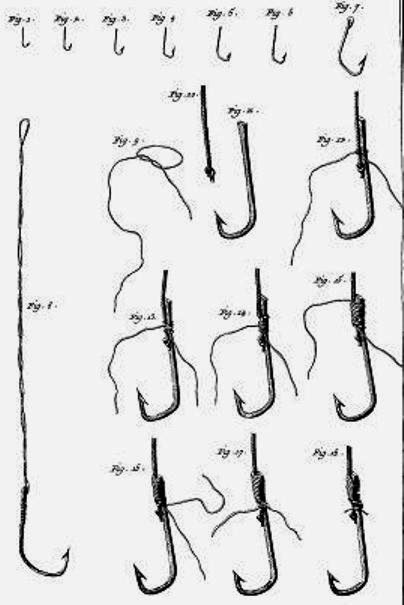
Hand forged copy of an 18th century eyeless fishing hook.
18TH CENTURY LIVING HISTORY, HISTORICAL TREKKING, AND PERIOD WILDERNESS LIVING.
A LIVING HISTORY BLOG.
18TH CENTURY LIVING HISTORY IN AUSTRALIA.
Wednesday, 30 October 2013
Another Way To Attach A Fishing Line.
Labels:
18th century,
america,
Australia,
colonial,
England,
eyeless hooks,
fishing,
line,
snelled hooks,
tackle
Australia
Australia
Tuesday, 29 October 2013
Shooting and Fire Season.
It is fire season here in Australia, and the worst one we have ever had so far. Global warming is pushing the temperature up. Using patch material or inflammable wadding can easily start a bushfire. I use leather wads.
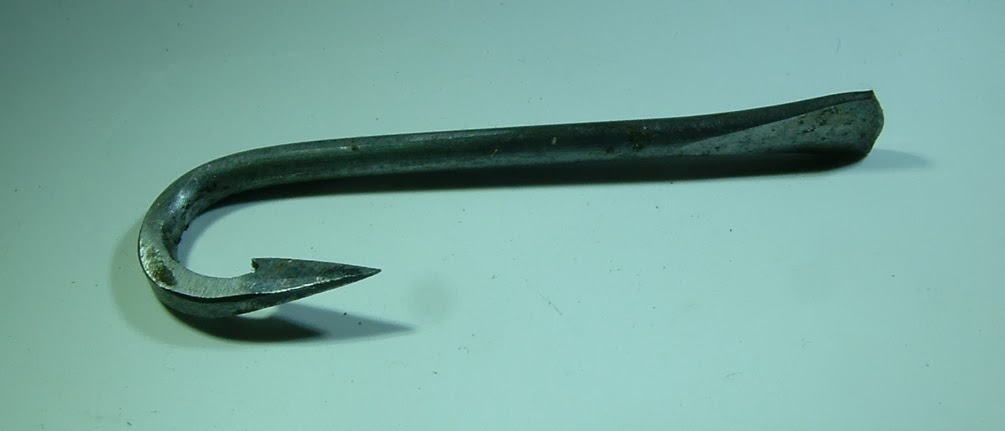
In the bottom left hand corner of this image you will see the 18th century wad punch that I use, which used to be my Father's.
Labels:
18th century,
colonial,
fire danger,
firearms,
gun tools,
guns,
leather wads,
muzzleloading,
patch material,
shooting,
survival,
tools,
wad punch,
wadding,
wilderness living
Australia
Australia
Sunday, 27 October 2013
A 3D Look At 17th Century London.
Labels:
17th century,
18th century,
buildings,
living history,
London,
Video
Australia
London, UK
Saturday, 26 October 2013
Thoughts on 18th Century Shirts, and Woodland Indian Interpretation.
Thoughts on 18th
Century Shirts, and Woodland Indian Interpretation.
The 18th
century men’s shirt was classed as underwear, and it was made long enough to be
tucked between the legs. This means that the average shirt should at least
reach the knees when hanging loose, or longer. It was also used as a
nightshirt. Now I am not aware that the trade shirt was any shorter than the
ordinary shirt, and yet woodland Indian interpreters are often seen with short
shirts and displaying their breechclout hanging below the length of the shirt.
The breechclout was traditionally short, the material being as long as the
height of the wearer.
Now I realise that there were tall and short people, and, it is possible that a tall person could end up wearing a short person’s shirt, but it does not seem feasible that everyone would have a short shirt.
Here we see some
woodland Indian interpreters. Only one of which is wearing his shirt short.
Anyone else have
thoughts on the length of trade shirts?
Keith.
More Info on Indian shirts here: http://woodlandindianclothing.blogspot.com.au/
http://www.nativetech.org/seminole/plainshirt/plainshirtinstr.php
Keith.
More Info on Indian shirts here: http://woodlandindianclothing.blogspot.com.au/
http://www.nativetech.org/seminole/plainshirt/plainshirtinstr.php
Friday, 25 October 2013
COLONIAL AMERICAN DIGRESSIONS: MILITIA TRAINING DAY
COLONIAL AMERICAN DIGRESSIONS: MILITIA TRAINING DAY: A Colonial Militiaman supplied his own uniform Courtesy of Woodsrunner’s Diary Dear Reader, Militia companies made u...
Monday, 21 October 2013
A Gerry Embleton Image.
Labels:
18th century,
frontier art,
Gerry Embleton,
images,
paintings,
prints
Australia
United States
Sunday, 20 October 2013
MY NEIGHBOR WELLINGTON: ROQUE GAMEIRO
MY NEIGHBOR WELLINGTON: ROQUE GAMEIRO: Here's a link to a page which post illustrates an author who's pictures I have used in the past. Roque Gameiro was a teacher, lith...
Subscribe to:
Posts (Atom)